Water Buffalos in the Roman Campagna — History & Facts
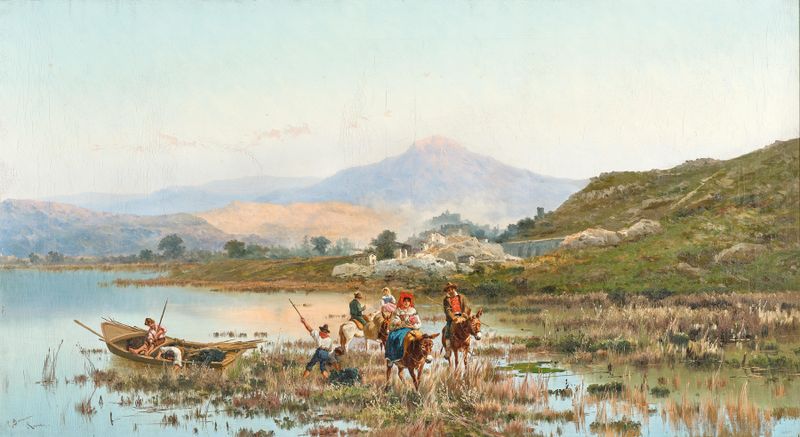
Is this a mirror — or a memory? In the gentle embrace of twilight, the landscape unfurls, inviting contemplation on the fragile thread between life and death. Look to the foreground, where the massive forms of water buffalos stand, their silhouettes etched against the fading light. Notice the way the sun bathes their sturdy bodies in warm gold, contrasting with the cool blues of the distant hills. The technique reveals a deliberate softness; brushstrokes blend seamlessly, suggesting the passage of time and the inevitable decay of all things.
Each buffalo, with its deep-set eyes, seems to carry the weight of history on its broad back, grounding the viewer in a moment that feels both eternal and transient. As you gaze deeper, consider the contrast between the serenity of the pastoral scene and the underlying tension of mortality. The buffalos, symbols of strength and endurance, inhabit a space that whispers of their own ephemerality. The quiet harmony of the landscape serves as a reminder of life’s cyclical nature, where existence ebbs and flows in a dance of growth and decay.
The stillness is poignant, inviting reflection on our place within this grand tableau. Painted during an unrecorded period, the artist was likely immersed in the changing dynamics of Italian art, exploring the themes of nature and existence. Much of his work resonates with a deep appreciation for the rural Italian landscape, a world that was both personal and reflective of larger societal shifts. In this piece, the intersection of life and memory echoes the contemplative spirit of the time, where beauty and mortality coexist in a delicate balance.