
Waterfall — History & Facts
Shadows dance along the periphery of perception, inviting us to explore the depths of nature’s embrace. Look to the center of the canvas, where the waterfall cascades with a powerful elegance. Notice how the artist employs deep hues of blue and green to create a sense of movement, while the foamy white tips of the water bring a dazzling contrast. The surrounding rocks, rendered in earthy tones, frame the scene, drawing your gaze toward the heart of the waterfall, which seems to both roar and whisper simultaneously. Delve deeper, and you’ll find the interplay of light and shadow reveals emotional tensions.
The shadows clinging to the rocks subtly suggest hidden depths and untold stories, while the brilliant highlights evoke a fleeting moment of clarity. Here, nature is alive, yet there’s a palpable stillness that contrasts the dynamic energy of the flowing water, inviting contemplation on the balance between chaos and serenity. In 1856, Larson painted this work while navigating a period of personal and professional growth in Sweden. The mid-19th century marked a time of burgeoning Romanticism in art, where nature became a focal point for expression.
As he captured the raw beauty of the natural world, Larson was inspired by his surroundings, reflecting the shift in artistic thought towards a more emotive and individualistic perspective.
More Artworks by Marcus Larson
Browse all →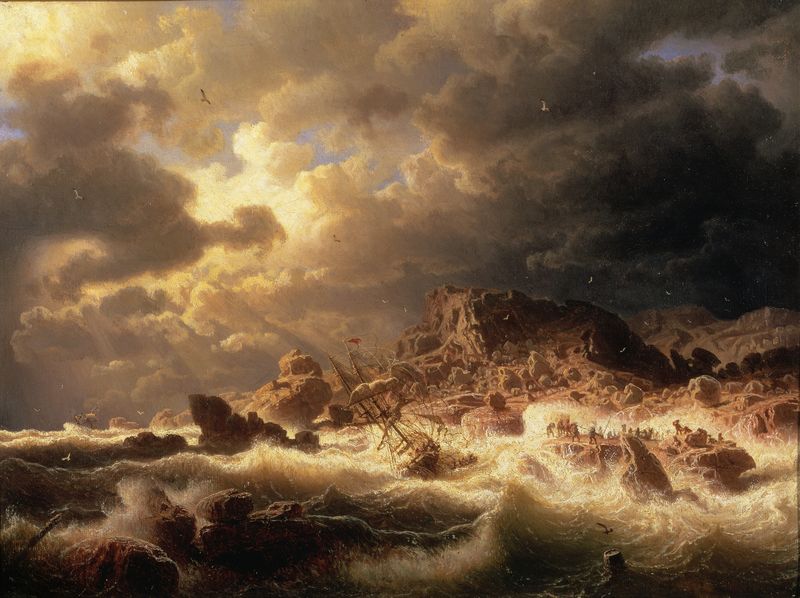
Gale on the Bohuslän Coast
Marcus Larson

Waterfall in Småland
Marcus Larson
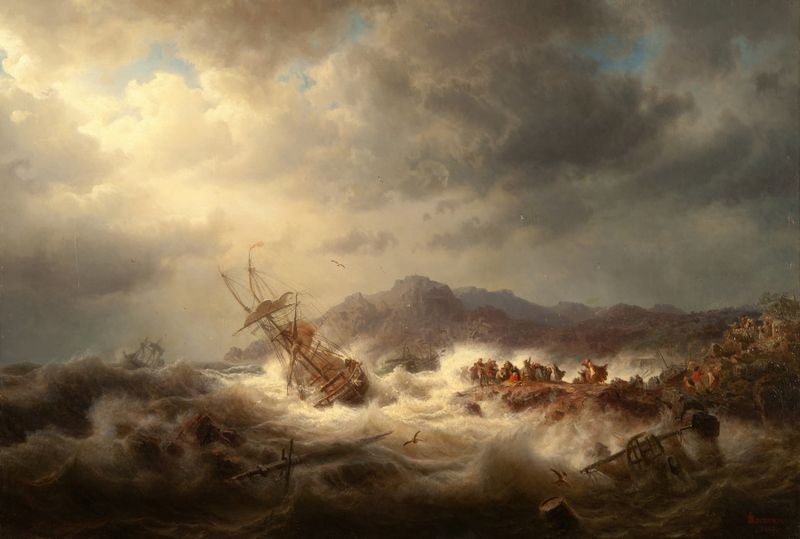
Shipwreck
Marcus Larson
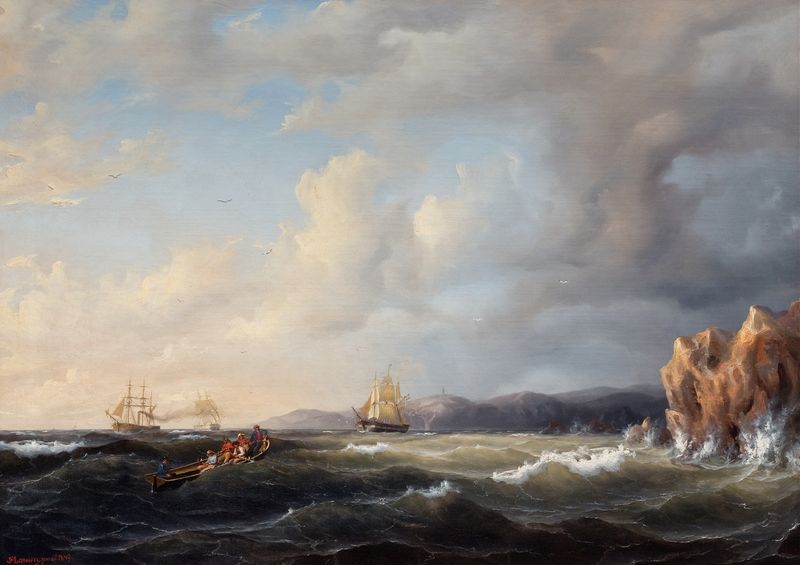
Bark Beating to Windward at Kullaberg
Marcus Larson
Gale on the Bohuslän Coast
Marcus Larson
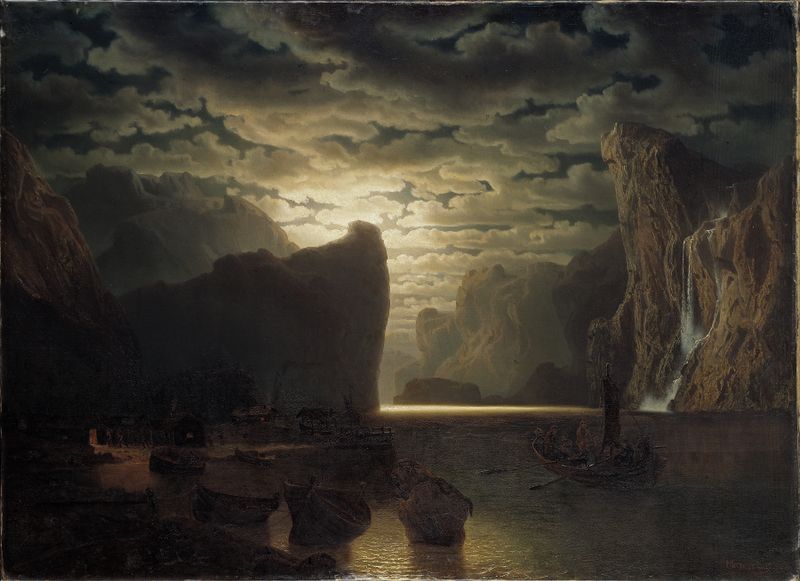
Norwegian Fjord in Moonlight. Motif from the Sogne-Fjord
Marcus Larson

Norwegian Fjord in Moonlight
Marcus Larson

Rocky Landscape with Waterfall
Marcus Larson

Burning Steamer
Marcus Larson

Swedish Lake. Study
Marcus Larson





