
Shipwreck — History & Facts
What secret hides in the quiet of the canvas? An echo of silence lingers, whispering tales of loss and the void left behind. Focus on the still expanse of the sea, where the remnants of a shipwreck emerge, fragmented against a backdrop of soft blues and browns. Notice how the light dances on the water's surface, illuminating the shards of the vessel as if to honor its tragic fate, compelling us to confront the solitude of abandonment. The meticulous brushwork reveals the texture of the waves, a delicate contrast to the jagged wreckage, drawing your eye toward the intricate details that breathe life into the scene. The painting speaks of emptiness, capturing not just the physical remnants of the ship but also the emotional weight of its story.
The calm waters, paradoxically soothing and sorrowful, hint at the loss that has transpired, while the distant horizon suggests both isolation and the potential for renewal. Each element holds significance, from the muted palette that evokes a sense of nostalgia to the absence of human figures, leaving us to ponder the fate of those who once sailed. Marcus Larson painted Shipwreck in 1855, during a period when maritime themes were gaining prominence amid the Romantic movement. Living in Sweden, Larson found inspiration in the dramatic contrasts of nature, reflecting the tumultuous changes in society and art.
This work mirrors his own exploration of emotional landscapes, establishing a poignant connection between human experiences and the vast, mysterious seas.
More Artworks by Marcus Larson
Browse all →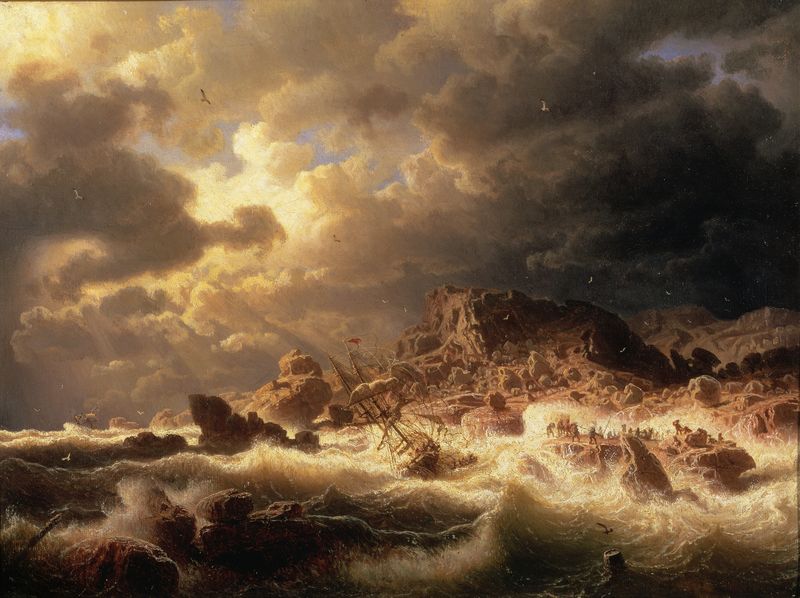
Gale on the Bohuslän Coast
Marcus Larson

Waterfall in Småland
Marcus Larson
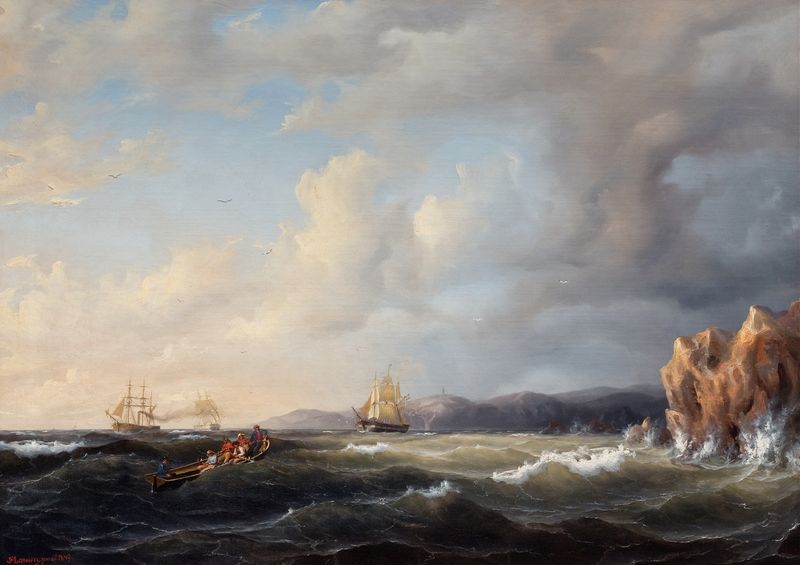
Bark Beating to Windward at Kullaberg
Marcus Larson
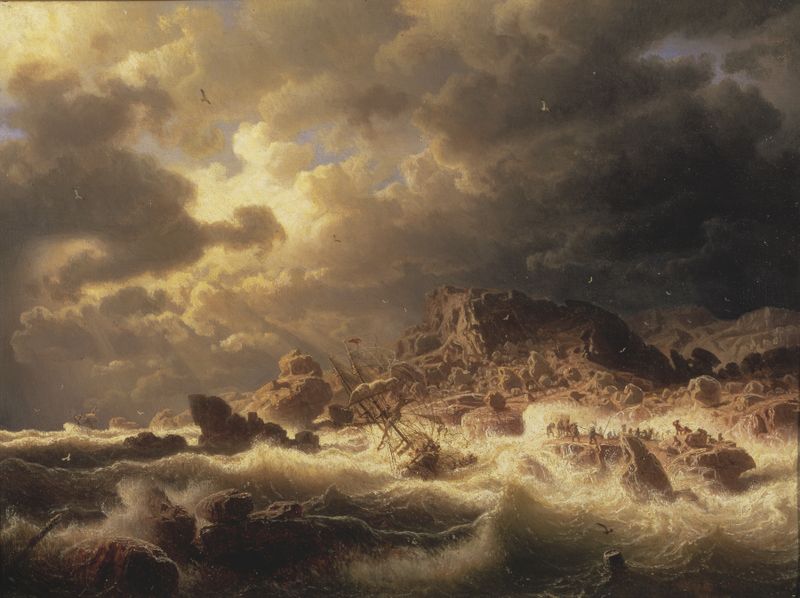
Gale on the Bohuslän Coast
Marcus Larson
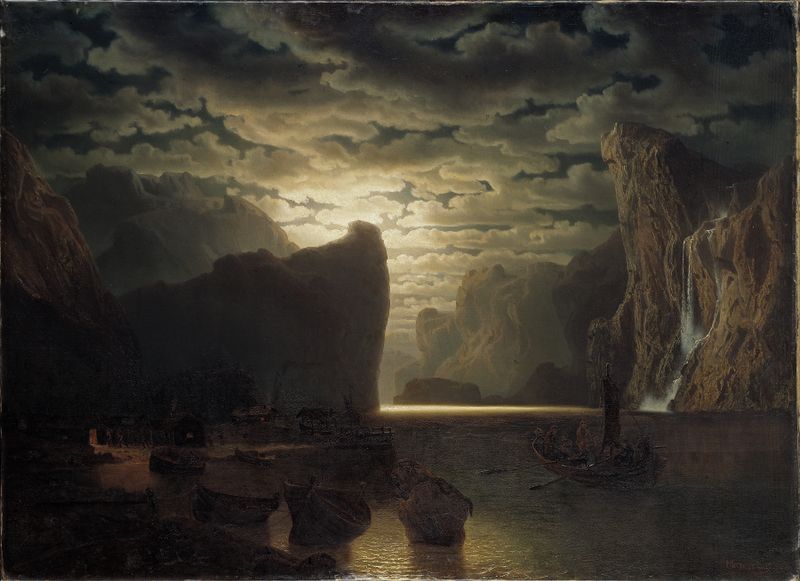
Norwegian Fjord in Moonlight. Motif from the Sogne-Fjord
Marcus Larson

Norwegian Fjord in Moonlight
Marcus Larson

Rocky Landscape with Waterfall
Marcus Larson
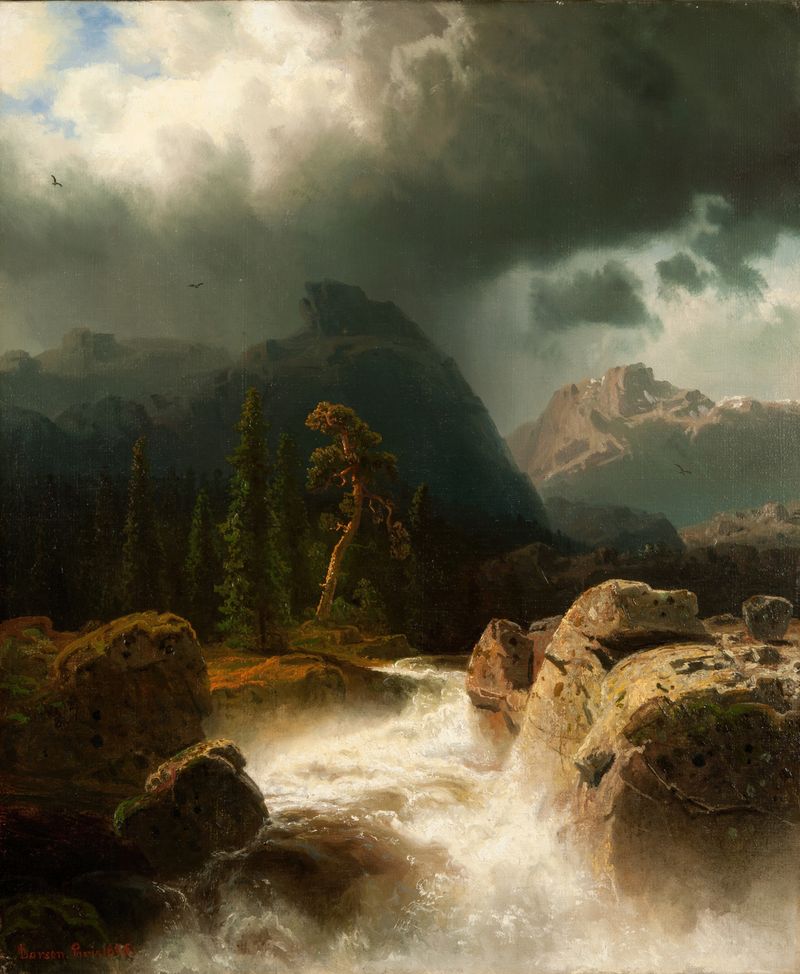
Waterfall
Marcus Larson

Burning Steamer
Marcus Larson

Swedish Lake. Study
Marcus Larson





