
Watering Place on the Waag River — History & Facts
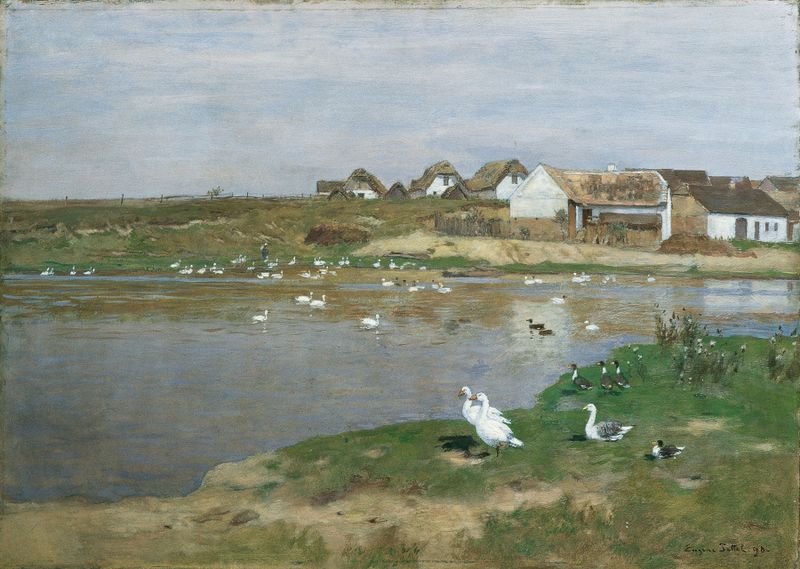
Where does light end, and longing begin? In Watering Place on the Waag River, the boundaries blur, inviting the viewer into a world saturated with quiet yearning. Focus on the luminous waters of the Waag, where the soft ripples reflect a hazy sky, drawing the eye toward the serene figures tending to their tasks. Notice how the dappled sunlight filters through the branches of nearby trees, casting delicate shadows on the ground. The vibrant palette of blues and greens, interspersed with warm earth tones, creates an atmosphere that is both tranquil and alive, urging contemplation of the gentle interactions between humans and nature. The contrast between the stillness of the river and the figures engaged in their labor evokes a sense of connection and nostalgia.
Each gesture, from the reaching hands to the flowing garments, speaks to an innate sense of duty and purpose amidst the beauty of the landscape. The serene expressions on the figures’ faces hint at their inner thoughts, suggesting a longing for something beyond the immediate moment—a desire for harmony, a connection with the world that surrounds them. Eugen Jettel painted this scene in 1872, during a period when he was deeply influenced by the natural beauty of his native Austria. At this time, artistic movements were shifting towards realism, celebrating everyday life and the beauty found in simple moments.
Jettel’s work reflects a burgeoning appreciation for capturing the essence of human experience within nature, a theme that resonated widely among his contemporaries and helped carve his niche in the art world.
More Artworks by Eugen Jettel
Browse all →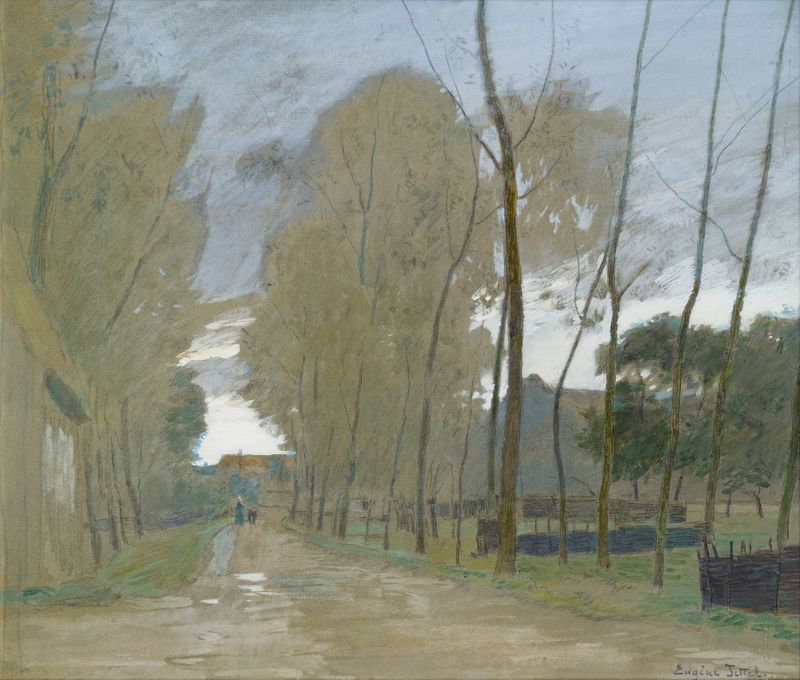
Motiv aus der Bretagne
Eugen Jettel
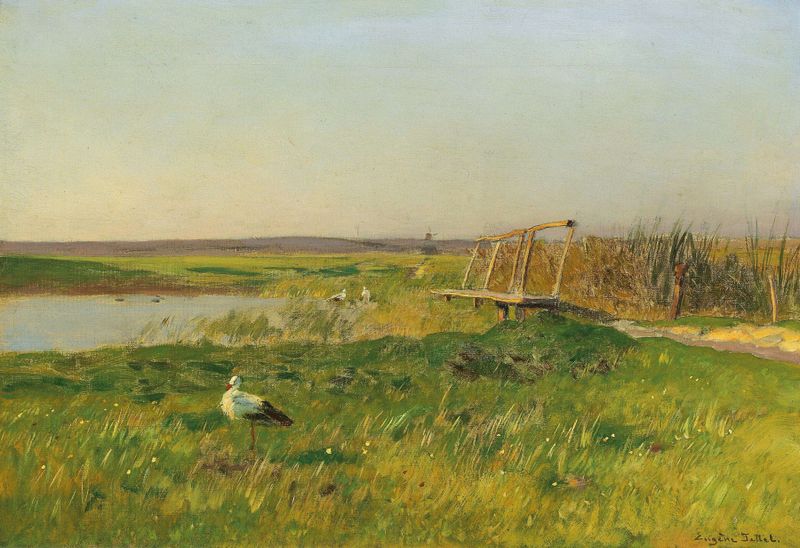
Frühlingslandschaft mit Störchen an einem Weiher
Eugen Jettel

Rinder auf Sommerwiese
Eugen Jettel
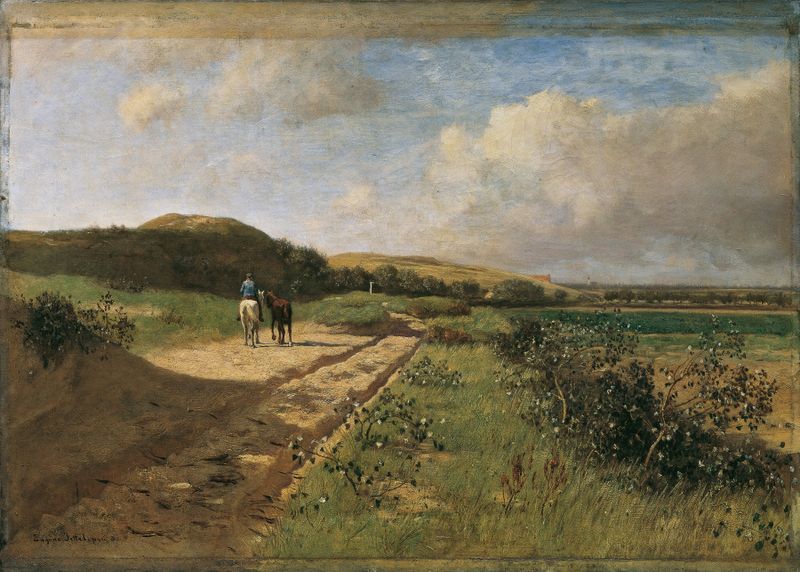
Dünen bei Katwijk
Eugen Jettel
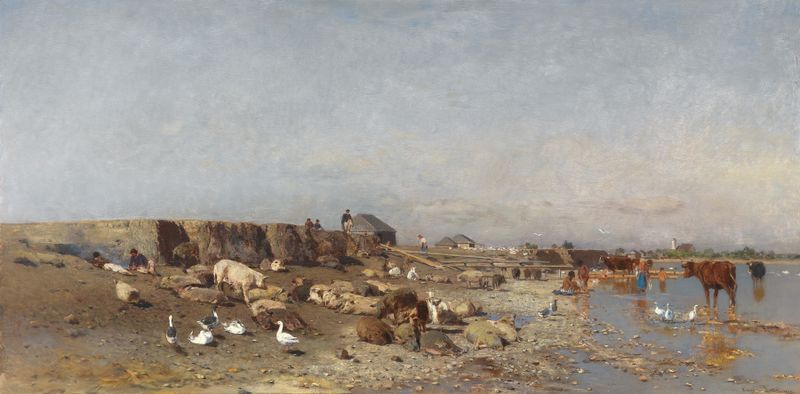
Motiv aus Szered an der Waag
Eugen Jettel
Der Gänseteich in Kotting-Neusiedl
Eugen Jettel

Flusslandschaft Mit Boot
Eugen Jettel

Flusslandschaft mit Kühen
Eugen Jettel

Dorfpartie Strohhütten aus Staatz
Eugen Jettel

Abendlandschaft
Eugen Jettel





