
Watermill Near Amsterdam — History & Facts
What if beauty was never meant to be finished? In Watermill Near Amsterdam, nature and human craftsmanship intertwine, creating a moment suspended in time—a glimpse into a harmonious existence that invites contemplation. Look to the center of the canvas, where the mill stands resolute, its wheel poised for action against the gentle current. Notice the soft strokes of green and blue that envelop the scene, capturing the essence of a tranquil afternoon. The artist employs a delicate balance of light and shadow, illuminating the water’s surface, while deepening the greens of the trees, inviting the viewer to wander into this serene landscape. Beyond its picturesque charm, the painting reflects the tension between civilization and nature.
The watermill, an emblem of human ingenuity, contrasts with the wild beauty surrounding it, urging a reflection on our relationship with the environment. The scattered clouds hint at a fleeting moment, reminding us of the transient nature of beauty, as well as the fleeting endeavors of creation that shape our world. Elias Pieter van Bommel painted this work during a period marked by the Dutch Golden Age, characterized by a flourish of artistic innovation and an appreciation for the natural world. Working in the late 17th century, he was influenced by both classical techniques and the burgeoning realism that defined his contemporaries.
His landscapes exemplify the calm and reflection valued in Dutch art, a testament to a time when the world was being reshaped, both in nature and culture.
More Artworks by Elias Pieter van Bommel
Browse all →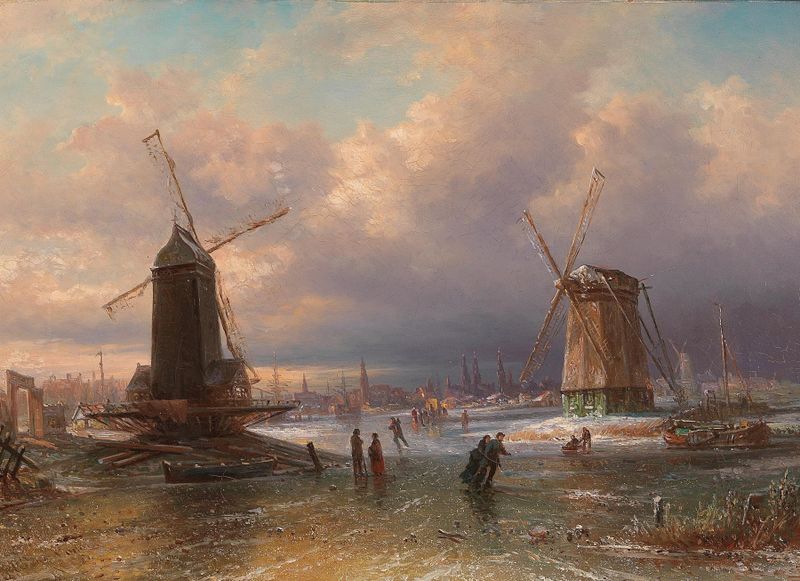
Winter Pleasures on the Ice outside a Dutch Town
Elias Pieter van Bommel
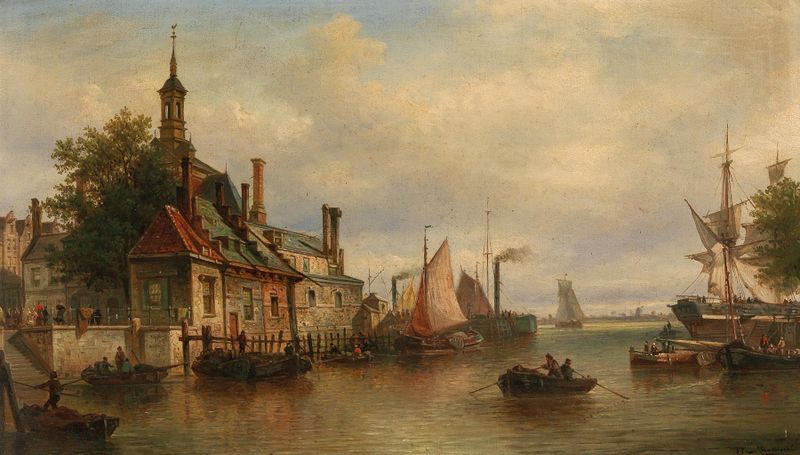
The Old Hanse Gate on the Maas in Rotterdam
Elias Pieter van Bommel

The Singel and Brouwersgracht, Amsterdam
Elias Pieter van Bommel

View from the Nieuwengracht in Amsterdam
Elias Pieter van Bommel
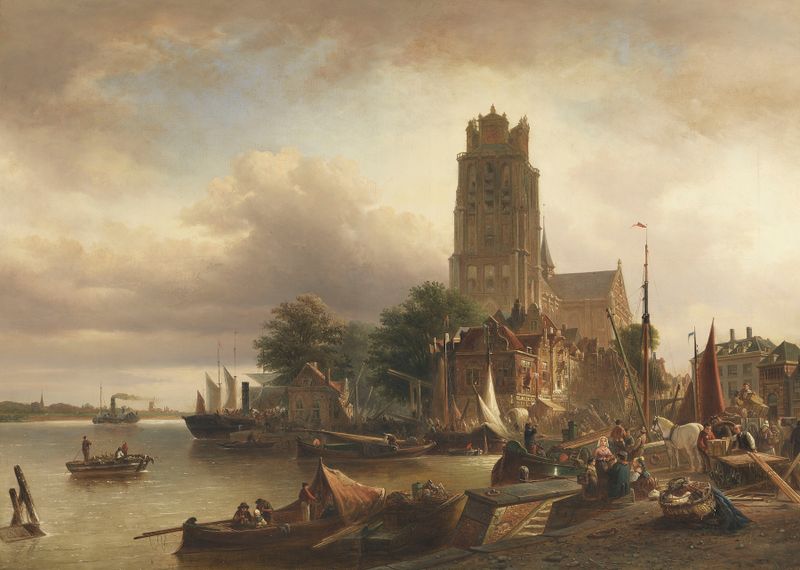
Ansicht von Dordrecht mit der Grote Kerk
Elias Pieter van Bommel
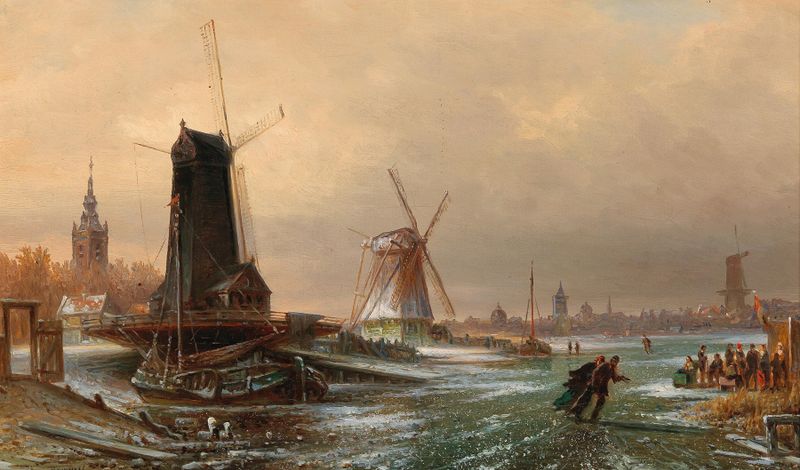
Dutch Sawmill, Water Mill and Flour Mill, near Amsterdam
Elias Pieter van Bommel
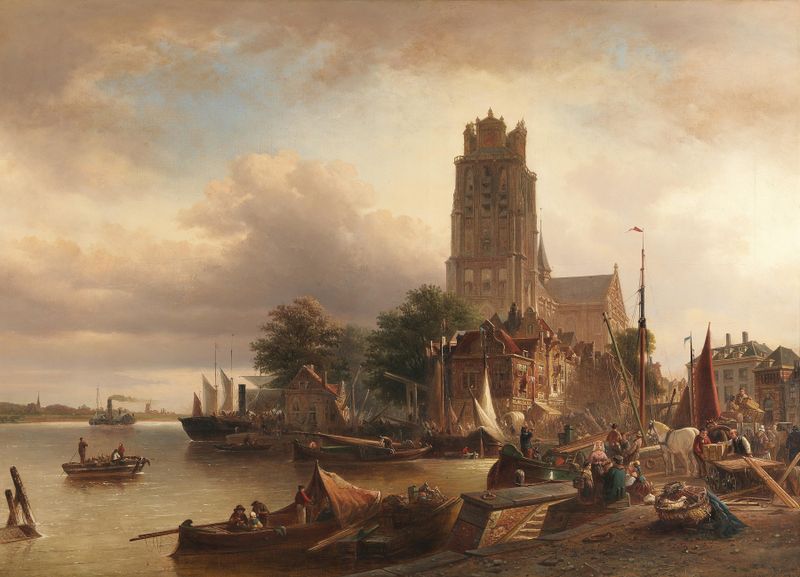
Dordrecht
Elias Pieter van Bommel

Motif Of Dordrecht
Elias Pieter van Bommel

A Winter View of the City of Dordrecht
Elias Pieter van Bommel
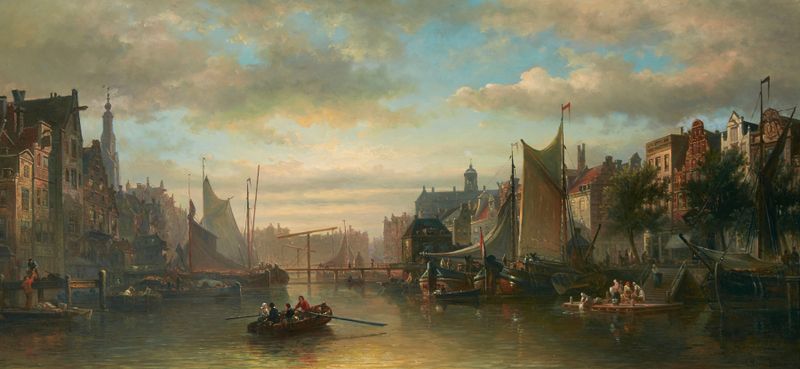
A view of Amsterdam
Elias Pieter van Bommel





