Weissenkirchen — History & Facts
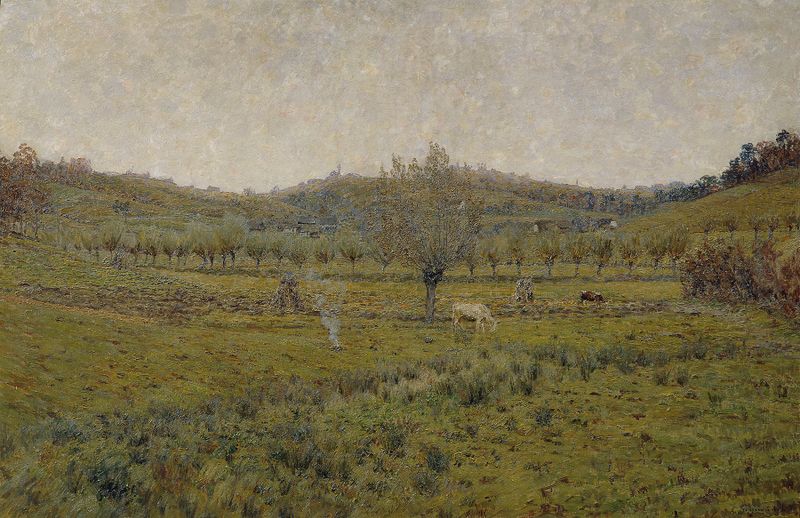
In its stillness, it invites contemplation of mortality, a poignant reminder of the fragile nature of existence. Focus on the sweeping landscape that dominates the scene, where rolling hills cradle the quaint village of Weissenkirchen. The careful brushstrokes create a wave of greens and browns, interspersed with flecks of vibrant color from the houses that seem to breathe life into the earth. Notice how the light spills across the canvas, illuminating the rooftops and casting shadows that stretch towards the viewer, drawing one into a conversation that feels both serene and urgent. Delve deeper into the emotional undertones of this pastoral setting.
The juxtaposition of the lively village against the backdrop of the expansive, indifferent hills speaks to the tension between human life and nature's vastness. Small details, like the winding river cutting through the landscape, evoke a sense of time flowing relentlessly, a metaphor for the inevitable passage of life. The viewer cannot help but feel an undercurrent of melancholy as the scene whispers of both tranquility and the impending reality of mortality. In 1911, Ludwig Sigmundt painted this work during a period of introspection and transition in his artistic career.
Living in Austria, he was influenced by the shifting currents of modernism and the lingering echoes of Romanticism. As Europe stood on the brink of upheaval, the artist sought solace in the landscapes of his homeland, capturing both beauty and an awareness of life’s transience in every stroke.