Welsh Mountain Stream — History & Facts
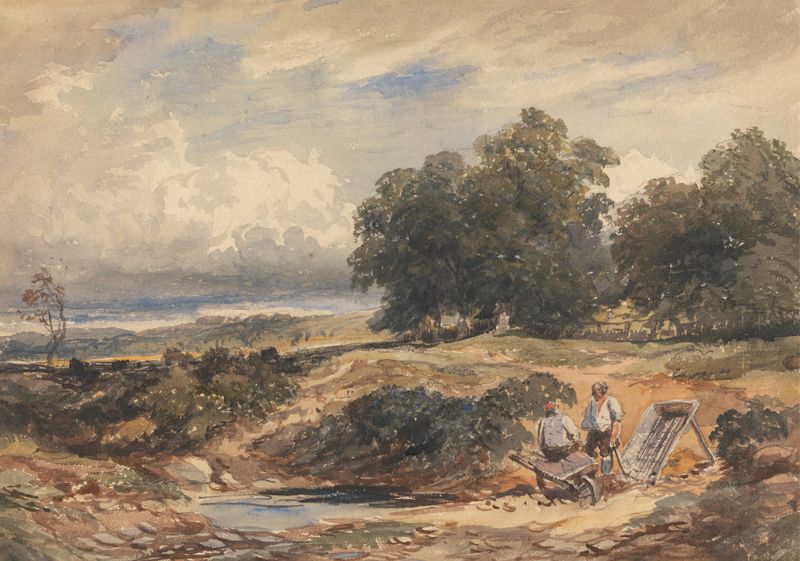
In the quiet embrace of nature, where water meets earth, the truth of life’s transience is revealed through the vivid strokes of a master’s hand. Look to the left, where the meandering stream captures light, reflecting the sky in shimmering blues and greens. Notice how the delicate interplay of light and shadow reveals the artist's meticulous technique; swift brushwork conveys the motion of water, while the surrounding foliage, rendered in rich, earthy tones, grounds the scene in tranquil reality. The composition draws the eye in and invites a moment of pause, as though one could step into the serene landscape. In this work, the contrast between the rushing stream and the stillness of the surrounding trees invites introspection, evoking a sense of both movement and peace.
Hidden within the vibrant palette are themes of renewal and the passage of time, as the flowing water symbolizes life’s journey while the solid rocks stand testament to endurance. Each detail, from the glint on the surface of the water to the lush greenery, speaks to the harmony between nature's chaos and its stillness. In 1850, David Cox Jnr painted this piece during a time when Romanticism was at its peak, championing the beauty of nature and the emotional experience it evokes. Living in England, he sought to capture the essence of the Welsh landscape, reflecting both personal and collective revelations of the sublime in the natural world.
This was a period of artistic exploration, where the boundaries between realism and emotional expression blurred, influencing the trajectory of landscape painting.