Wendelstein — History & Facts
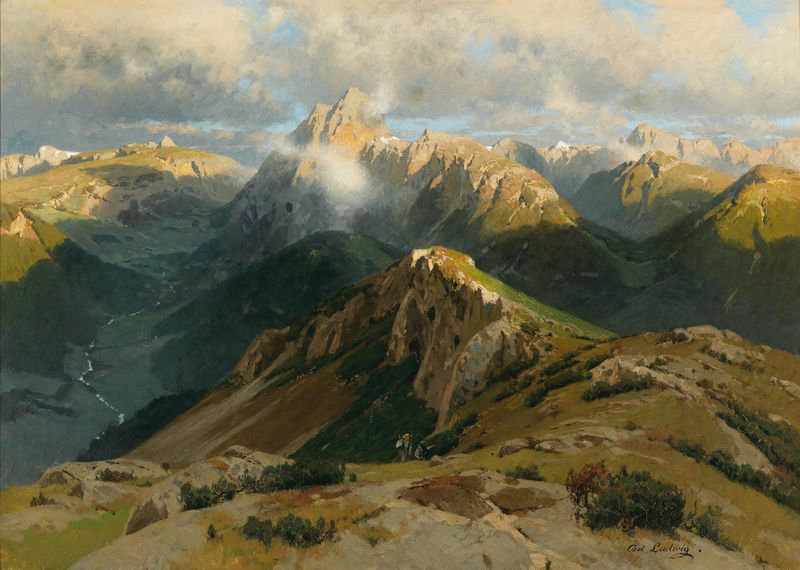
In the quiet spaces of life, loss lingers, waiting for its moment to be recognized. Look to the top left corner — notice the gentle cascade of blues and greens that embrace the mountains. The vibrant hues contrast against the muted pastels of the foreground, drawing your eye toward the majestic peaks of Wendelstein. The interplay of light and shadow brings depth, inviting contemplation of the rugged terrain beneath a vast sky that seems to breathe with emotion.
Each brushstroke captures not just the physical landscape, but the essence of solitude embedded within it. The painting evokes a tension between the grandeur of nature and the intimate sorrow of human experience. The distant mountains, although stunning, appear isolated, hinting at a yearning for connection and understanding. The gentle slopes may symbolize the journey of loss — an ascent that feels both familiar and daunting.
The subtle transitions in color echo the complexities of grief, conveying a narrative that resonates on a personal level, even amidst the splendor of the scene. In 1896, while creating this work, the artist was profoundly influenced by the changing tides of the art world. Emerging from a period of academic rigidity, he sought to capture nature’s raw beauty through an impressionistic lens. This was a time of personal reflection for him, marked by the loss of loved ones and the evolving relationship between humanity and the natural environment.
The mountains of Wendelstein became more than a subject; they served as a canvas for his introspection and a testament to the interplay of loss and beauty.