
West of Vienna — History & Facts
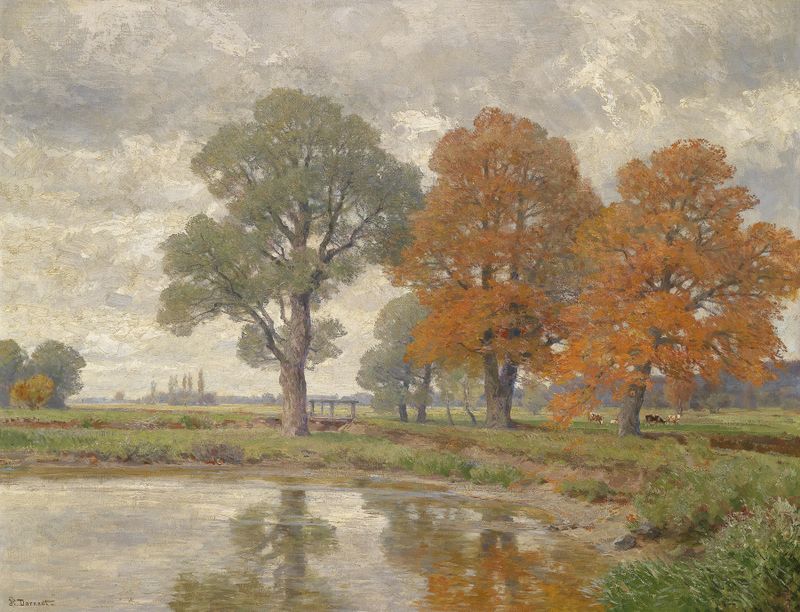
Could beauty survive in a century of chaos? The answer lies in the delicate brushstrokes and vivid palettes that echo both vibrancy and vulnerability, as if whispering the fragility of existence itself. Look to the canvas's left side, where swirling clouds cradle a horizon kissed by the glow of a sinking sun. The warm hues of orange and gold meld into the cool blues, creating a dichotomy that captures the eye. Notice how the composition draws your gaze outward, leading you through a landscape that feels both expansive and intimate.
The fine details in the foliage contrast sharply with the softness of the sky, suggesting the coexistence of strength and delicacy that permeates the piece. Within this juxtaposition lies a profound commentary on the human condition. The tranquility of the natural world stands in stark contrast to the chaos of life beyond the frame. Each brushstroke tells a story of resilience, as the landscape endures despite the inevitable turbulence of time.
This interplay of light and shadow serves as a reminder that beauty, while fleeting, can flourish even in uncertain moments. During the time West of Vienna was created, Darnaut navigated a shifting landscape of artistic styles and personal challenges. His work emerged in an era marked by great upheaval, where tradition and modernity clashed, and artists sought new ways to depict reality. Amidst this turmoil, he found solace in capturing the allure of nature, reflecting both the chaos surrounding him and his own inner journey as an artist.
More Artworks by Hugo Darnaut
Browse all →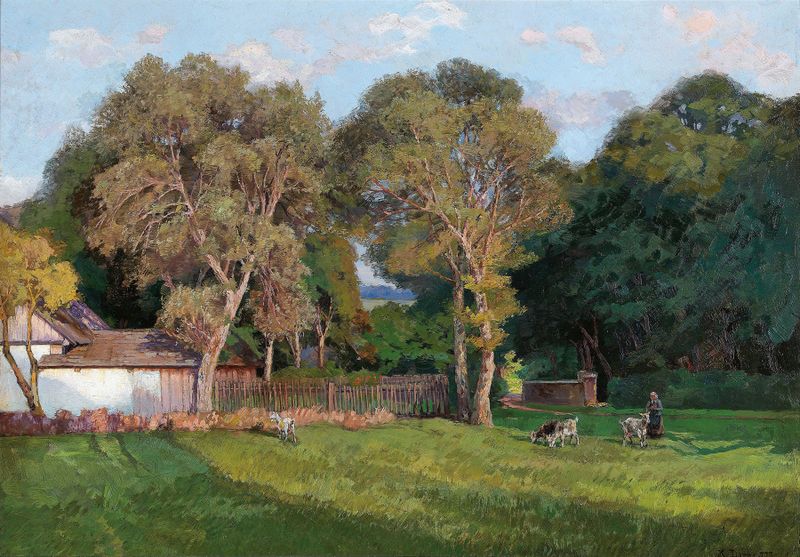
Aus dem Wienerwald
Hugo Darnaut
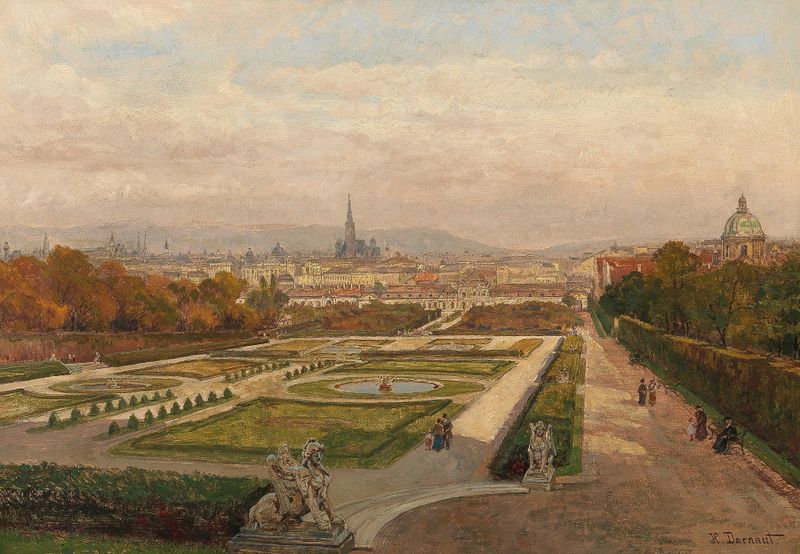
Blick vom Belvedere auf Wien
Hugo Darnaut

Motiv aus Plankenberg
Hugo Darnaut

In einem Wiener Garten (II., Praterstraße 60)
Hugo Darnaut

A Scene at Dusk in Late Autumn
Hugo Darnaut
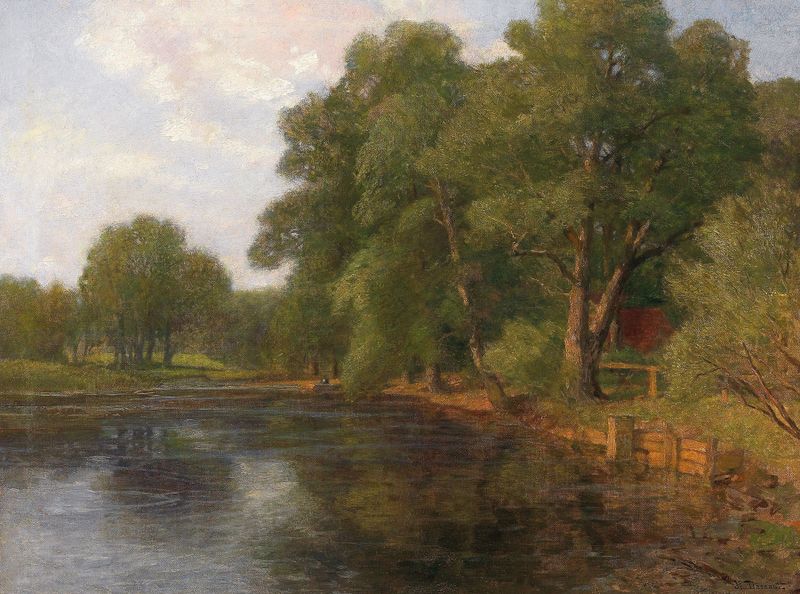
Motiv bei Plankenberg
Hugo Darnaut

Die Ruine Starhemberg im Piestingtal
Hugo Darnaut
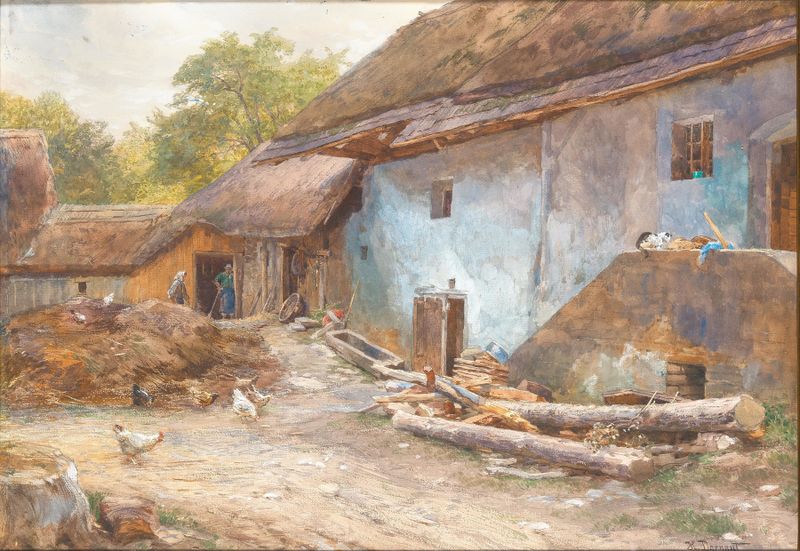
Niederösterreichischer Bauernhof
Hugo Darnaut

River Landscape with Small Herd of Cows and a Village in the background
Hugo Darnaut
Spätherbsttag
Hugo Darnaut





