
Westminster Hall — History & Facts
In a world where truths often blur, innocence finds a voice within the painted frame, inviting us to explore its depths. Look to the expansive foreground, where intricate stonework of Westminster Hall commands attention. Each meticulous detail draws the viewer's gaze toward the towering arches and the play of light cascading through the historic windows. Notice how the delicate hues shift across the surface—muted grays and warm ochres intertwine, creating a harmonious balance that emphasizes the structure's majesty. Yet, amidst this architectural grandeur lies an undercurrent of vulnerability.
The hall, grand yet hauntingly empty, evokes a sense of solitude, inviting contemplation about the stories it has witnessed. The interplay of shadows and light suggests both enlightenment and obscurity, highlighting the duality of history—the weight of the past coupled with the fragility of memory. Each crevice seems to murmur secrets of innocence lost and the passage of time. George Hawkins painted this evocative piece during a period when he sought to capture the spirit of iconic places in England.
Working in the late 19th century, he became known for his architectural renderings, thriving amid the arts' embrace of realism and the burgeoning interest in heritage. This work exemplifies the artist's dedication to revealing the emotional resonance embedded within historical sites, a reflection of his own explorations of time and memory.
More Artworks by George Hawkins
Browse all →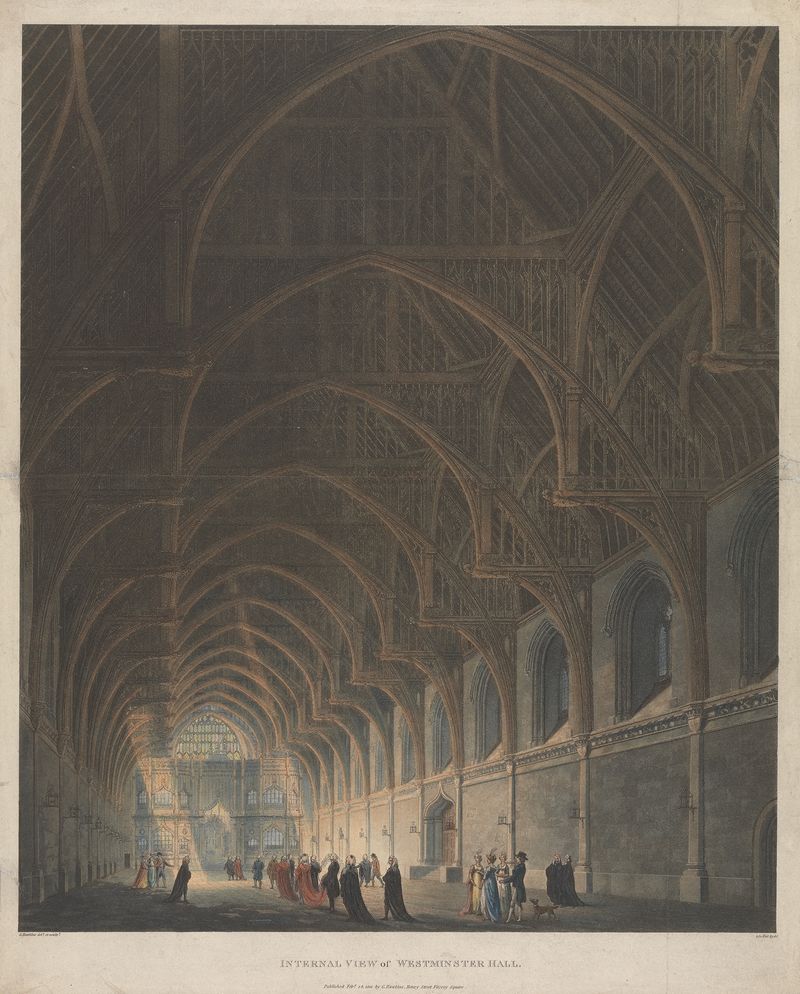
More Architecture Art
Browse all →
The statue of Liberty
Frédéric Auguste Bartholdi

View of Houses in Delft, Known as ‘The Little Street’
Johannes Vermeer

View of Houses in Delft, Known as ‘The Little Street’
Johannes Vermeer

The Cathedral in Rouen. The portal, Grey Weather
Claude Monet

The yellow house
Vincent van Gogh

The Church in Auvers-sur-Oise, View from the Chevet
Vincent van Gogh