
Trafalgar Square — History & Facts
Could beauty survive in a century of chaos? As the pulse of modernity quickens, the quest for balance becomes an act of defiance, a silent rebellion against the relentless tide of tumult. Focus on the center of the canvas where the iconic column rises majestically, a beacon of strength amidst the bustling square. The artist employs a muted palette, allowing softer tones of grey and blue to interplay with warm hints of ochre. This careful color choice evokes a sense of tranquility, drawing the eye to the detailed figures below who navigate their lives around the monumental structure.
Notice how the delicate brushstrokes in the foreground contrast with the more rigid lines of the architecture, creating a dynamic tension that speaks to the chaos of urban life. Hidden within the layers of this bustling scene lies an exploration of balance — the juxtaposition of human life against an enduring symbol of history. The scattered figures represent diverse narratives, each absorbed in their moment, yet all are unified under the watchful gaze of the column. This contrast between the fleeting and the eternal invites reflection on the nature of existence; while chaos reigns around them, the beauty of the square remains steadfast and untouched. In the absence of a specific date, George Hawkins created Trafalgar Square during a period when artists were increasingly drawn to the urban landscape, capturing the vibrancy and struggles of modern life.
Hawkins, influenced by the changing dynamics of post-war society, sought to convey this balance between beauty and chaos, asserting that even in the most tumultuous times, art can find a place of serene reflection.
More Artworks by George Hawkins
Browse all →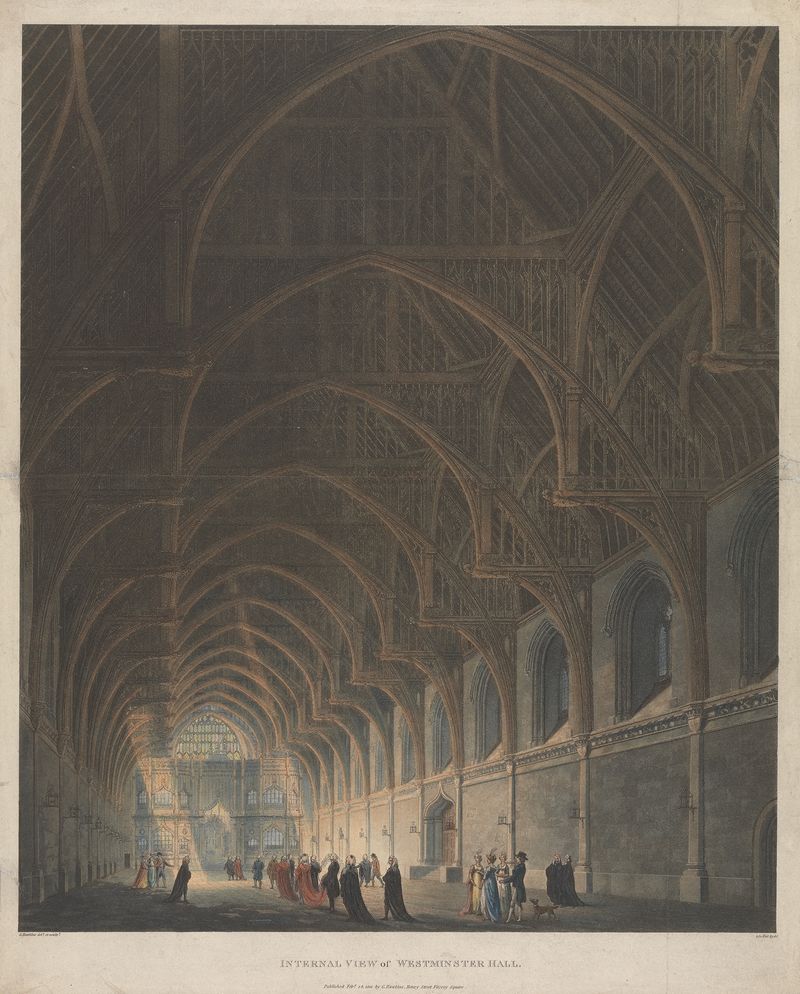
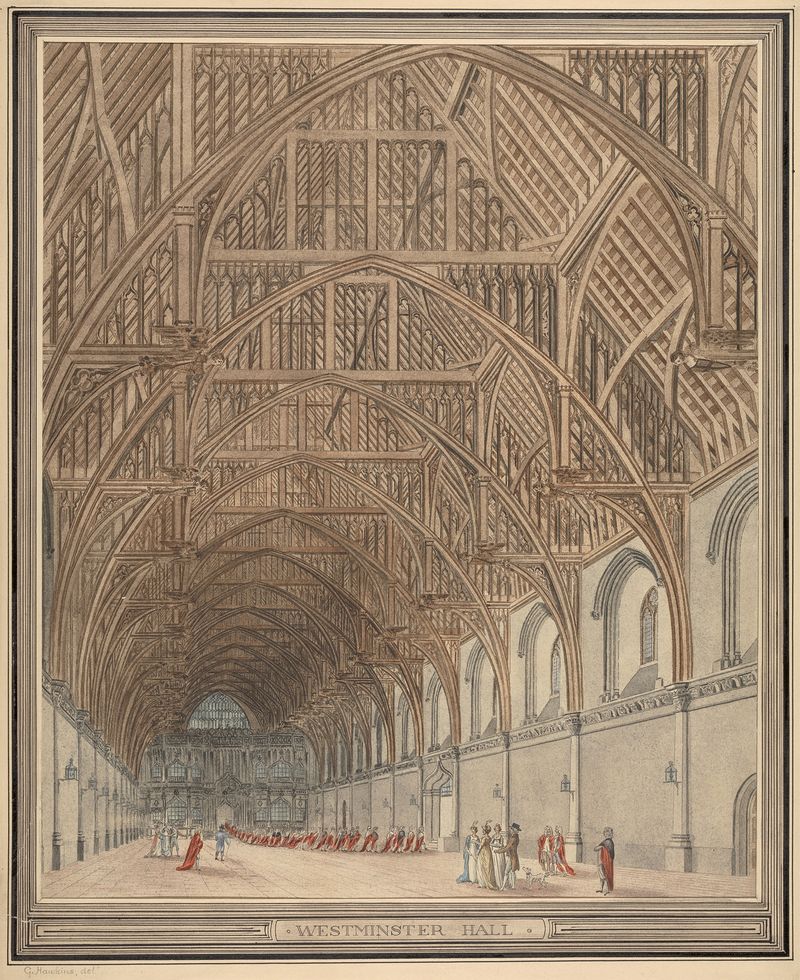
More Architecture Art
Browse all →
The statue of Liberty
Frédéric Auguste Bartholdi

View of Houses in Delft, Known as ‘The Little Street’
Johannes Vermeer

View of Houses in Delft, Known as ‘The Little Street’
Johannes Vermeer

The Cathedral in Rouen. The portal, Grey Weather
Claude Monet

The yellow house
Vincent van Gogh

The Church in Auvers-sur-Oise, View from the Chevet
Vincent van Gogh