Where the Clouds Love to Rest — History & Facts
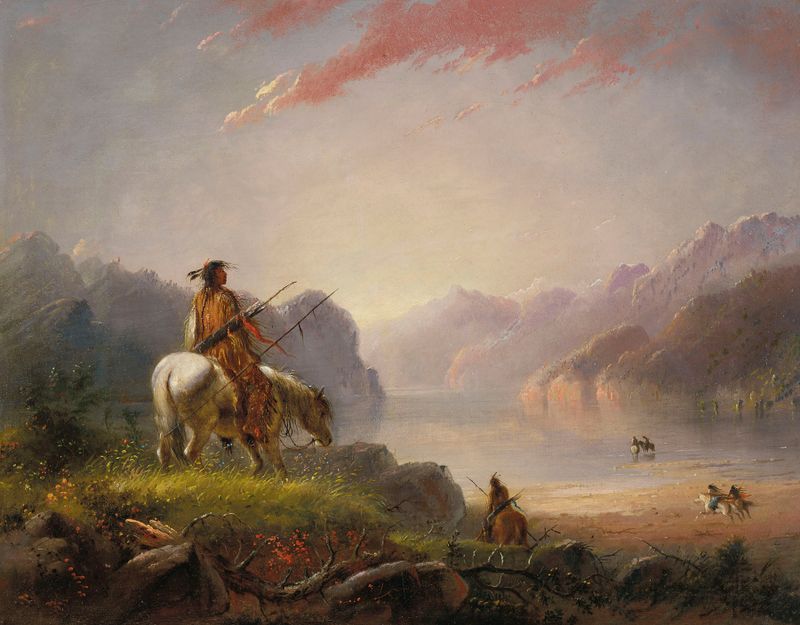
Where does light end, and longing begin? In Where the Clouds Love to Rest, a delicate interplay of landscape and emotion invites viewers to reflect on the beauty of revelation. Look to the center of the canvas, where rolling hills cradle a tranquil lake, its surface shimmering under a soft, golden light. The artist employs a gentle palette of blues and greens, punctuated by the luminous whites of the clouds, which seem to hover as if caught in an eternal moment of rest. Notice how the skillful brushwork blurs the edges of the clouds, creating an ethereal quality that beckons the viewer deeper into this dreamlike setting. The composition speaks not only of nature's splendor but also of the dichotomy between stillness and the passing of time.
The fluid motion of the clouds contrasts sharply with the serene, stagnant water below, suggesting an underlying tension between the desire for permanence and the inevitability of change. The distant mountains loom, embodying the weight of unfulfilled dreams, while the sunlight casts a warm glow, hinting at the promise of new beginnings. In the mid-19th century, during which this piece was created, Miller was deeply influenced by the romantic ideals of the American West. Having traveled to Wyoming and other expansive landscapes, he sought to capture the sublime beauty of the terrain during an era characterized by exploration and a longing for connection with nature.
This painting reflects not just the physical landscapes he encountered but also the emotional landscapes of a burgeoning national identity.