White Mountains from Fernald’s Hill — History & Facts
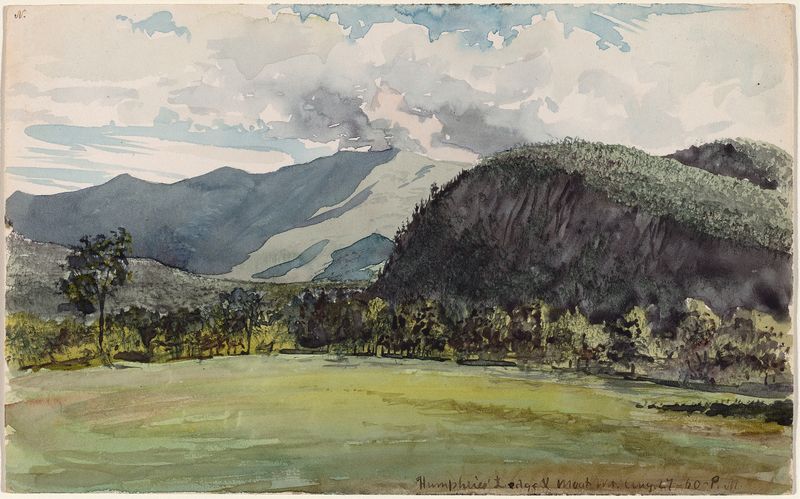
In White Mountains from Fernald’s Hill, tranquility envelops the viewer, yet beneath the surface, a profound sadness resonates. Look to the foreground where gentle hills brush against the horizon, their soft curves inviting exploration. The meticulous layering of greens and warm earth tones gives a palpable sense of depth, leading your gaze upward to the majestic peaks. Notice how the sunlight bathes the mountains in a golden hue, illuminating their rugged textures, while shadows whisper of the unseen crevices and valleys that hold secrets of the past.
The composition balances serenity and scale, as the cool blue sky provides a stark contrast to the earth below, drawing you into an intimate dialogue with nature. Yet, the beauty of the landscape is tinged with an underlying tension. The stillness of the scene invites reflection, leading us to ponder the weight of loss that may linger in the artist’s heart. The vibrancy of color could be seen as a mask, hiding sorrow beneath a serene facade.
This dichotomy evokes a recognition of life's fleeting moments—the way joy and grief intertwine, revealing the fragility of existence in the natural world. In 1860, Charles de Wolf Brownell painted this work amidst a period of personal turmoil and change; his exploration of American landscapes was intensifying as the art world began to embrace the Romantic ideals. As he rendered the beauty of the White Mountains, he was simultaneously navigating his own grief, reflecting the complexities of a life marked by both aspiration and loss.