
Wien Karlskirche — History & Facts
In the quiet expanse of Wien Karlskirche, a void emerges that speaks volumes, inviting reflection on the passage of history and the weight of existence. Focus your gaze on the intricate dome of the church, which commands the center of the composition. Notice how the soft play of light imbues the stone with ethereal warmth, contrasting with the cool shadows that lurk in the periphery. The meticulous detail of the façade, adorned with classical elements, draws you into a world that balances both reverence and grandiosity, evoking the sacredness of the space. As you delve deeper, the subtle juxtaposition between the architectural solidity and the ephemeral play of light reveals a dialogue between permanence and transience.
Look closely at the figures in the foreground, perhaps lost in their own reflections, embodying the human experience of being drawn to the majestic yet feeling dwarfed by it. This emotional tension encapsulates the essence of longing for connection amid vastness, echoing the void that each individual must confront. Created during an era of artistic exploration, Zajicek captured Wien Karlskirche amid the bustling cultural landscape of 19th-century Vienna. The artist, while not widely recognized in his lifetime, immersed himself in the architectural heritage of the city, reflecting its rich history and evolving identity.
It was a time when artists were beginning to embrace realism, yet Zajicek’s work offers a distinct perspective, reminding us of the delicate balance between the monumental and the intimate.
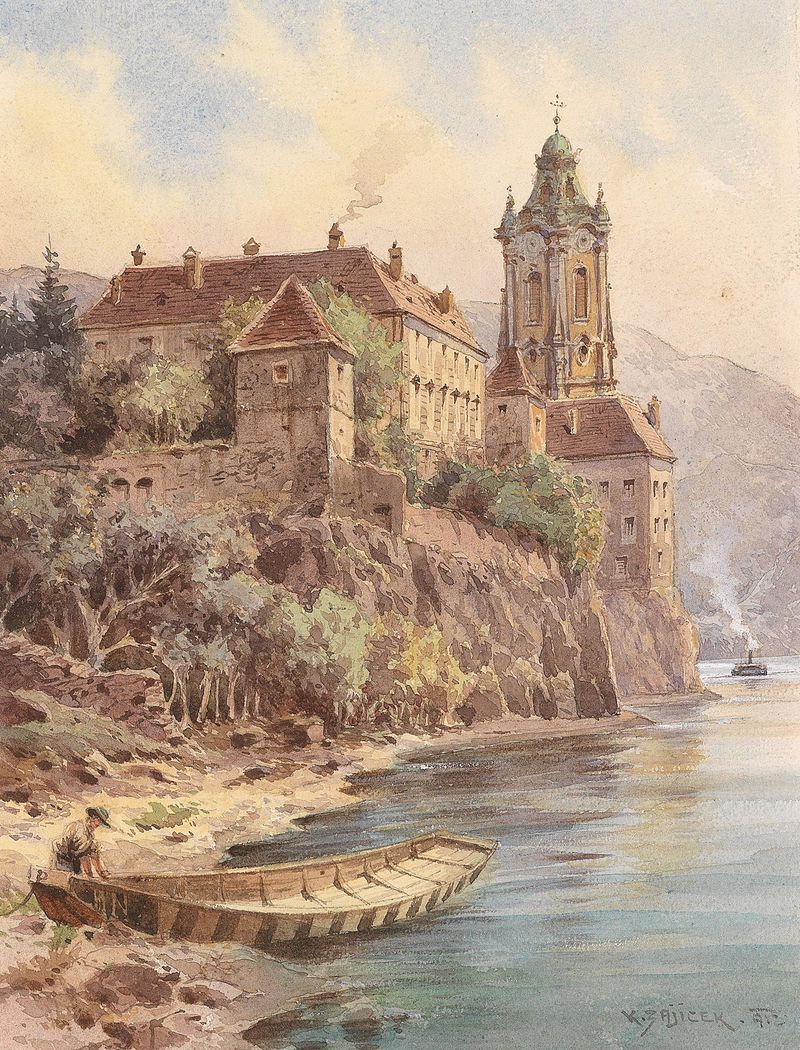
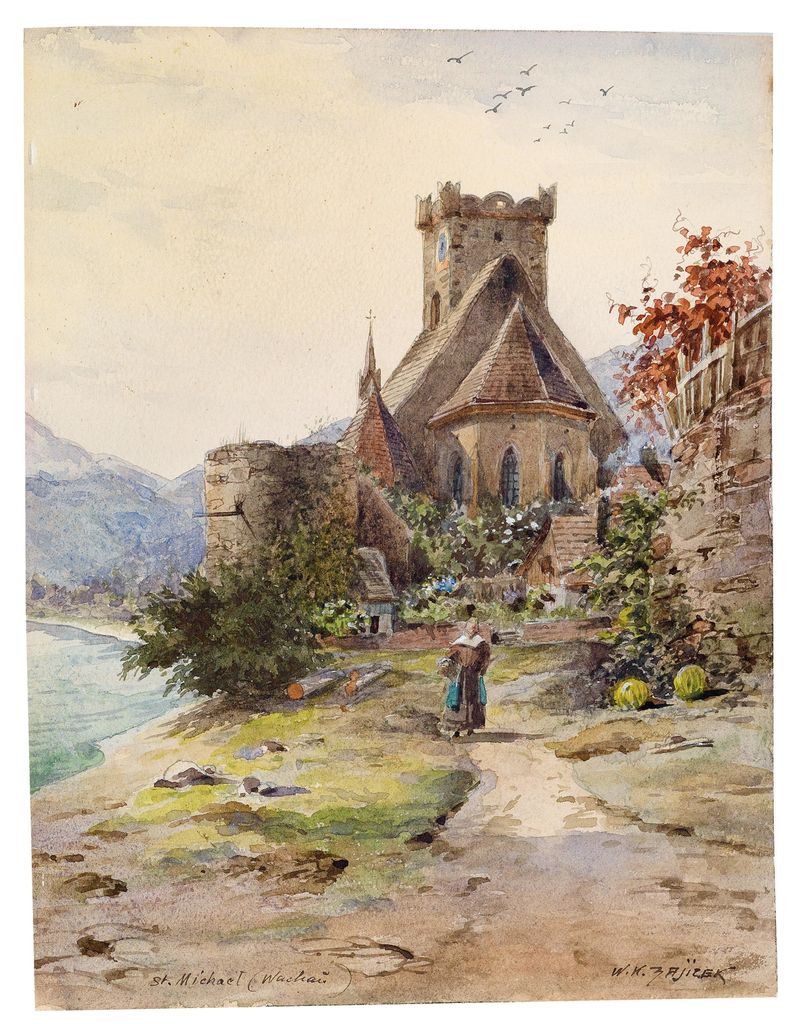
More Artworks by Carl Wenzel Zajicek
Browse all →

More Architecture Art
Browse all →
The statue of Liberty
Frédéric Auguste Bartholdi

View of Houses in Delft, Known as ‘The Little Street’
Johannes Vermeer

View of Houses in Delft, Known as ‘The Little Street’
Johannes Vermeer

The Cathedral in Rouen. The portal, Grey Weather
Claude Monet

The yellow house
Vincent van Gogh

The Church in Auvers-sur-Oise, View from the Chevet
Vincent van Gogh