Willows — History & Facts
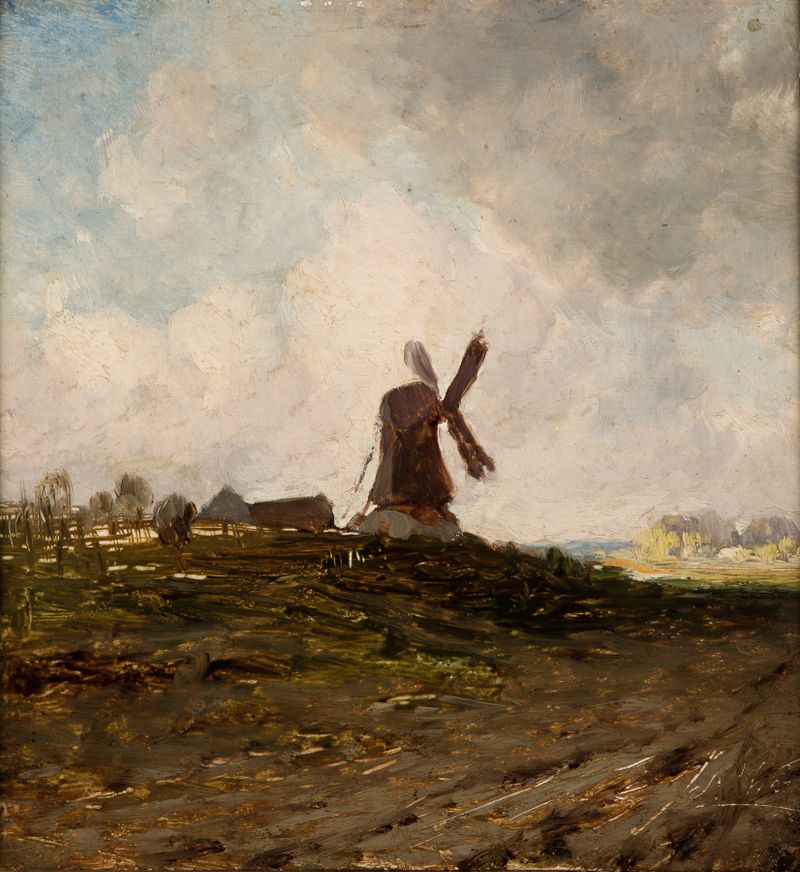
What secret hides in the quiet of the canvas? In Willows, the brushstrokes whisper of life’s transience, inviting us to reflect on the delicate balance between existence and the inevitability of what lies beyond. Focus first on the willow trees, their drooping branches cascading down like a curtain of green. Notice how the play of light dances upon the leaves, creating a mesmerizing pattern that flickers between shadow and illumination. The soft palette of greens and earthy browns draws the eye seamlessly across the scene, evoking a sense of serene tranquility that belies the underlying tension of mortality present within the natural world. Yet, hidden amongst this calm is a profound message.
The willows, often symbols of grief and remembrance, seem to entreat us to contemplate the fragility of life. The juxtaposition of their graceful forms against the muted backdrop hints at a deeper reflection on the passage of time—each branch a reminder of moments that slip away, each leaf a testament to what is lost but also cherished. The painting holds a mirror to our own experiences of love, loss, and the quiet acceptance of life's dualities. Antoni Kozakiewicz painted Willows in 1890 during a period marked by his exploration of natural forms and the emotional resonance they evoke.
Living in Poland, he was influenced by the burgeoning Symbolist movement, which sought to delve into the psychological depth of subjects. This work reflects his ability to intertwine the beauty of nature with profound existential themes, resonating with a society grappling with change and the passage of time.