Windmills in Schiedam — History & Facts
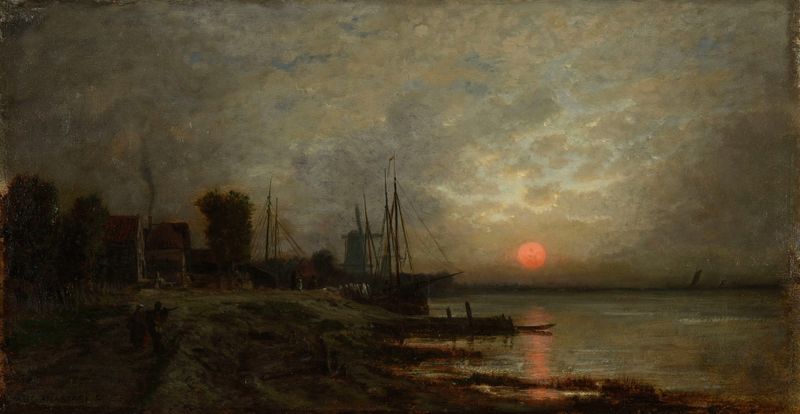
In examining the tranquil beauty of this work, one is drawn into the essence of truth captured within its strokes. Look to the left, where the towering windmill dominates the composition, its sails poised against a vivid sky streaked with warm oranges and cool blues. The artist’s meticulous attention to detail is evident in the textured brushwork of the mill’s wooden structure, inviting the viewer to appreciate the interplay of light and shadow. The vibrant hues of the landscape breathe life into the scene, creating an atmosphere that juxtaposes the industriousness of the windmill with the serene quality of nature surrounding it. Delve deeper, and you may uncover subtle narratives embedded in the scene.
The windmill stands as a symbol of resilience and human endeavor amidst the vastness of the landscape, while the gentle ripples in the water reflect moments of introspection. The contrasting elements of industry and nature provoke contemplation on the delicate balance between progress and preservation, revealing a quiet tension that resonates throughout the painting. In 1867, while residing in France, the artist painted this work during a period marked by significant transformation in both his personal life and the art world at large. The mid-19th century saw a burgeoning interest in realism, and Windmills in Schiedam reflects this shift, capturing not just a scene but a deeper commentary on the era's evolving relationship with nature and technology.