Winter im Rosenthal bei Kapellen (Steiermark) mit altgotischer Kirche — History & Facts
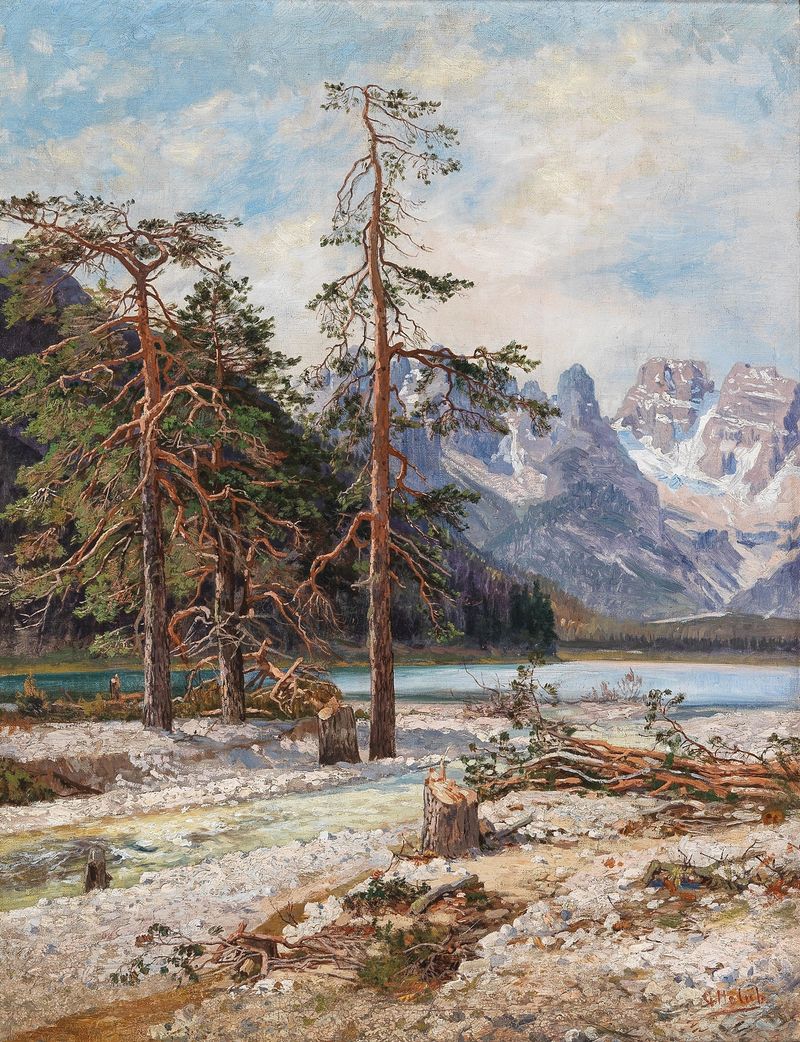
In the quiet stillness of winter, fear lurks beneath the surface, shrouded in the beauty of nature's frosty embrace. It is within this tension that we find ourselves drawn into the heart of the painting, witnessing the delicate interplay between serenity and apprehension. Look to the left at the ancient Gothic church, its spires reaching skyward, seemingly defiant against the weight of snow that clings to its stones. The bright whites and icy blues dominate the scene, casting an ethereal glow that contrasts with the darker, more muted tones of the landscape.
Notice how the soft strokes create a sense of depth while the sweeping sky wraps around the church, as if encasing it in a shroud of winter's breath. The composition leads the eye toward the horizon, where the impending twilight hints at the encroaching shadows of nightfall. Yet, amidst the serene beauty lies an undercurrent of unease. The church, a symbol of faith and refuge, stands alone, isolated in its winter garb, suggesting a solitude that echoes the fear of abandonment.
The coldness of the scene seeps into the viewer's bones, evoking the anxiety of the harsh season yet inviting reflection on the resilience found in quiet moments. The juxtaposition of the stark landscape with the warm, inviting structure creates a silent dialogue about hope and despair. Georg Holub painted Winter im Rosenthal bei Kapellen (Steiermark) mit altgotischer Kirche in 1915, during a time marked by the upheaval of World War I. Living in Austria, Holub was influenced by the shifting tides of society and the emotional landscape of his day.
The war loomed large, shaping both personal and collective fears, and as such, his work reflects a poignant meditation on the delicate balance between beauty and vulnerability in life.