Winter Landscape — History & Facts
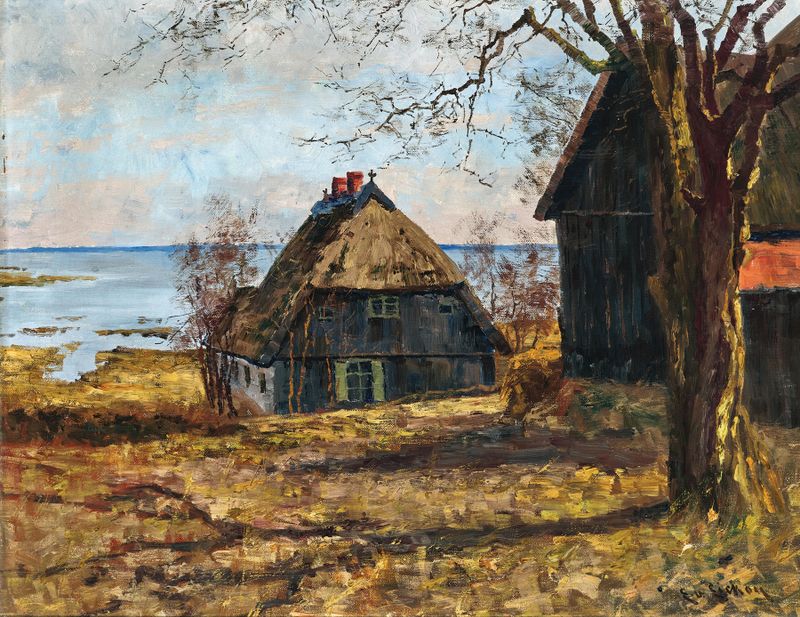
The weight of solitude hangs thick in the air, beckoning the viewer into a world where loss shapes the landscape. In this winter scene, the stark chill of the environment resonates with the quiet ache of grief, inviting contemplation and introspection. Look to the foreground, where the delicate brushstrokes of frost-kissed trees stand as silent witnesses to the passing of time. Notice how the pale blues and whites intermingle, creating a shimmering coldness that permeates every corner of the canvas.
The subtle gradient of the sky overhead, transitioning from icy gray to soft lavender, hints at the impending twilight, suggesting a moment caught between the end of day and the stillness of night. Among the muted colors and gentle forms, the absence of life speaks volumes. Isolated patches of snow blanketing the ground evoke a stillness that conveys both beauty and sorrow, as if each flake carries a memory of what once was. The distant horizon looms like an unresolved question, leaving the viewer to ponder the nature of mourning and the quiet endurance of nature through cycles of loss. Elisabeth von Eicken painted this evocative piece during a time when the art world was shifting towards realism and emotional depth, though her exact date of creation remains uncertain.
Living in the late 19th century, she navigated the complexities of a male-dominated field, channeling her personal experiences into landscapes that explore the emotional landscapes of human existence. In Winter Landscape, her brushstrokes capture not just a scene, but the essence of human grief intertwined with nature's resilience.