Winter Landscape — History & Facts
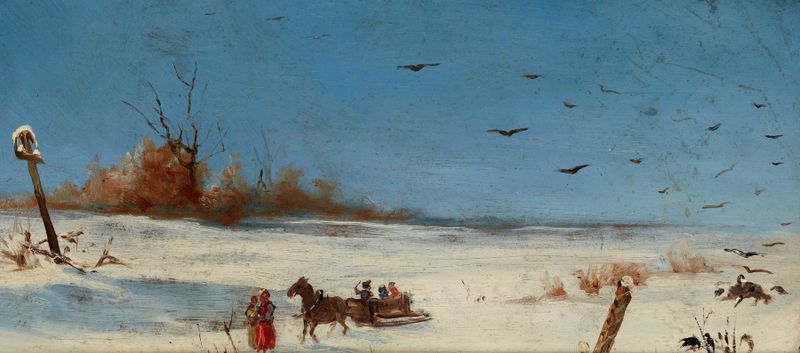
In the quiet embrace of winter, innocence lingers like a fleeting whisper, capturing moments that vanish with the thaw. Look to the center of the canvas, where a snow-blanketed landscape stretches infinitely, inviting the viewer into a serene, yet solemn atmosphere. The soft hues of white and pale blue blend harmoniously, interrupted only by the delicate outlines of bare trees, their skeletal branches reaching skyward. Notice how the light glimmers on the surface of the snow, creating an illusion of warmth against the chill, while subtle shadows hint at the depth of the untouched terrain.
Every brushstroke conveys a stillness that speaks volumes, illuminating both beauty and desolation. The contrast between the starkness of winter and the gentle play of light evokes a sense of nostalgia, reminding us of the innocence lost in life's relentless passage. In the distance, a faint trail suggests the passage of time, perhaps hinting at a journey taken or a memory to be cherished. This delicate interplay between the harshness of the environment and the warmth of memory invites contemplation about the fleeting nature of innocence in the face of inevitable change. During the years 1901 to 1910, Teodor Marian Talowski was deeply immersed in the evolving art movements of his time, focusing on capturing the essence of nature.
As he painted this piece, the world around him was undergoing profound transformations, with modernity slowly encroaching upon the timeless landscapes he held dear. This work stands as a testament to his ability to reflect upon the past while grappling with the rapid changes of the early 20th century.