Sledging — History & Facts
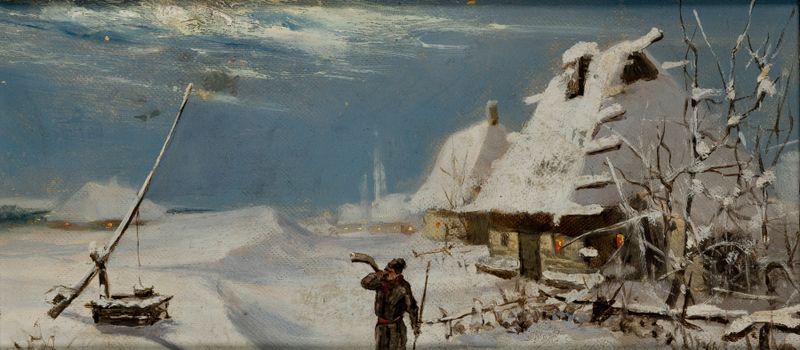
In the chill of winter, a group of children find joy in the snow, but beneath the surface of their laughter lies an undercurrent of fear, waiting to be unveiled. Look to the left at the figures, their cheeks flushed in vibrant hues of rosy red against the stark whites and soft blues of the snowy landscape. Notice how Talowski’s brushwork captures their movement — sleds gliding, legs splayed — creating a sense of dynamic energy and fleeting joy. The crisp precision of the snowy background contrasts sharply with the lively chaos of the children, a deliberate choice that anchors the viewer in this moment of innocence, yet hovers tantalizingly close to the edge of danger. There’s a tension in the air, where the exuberant play of the children clashes with the looming shadows of the trees and the icy slope that could turn treacherous in an instant.
The quiet swirl of snowflakes gently falling holds a duality of beauty and potential harm, echoing the fragility of childhood. This delicate balance between joy and fear illuminates the deeper emotional undercurrents of the artwork, revealing the complex nature of play in the face of an unpredictable world. During the years 1901 to 1910, the artist was exploring themes of childhood and nature while living in Poland, a time marked by both cultural revival and political uncertainty. This period saw a growing interest in capturing the essence of everyday life, especially the innocence and vulnerability of youth amidst a rapidly changing society.
Talowski, influenced by these societal currents, used his canvas to reflect both the joy and the latent fears surrounding childhood adventures.