
Winter, nacht en vuur — History & Facts
Is this a mirror — or a memory? The lines between reflection and recollection blur in the soft glow of Winter, nacht en vuur. Look to the center at the flames, their flickering warmth contrasting sharply with the dark, still surroundings. The artist employs a rich palette of deep blues and warm amber tones, drawing your eye to the hearth that serves as both a literal and metaphorical source of light. Notice how the smoke curls upwards, dissolving into the night sky, blurring the boundary between the tangible and the ethereal.
Each brushstroke evokes a sense of intimacy, inviting viewers into a moment suspended in time. In this piece, emotions run deep; the warmth of the fire represents both comfort and transience, a bittersweet reminder of fleeting moments shared. The shadows loom large, embodying memory’s capacity to both illuminate and obscure. The figures, though somewhat indistinct, suggest a shared history, their postures hinting at a story that transcends the canvas — perhaps a gathering of friends or family, where laughter mingles with nostalgia, and each glance holds untold tales. Jacob Cats painted Winter, nacht en vuur in 1797, during a period marked by artistic experimentation and shifting societal norms.
Emerging from the rich tradition of Dutch painting, he sought to encapsulate the fleeting warmth of human connection amidst the coldness of winter. This work reflects not only his personal experiences but also the broader Enlightenment ideals that emphasized memory, emotion, and the human condition.
More Artworks by Jacob Cats
Browse all →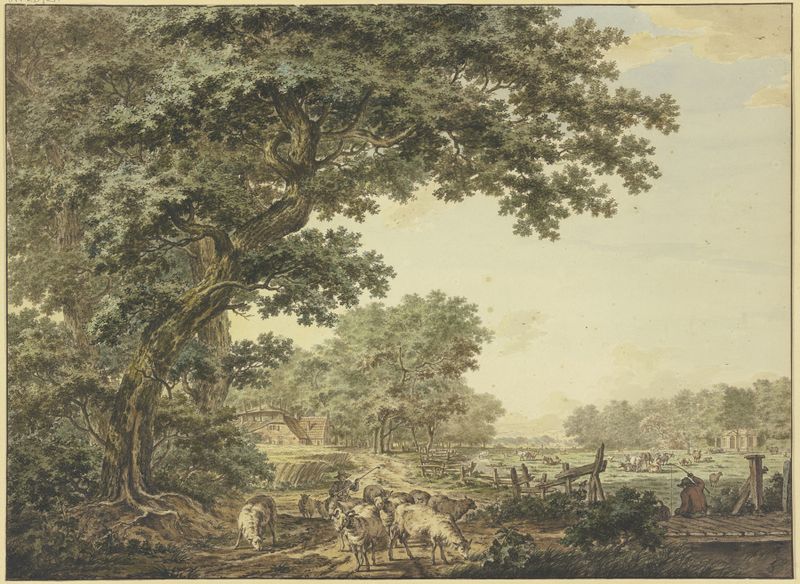
Wiesengrund zwischen dem Wald mit vielem Vieh, vorne ein Schäfer mit seiner Herde, auf einer Brücke rechts ein Angler
Jacob Cats
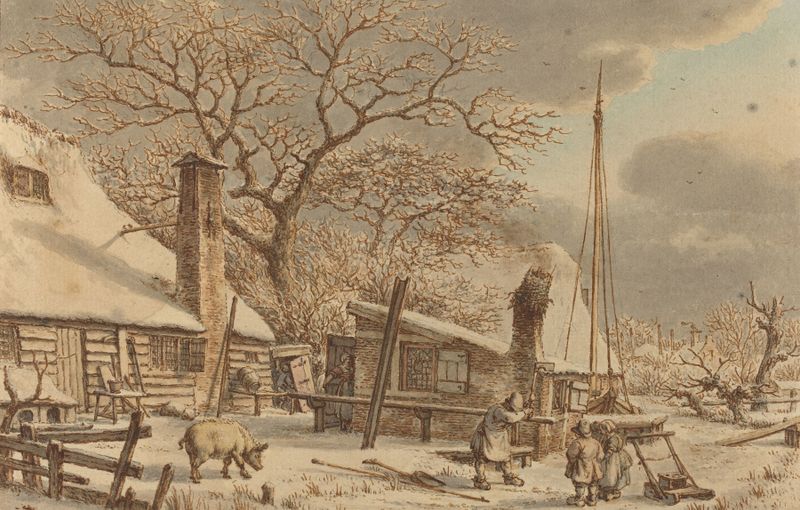
Farmyard in Winter
Jacob Cats
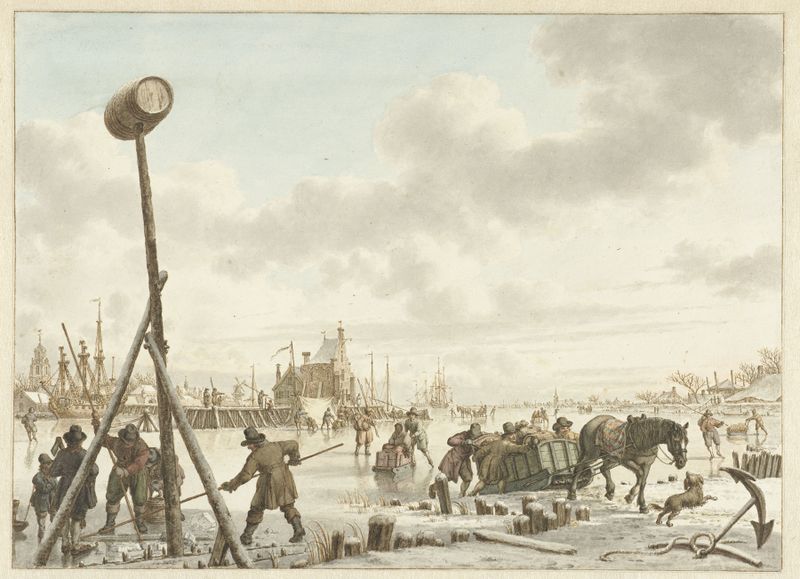
Bedrijvigheid op het ijs bij de stadswal van Veere
Jacob Cats
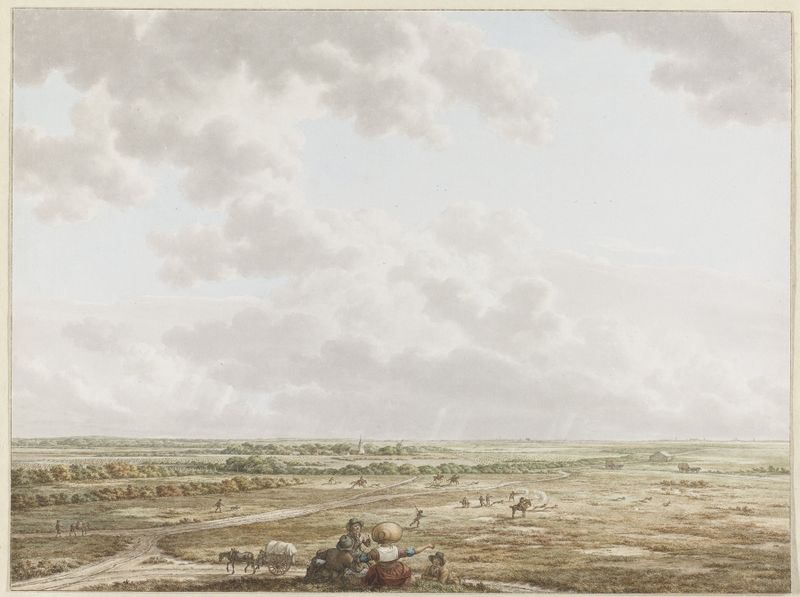
Gezicht van de Tafelberg bij Blaricum, met op de voorgrond Laren
Jacob Cats

Gezicht van de Tafelberg bij Blaricum, met links Craayloos’ Bosch en rechts de ‘tafel’
Jacob Cats
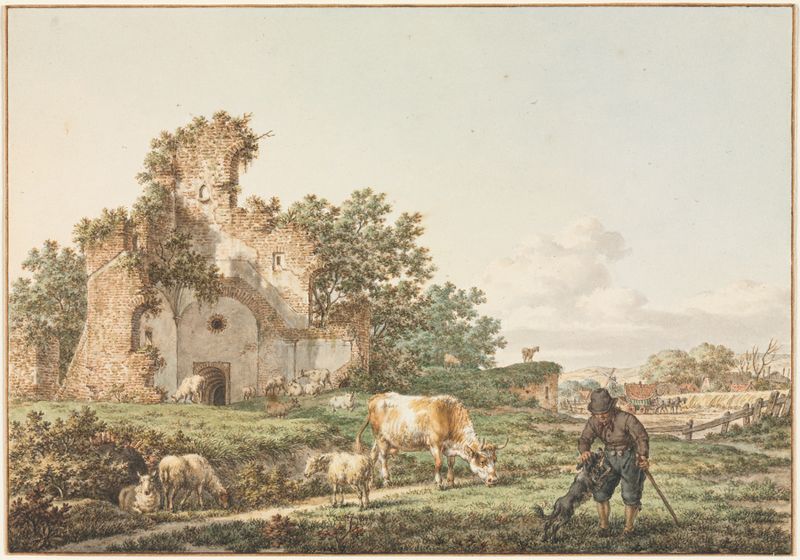
Pastoral Landscape with a Ruin
Jacob Cats
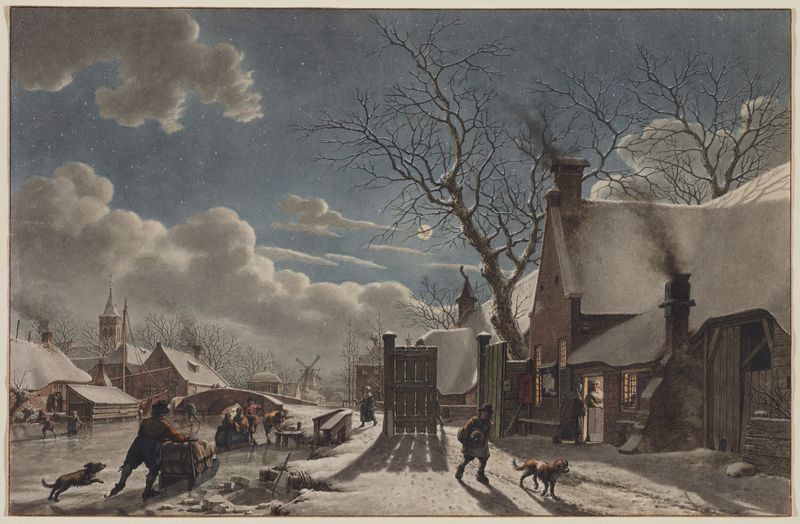
Winter Night in a Dutch Town
Jacob Cats

View of Heemstede
Jacob Cats
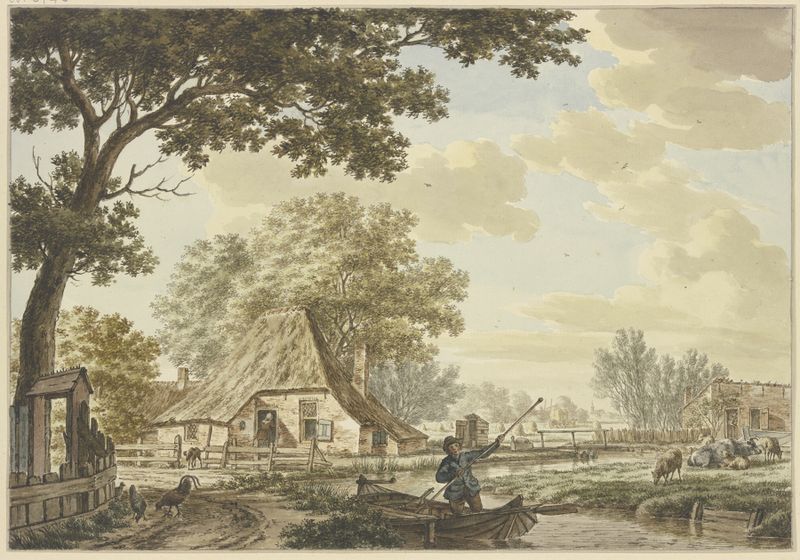
Enger Kanal bei einem Dorf, darauf ein Mann in einem Kahn, rechts Vieh, links Hühner
Jacob Cats
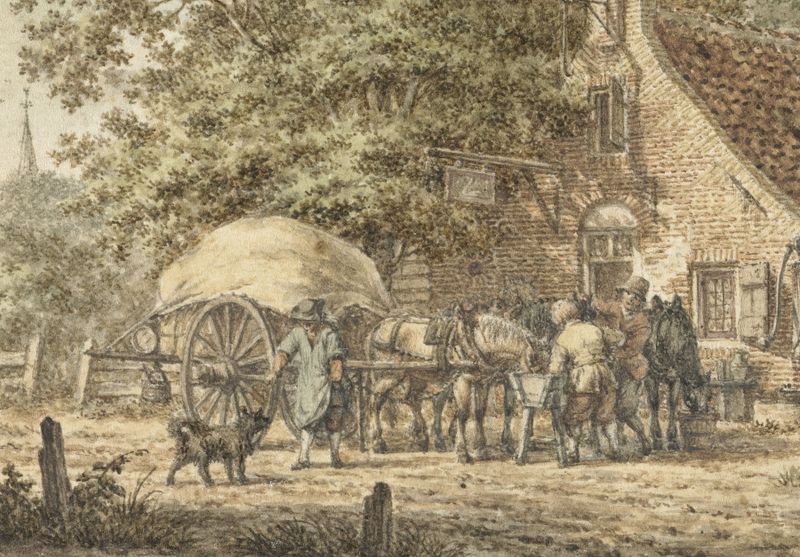
Halte voor een herberg in zomertijd
Jacob Cats





