Winter On The Rhine — History & Facts
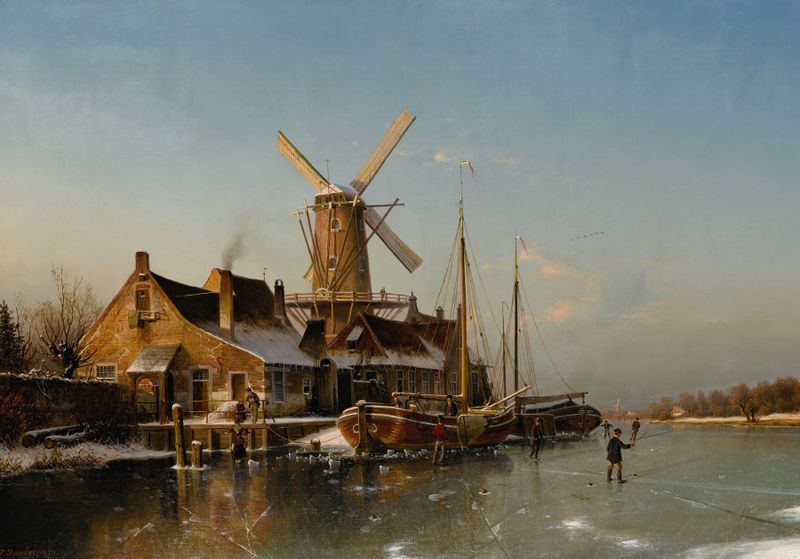
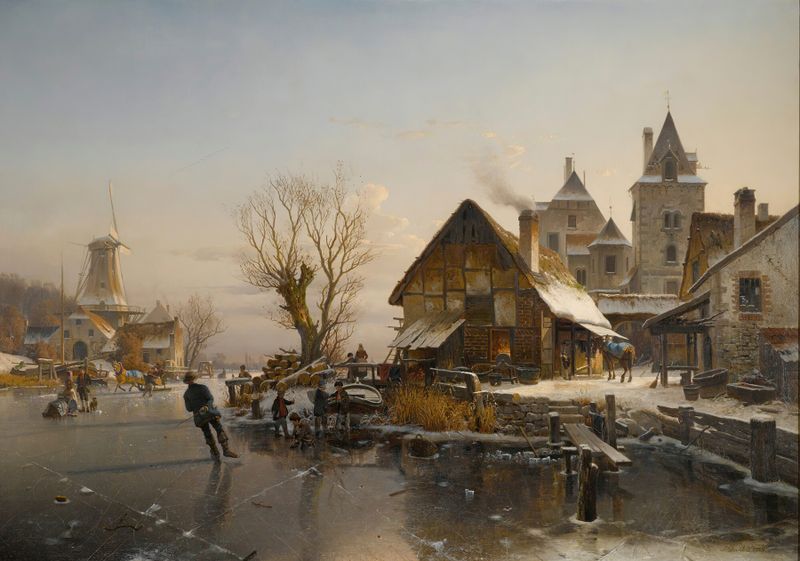
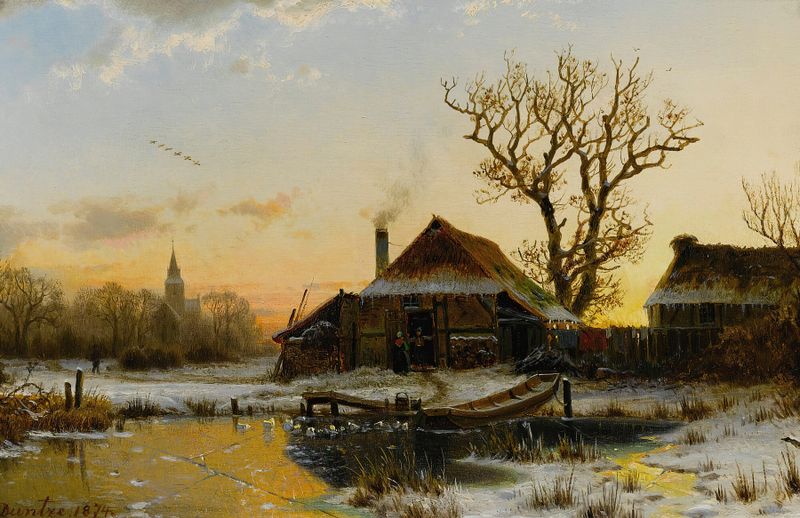
Sometimes beauty is just pain, disguised in gold. In Winter On The Rhine, the chill of the season mingles with the warmth of fleeting moments, inviting contemplation on the passage of time and the impermanence of beauty. Focus on the lower foreground where the icy river meets the rocky shore, the terrain harsh yet strangely inviting. The artist uses cool blues and grays to evoke the chill of winter, while soft golden hues dance across the snow-covered landscape, illuminating the scene.
Duntze’s brushstrokes reveal a tension between the harshness of nature and the delicate beauty found within it, guiding the viewer’s eye through the tranquil yet poignant composition. Delve deeper into the contrast between the serene beauty of the winter landscape and the inherent isolation the scene evokes. The skeletal trees stand as silent witnesses to the passing year, while the river flows—an eternal reminder of time's relentless march. The juxtaposition of vibrant light against the stillness enhances the emotional weight, suggesting that even in cold seasons, warmth can emerge from quietude. In 1885, Duntze created this work while living in Germany, a time when the country was undergoing significant industrial expansion and social change.
The natural world was frequently depicted in contrast to the burgeoning urban landscape, as artists sought to capture moments of tranquility amid societal shifts. This painting reflects both a personal and collective yearning for connection with nature, offering solace in a rapidly changing world.