Winterlandschaft — History & Facts
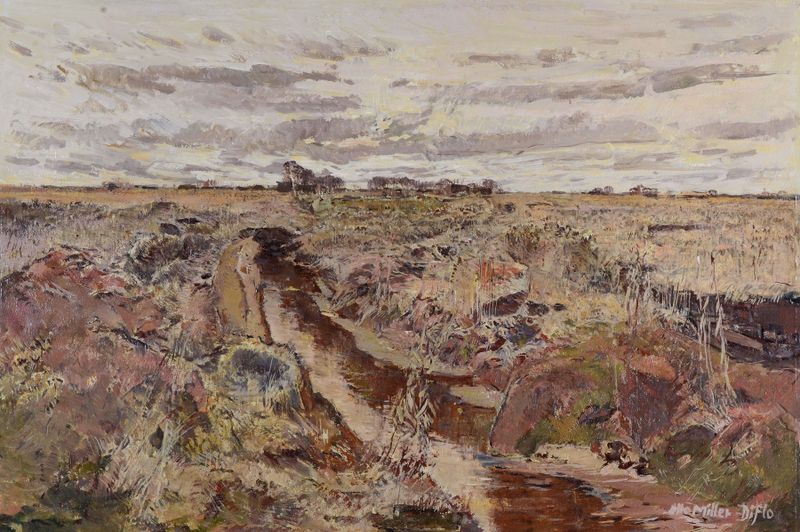
Where does light end, and longing begin? In the stillness of Winterlandschaft, a haunting landscape unfolds, echoing the quiet ache of winter’s grasp. Look to the horizon line, where soft, muted blues and whites blend seamlessly, creating a serene yet expansive atmosphere. Your gaze is drawn first to the delicate interplay of light, which dances gently across the snow-covered terrain, illuminating the subtle textures beneath. Notice how the abandoned trees, stripped of leaves, stand like sentinels in this frozen world, their dark silhouettes contrasting against the pale backdrop, inviting contemplation about solitude and the passage of time. As you analyze further, small details come into focus: the gentle undulations of the snow hint at movement, suggesting a hidden life beneath the surface.
The artist’s choice of a confined palette evokes a sense of both peace and desolation, intertwining beauty with an undercurrent of longing. This palpable tension conjures reflections on memory and the bittersweet nature of nostalgia, as if the landscape mourns what has been lost to the frigid embrace of winter. Otto Miller-Diflo painted Winterlandschaft in 1925 while living in Germany, during a time when Europe was grappling with the aftermath of World War I. In the throes of societal change and personal reflection, the artist turned to evocative landscapes as a means to express his inner world—a silent witness to the complexities of human emotion amid a stark, unforgiving environment.