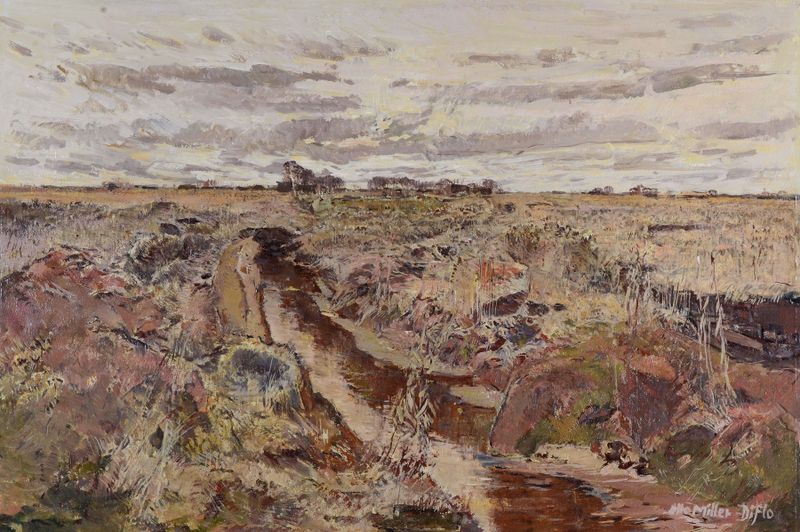
Stilles Land (Dachauer Moorlandschaft) — History & Facts
What secret hides in the quiet of the canvas? Here, the stillness of a vast landscape beckons, inviting contemplation and stirring a sense of yearning deep within the viewer's soul. Begin by looking at the soft, muted tones that envelop the scene. The gentle greens and browns blend seamlessly, creating a tranquil atmosphere that captivates. Notice how the horizon stretches across the painting, drawing your gaze toward the distant, hazy outlines of trees, while the foreground is dotted with delicate grasses swaying lightly, as if whispering secrets to those who pause to listen.
The interplay of light and shadow adds depth, inviting an exploration of the emotional undercurrents that flow through the composition. As you delve deeper, explore the contrasts inherent in the work. The serene landscape evokes a sense of peace, yet an undercurrent of longing permeates the scene. The absence of figures or lively activity amplifies this feeling, suggesting that the landscape itself holds stories untold.
The careful brushwork reveals a meticulous attention to detail, while the subtle gradient in color hints at a world beyond, urging the viewer to connect with whatever may lie just out of sight. Created in 1930, this piece emerged during a transformative era for the artist, who was navigating the complexities of post-World War I Europe. Living in Germany, Miller-Diflo sought solace in nature while grappling with the tumult of societal change. His dedication to capturing the essence of quiet landscapes resonated with a generation in search of meaning as they rebuilt their lives, making Stilles Land a poignant reflection of both personal introspection and collective yearning.