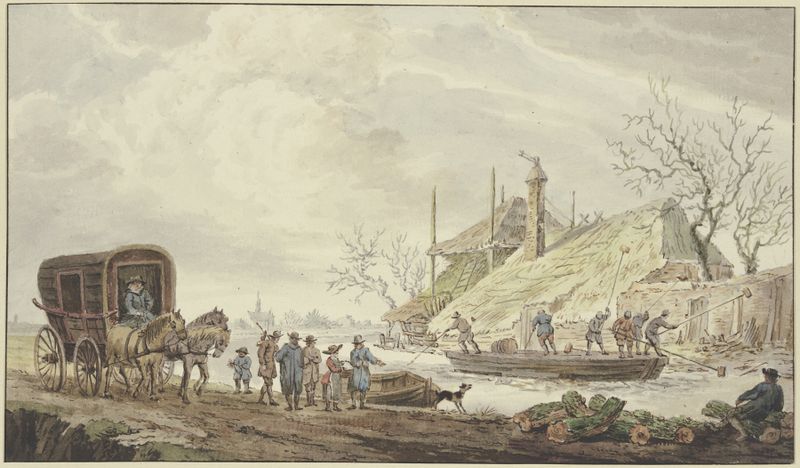
Winterlandschaft, auf dem Fluß Schlittschuhläufer, links am Quai ein Wagen — History & Facts
The act of capturing fleeting moments is a legacy that transcends generations, and in this work, we witness a vibrant dialogue between the past and present. Look closely at the center of the canvas, where the ice glistens under a pale winter sun. The skaters, with their graceful arcs, seem to float on the frozen river, a moment frozen in both time and motion. Notice the delicate brushwork that depicts swirling eddies of cold air, and how soft blues and whites blend harmoniously, evoking the chill of the season.
The distant figures stand in contrast to the warmth of the carriage on the quay, inviting a reflection on the interplay between activity and stillness. Within this serene landscape lies a tapestry of contrasts; the vibrancy of life against the starkness of winter, action juxtaposed with the quietude of the surrounding scene. The skaters' movements embody joy and freedom, while the carriage represents a more grounded existence, suggesting a tension between leisure and obligation. The renderings of smoke rising from the chimney illustrate a human presence and the complexities of rural life during this season. J.
H. Van Loon created this piece during a time when traditional landscape painting was being revitalized and reinterpreted. Working in the early 20th century, he was influenced by the growing interest in capturing the emotional resonance of everyday scenes.
This period in art history saw a blending of realism with impressionistic techniques, paving the way for future explorations in light and color, echoing the legacies of those who came before him.