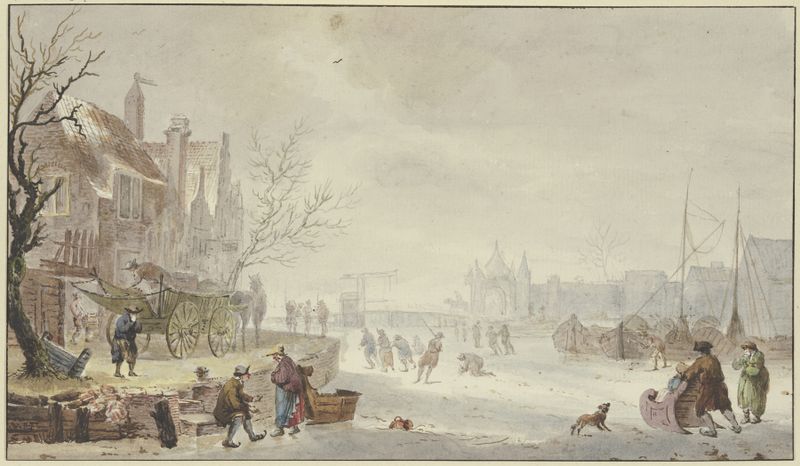
Winterlandschaft, an einem Bauernhof hauen Schiffer das Eis auf, links eine Kutsche — History & Facts
In the stillness of winter, loss weaves itself into the fabric of the everyday, an unspoken tension that lingers like the chill in the air. Look to the foreground, where the scene breathes life into the biting cold. Notice how the figures, clad in heavy garments, diligently work to break the ice in a frozen pond. The palette is dominated by muted blues and grays, evoking the somber atmosphere of a winter's day, yet the subtle warmth of ochres in the horses and the carriage offers a contrast that hints at longing and connection amidst the harshness. As you explore the canvas further, hidden meanings emerge.
The laborers’ focused expressions suggest not just physical effort but an emotional weight, perhaps a desperate attempt to reclaim some semblance of normality in nature's icy grip. The solitary carriage, positioned to the left, symbolizes impending journeys unfulfilled, echoing the sense of loss that pervades the landscape. Each detail, from the cracked ice to the distant trees, reinforces the fragility of life in winter's clutch. In this undated piece, the artist found inspiration during a time when the world of art was beginning to embrace realism, capturing the raw and relatable experiences of rural life.
The work reflects the societal shifts of the era, where the harsh realities of existence were laid bare, and the beauty of everyday moments emerged as a poignant response to the shifting tides of industrialization and change.