Wiston River — History & Facts
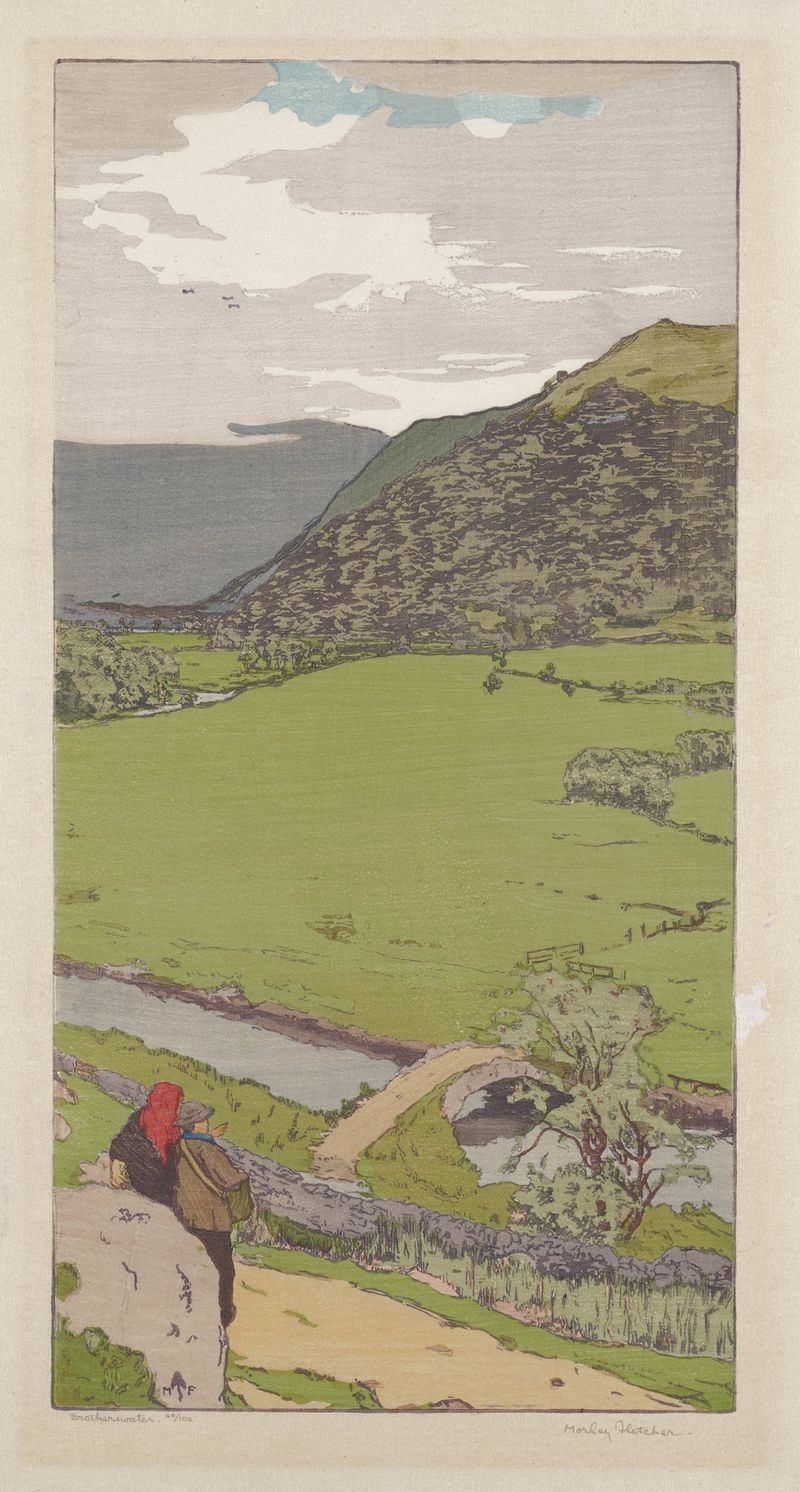
Who listens when art speaks of silence? In Wiston River, the tranquil palette invites contemplation, drawing us into the depths of its serene atmosphere. Focus first on the sweeping hues of blue and green that compose the river, shimmering under the gentle embrace of light. The brushstrokes are fluid, almost rhythmic, mimicking the soft undulations of water. Notice how Fletcher contrasts the cool tones of the river with the warm ochres of the landscape, creating a harmonious balance that reflects nature's tranquility.
The play of light dances across the surface, beckoning us to explore the depths beyond, while wispy trees frame the scene, their branches arching protectively toward the flowing water. Yet, beneath this peaceful veneer lies an intricate interplay of emotions. The stillness of the water evokes a sense of introspection, inviting viewers to ponder the deeper currents of life. The faint reflection of the sky on the river’s surface suggests a connection between the heavens and earth, hinting at a quiet dialogue between the two.
This silent conversation serves as a reminder of nature's resilience, where even in stillness, movement and change are ever-present. Created between 1900 and 1911, Fletcher was immersed in the vibrant artistic community of the early 20th century. This period was one of innovation, as artists sought to capture the essence of their surroundings through new techniques and styles. While working in England, Fletcher embraced the use of color and light in a way that pushed the boundaries of traditional landscape painting, paving the way for future explorations in the genre.