
Wooded Landscape — History & Facts
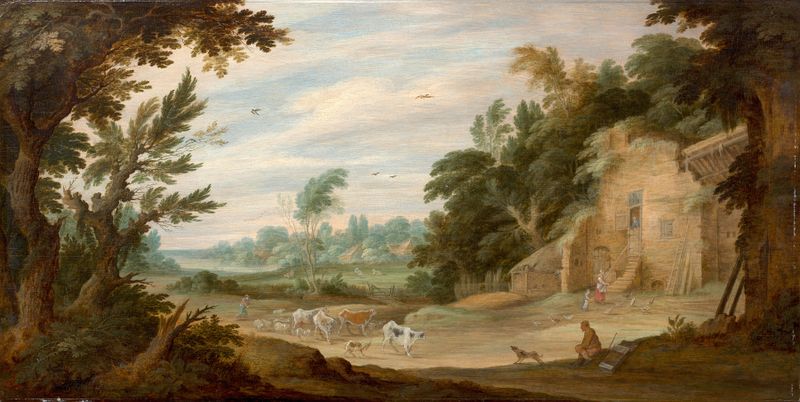
In a world defined by the decay of the natural, beauty emerges through the artist's hand. Here lies a landscape that speaks of time's relentless passage, where the wilderness seemingly breathes with a silent, haunting elegance. Look to the foreground, where a tranquil stream flows gently, its surface mirroring the lush greenery that wraps around it. The artist’s deft brushwork conjures a riot of greens—deep emeralds blend seamlessly with vibrant limes—while dappled sunlight filters through the leaves overhead, casting playful shadows upon the ground.
Each stroke captures the essence of life amid the decay, inviting the viewer into a sanctuary steeped in both serenity and a hint of melancholy. Beyond the rich foliage, consider the decaying trunks and branches, their twisted forms bearing witness to nature's cycle of life and death. This landscape is not merely a vision of beauty; it is a subtle reminder of transience. The quiet intermingling of vibrant life with remnants of decay creates an emotional tension, prompting reflections on our own relationship with time and the inevitability of change. Created between 1615 and 1620, this piece emerged during a period when Keirincx was honing his skills in the Netherlands, a region flourishing with landscape painting.
The art world was shifting, deeply influenced by the intricacies of light and texture that characterized the Baroque era. At this time, artists were beginning to explore nature not just as a backdrop, but as a subject worthy of intimate contemplation—an exploration that Keirincx captures beautifully in this work.
More Artworks by Alexander Keirincx
Browse all →
River Landscape with Oak Forest
Alexander Keirincx

Landscape with a Deer Hunt
Alexander Keirincx
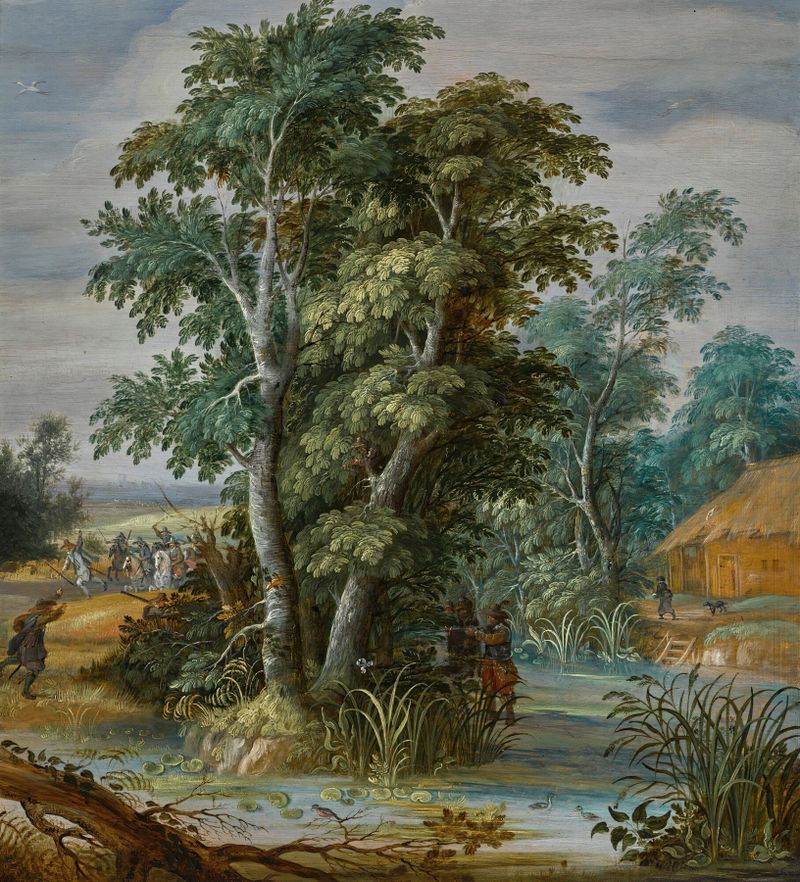
An ambush in a wooded landscape
Alexander Keirincx
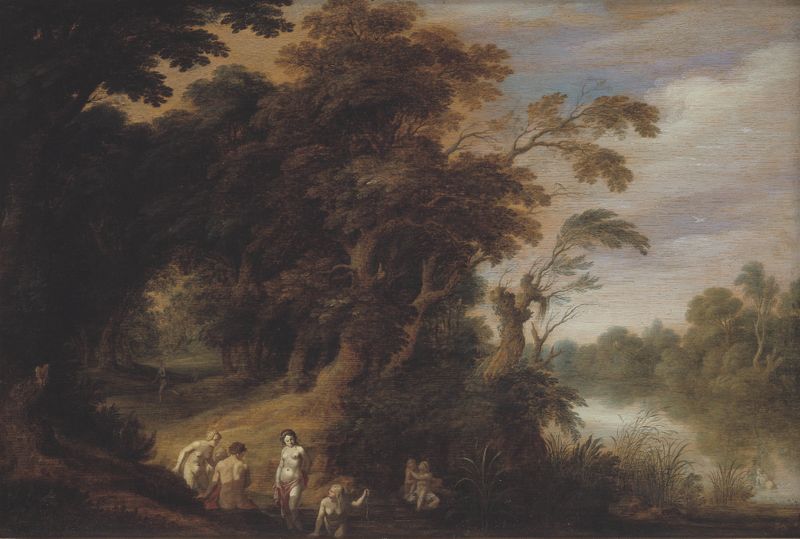
Wooded Landscape with Bathing Nymps
Alexander Keirincx
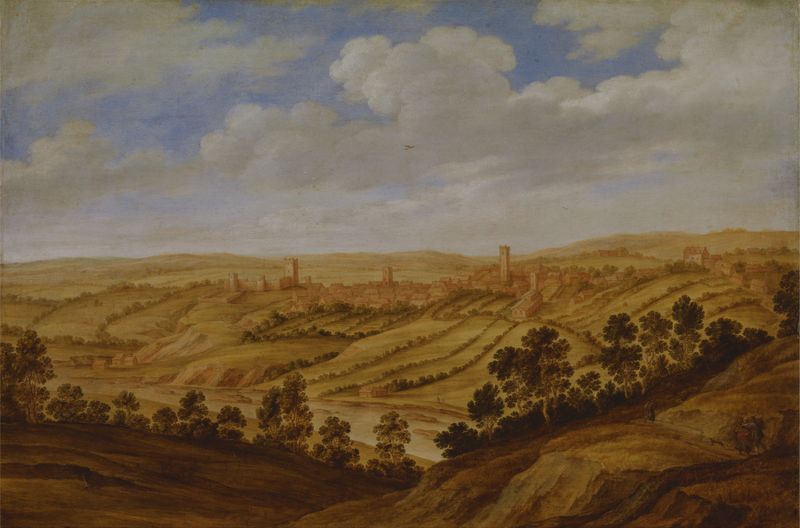
Richmond Castle, Yorkshire
Alexander Keirincx
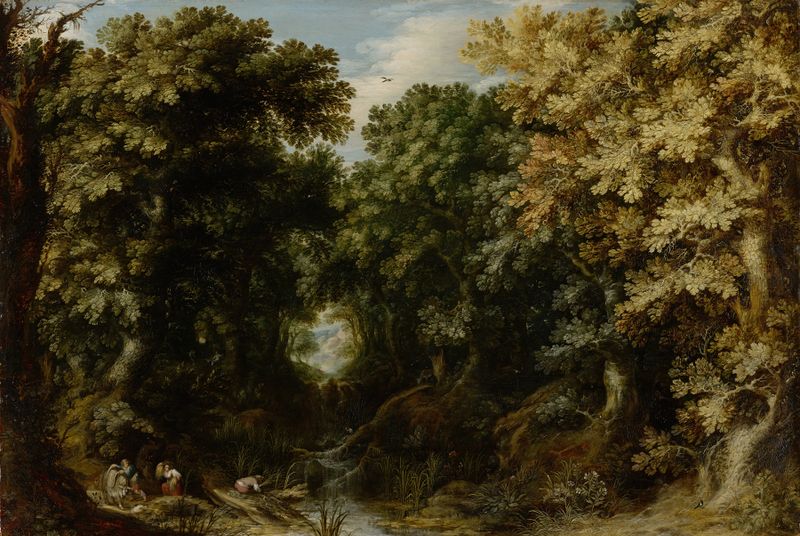
Deep in the Forest with a Perspective
Alexander Keirincx
Le retour du troupeau
Alexander Keirincx





