Wooded Landscape in Snow — History & Facts
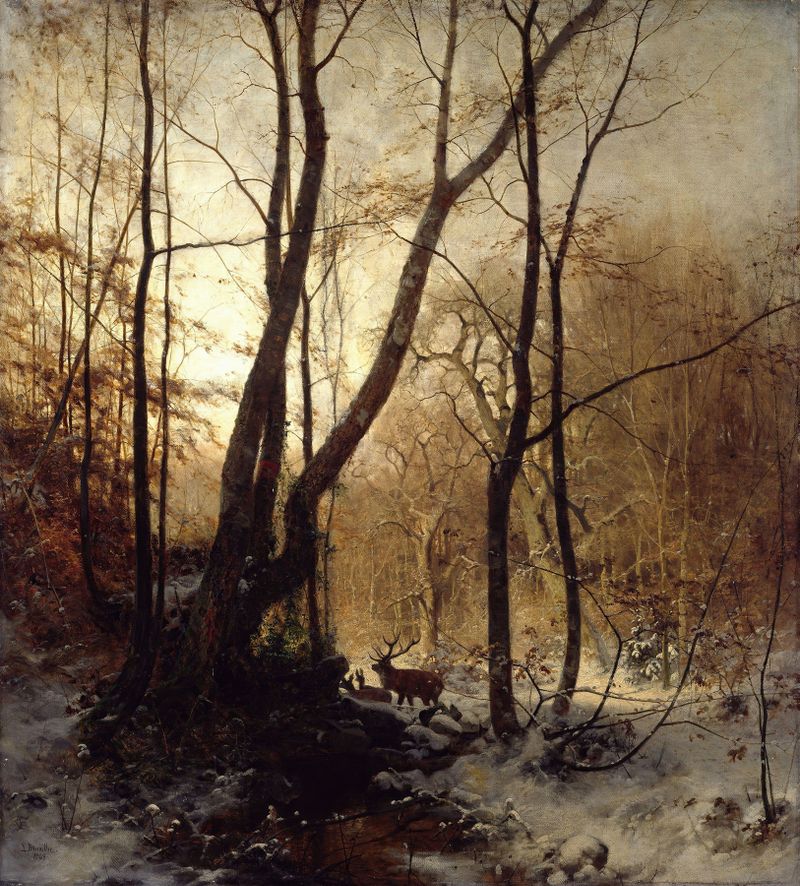
When did color learn to lie? In nature’s embrace, hues can deceive, yet they hold a certain magic that enchants the soul and provokes wonder. Begin by observing the tranquil expanse of snow blanketing the ground, where the whites play against cool blues and soft grays. Look to the left, where silhouetted trees rise, their dark branches seemingly etched against the winter sky. The delicate interplay of light creates an almost surreal quality, inviting the viewer to wander deeper into this serene yet haunting scene. Beneath the surface of this idyllic landscape lies a tension between warmth and cold, solitude and life.
The contrasting colors evoke feelings of both peace and melancholy, inviting reflection on the transient beauty of winter. Each brushstroke whispers stories of quiet moments, while the untouched snow hints at the presence of unseen creatures, reminding us that life continues silently, even in the coldest months. Ludvig Munthe painted this serene scene in 1870, during a time when the naturalist movement was gaining momentum in art. Living in Norway, Munthe was influenced by the dramatic landscapes of his homeland and the broader European artistic currents that celebrated nature's beauty.
His work reflects a shift towards capturing the emotional resonance of landscapes, a hallmark of his personal style and a response to the evolving art world around him.