
Wyoming Foot Hills — History & Facts
Could beauty survive in a century of chaos? The essence of truth is etched into the very fabric of Wyoming Foot Hills, where the interplay of nature and artistry beckons the soul to reflect. Look to the sweeping expanse of hills, where verdant greens meld into soft browns, creating a harmonious tapestry that captures the eye. Notice how the sunlight bathes the scene in a warm glow, highlighting the subtle textures of the land. The brushstrokes, though seemingly simple, evoke a profound sense of depth and movement, inviting viewers to traverse the undulating landscape as if it were a real journey. Beneath the surface, there lies a tension between the serenity of nature and the looming scent of industrialization felt in the world outside.
The gentle contours of the hills are a reminder of stability, while the distant horizon hints at the encroaching changes that threaten this sanctity. Each element in the painting speaks to the fragility of beauty, suggesting that even in tranquility, there is a whisper of uncertainty. In 1921, the artist created this work during a time of transition in America, amid the social upheaval following World War I. Holmes, deeply influenced by the natural landscapes of the West, sought to capture the American spirit through his depiction of the rugged terrain.
This painting emerged during a period when artists began to reflect more critically on nature's role in an increasingly industrialized world, making it a striking commentary on the delicate balance between beauty and chaos.
More Artworks by William Henry Holmes
Browse all →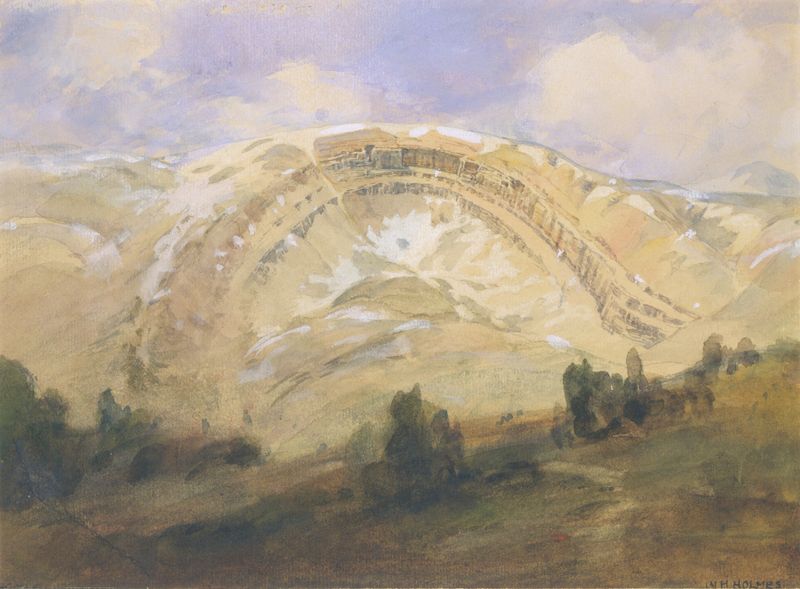
Folded Strata, A Great Geological Arch, Colorado
William Henry Holmes
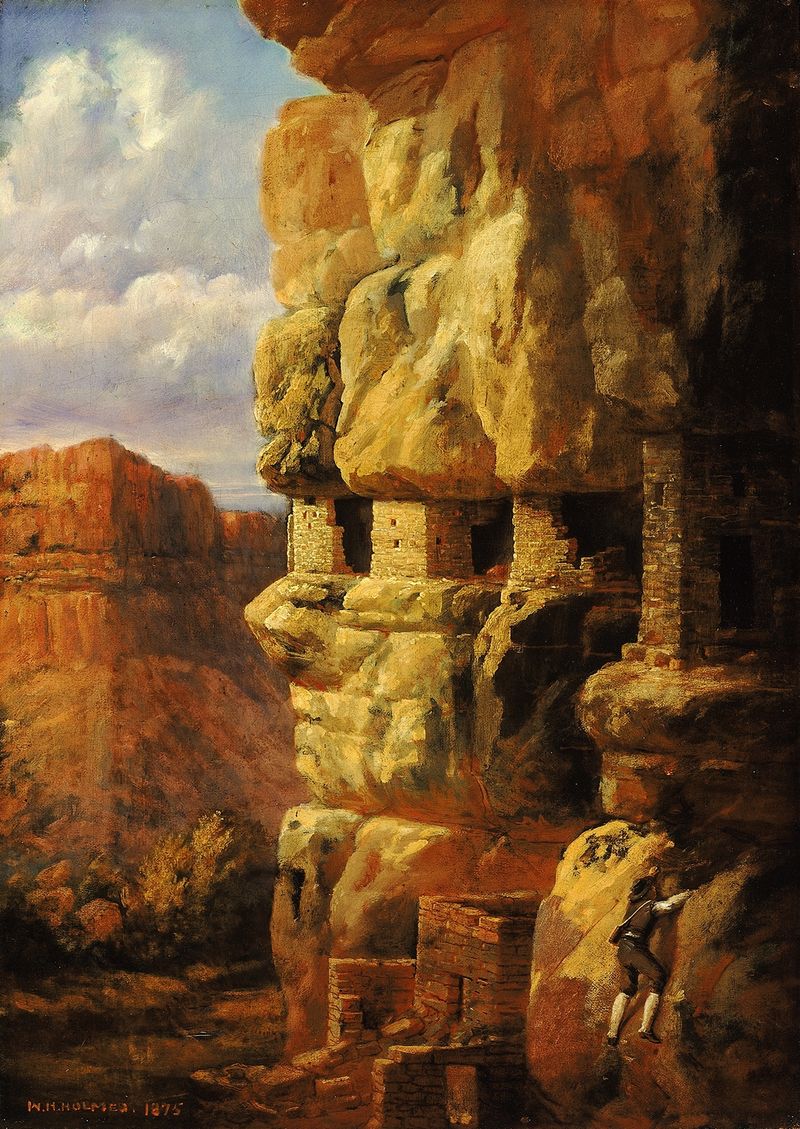
Cliff Houses On The Rio Mancos, Colorado
William Henry Holmes
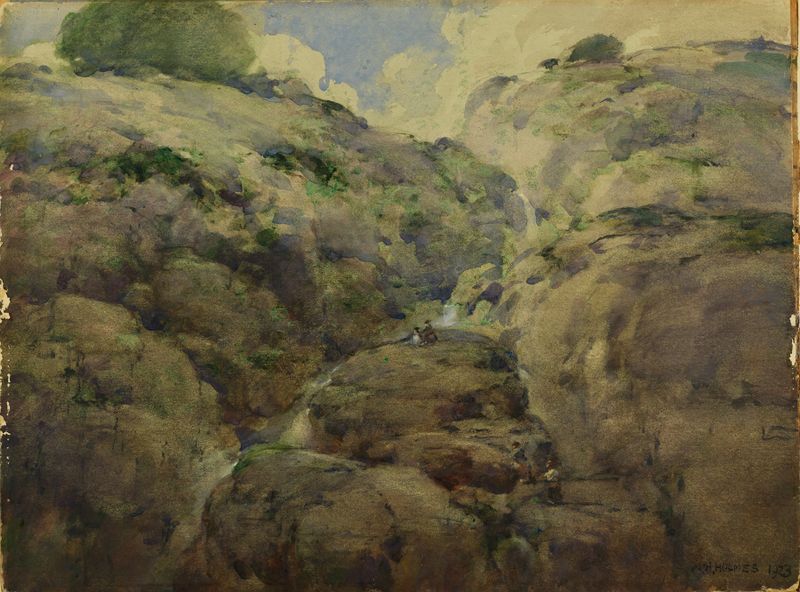
Mountain Gorge, Colorado
William Henry Holmes
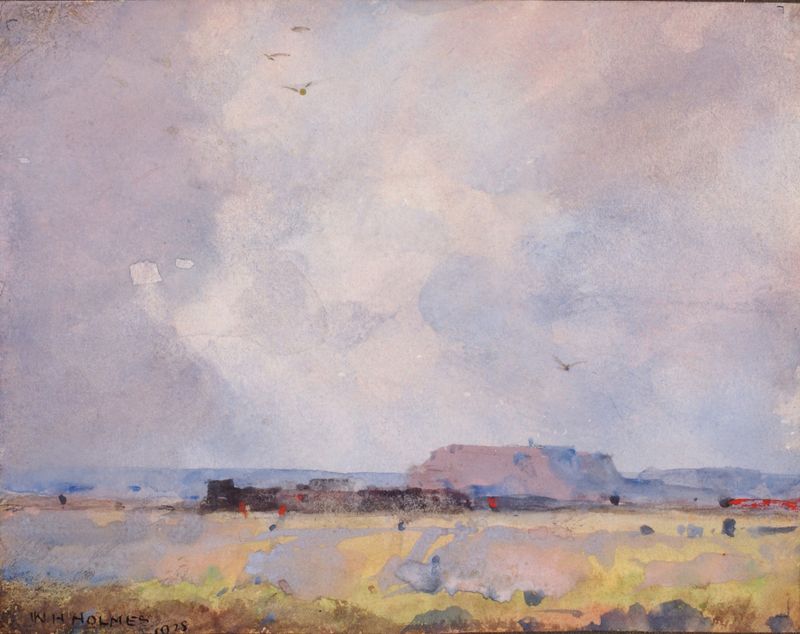
In The Plateau Country, With An Inhabited Pueblo
William Henry Holmes
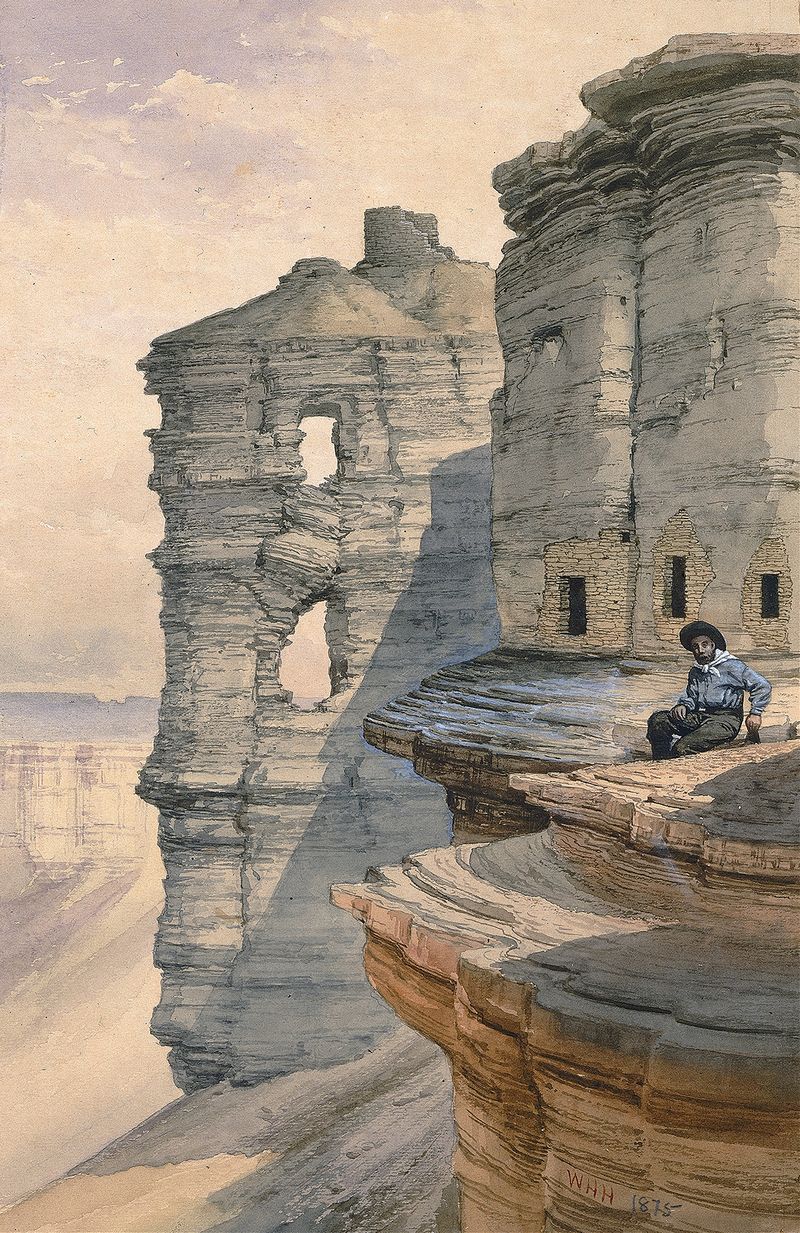
Cliff Houses on the Rio Mancos, Colorado
William Henry Holmes
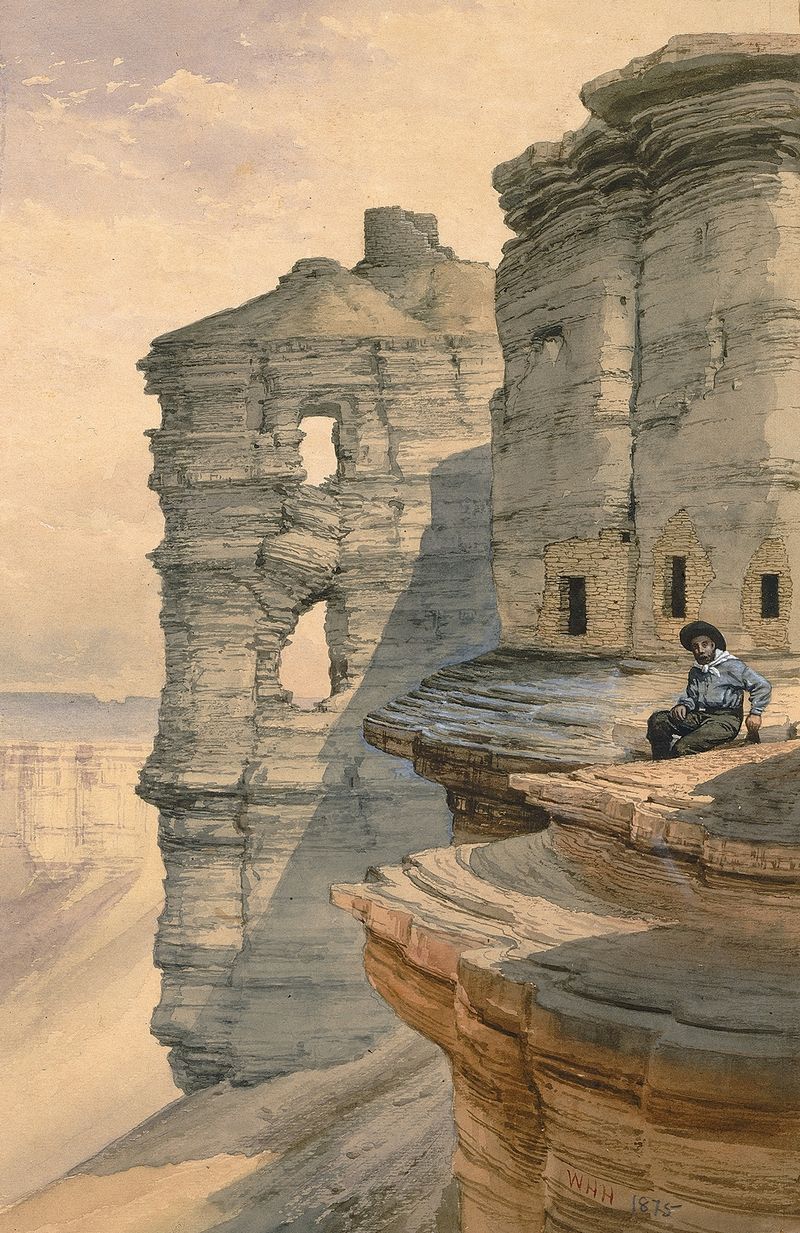
Cliff Houses On The Rio Mancos, Colorado
William Henry Holmes
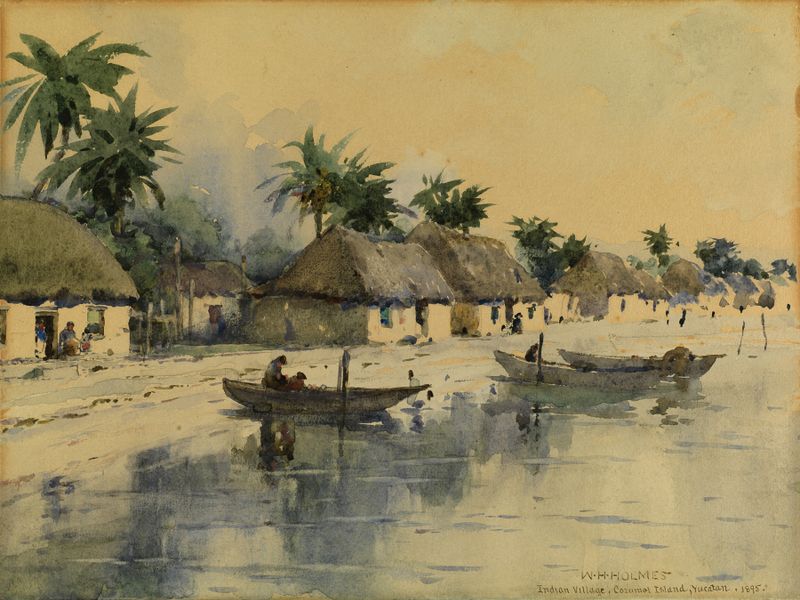
Indian Village, Cozumel Island, Yucatan
William Henry Holmes
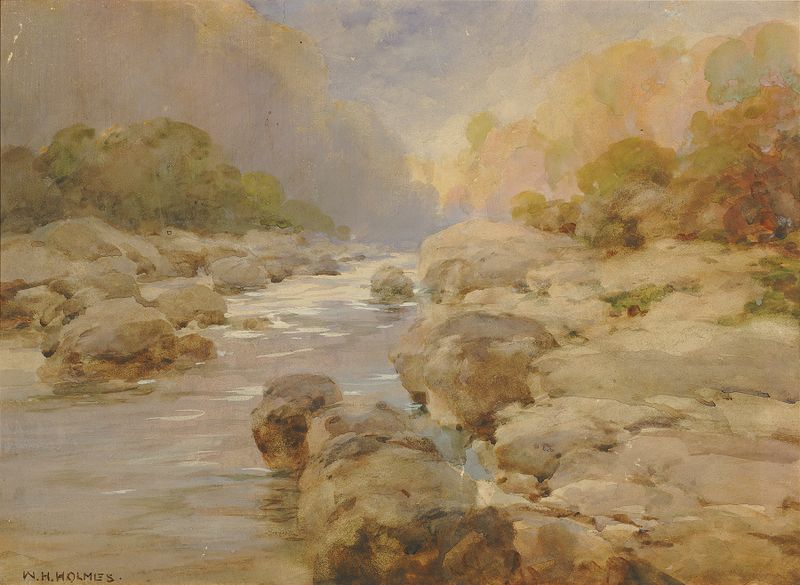
Unmodified Rock Creek, About 1910
William Henry Holmes
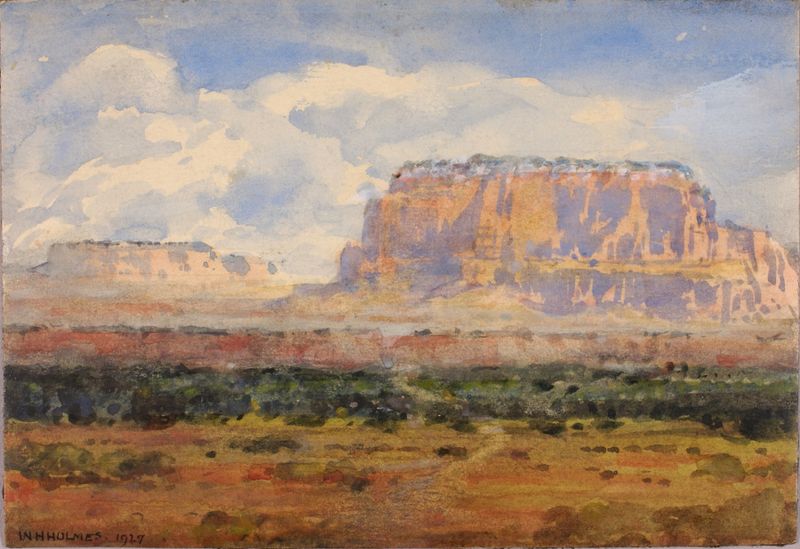
The Enchanted Mesa
William Henry Holmes
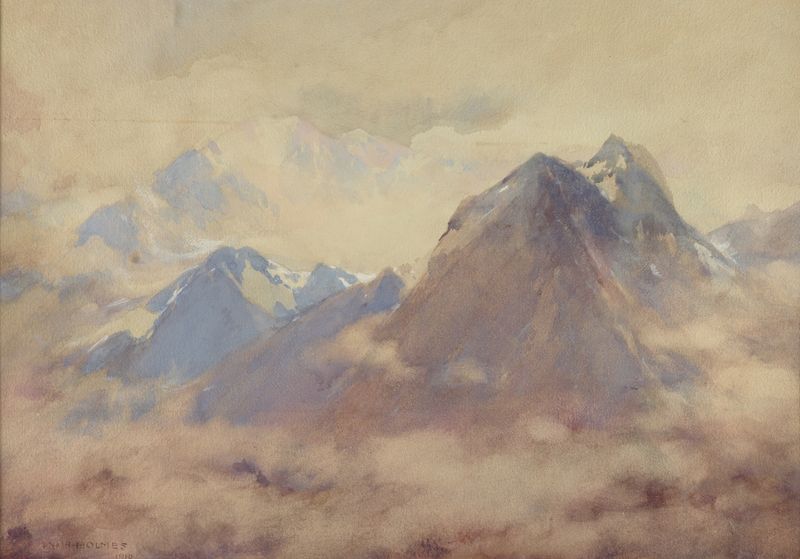
The Almighty’s Own, An Impression Of The High Andes
William Henry Holmes





