
Yellow, Blue, and Violet — History & Facts
A single, jagged arc slices through the center of Yellow, Blue, and Violet, pulling the viewer’s attention into a storm of movement and color. The painting feels almost like a memory of a landscape, half-recalled and filtered through the mind’s eye: a rush of ochre and smoky black, feathered edges, and a pale, luminous core that seems to pulse with energy. Notice how the dark forms bristle and curve, their sharp silhouettes suggesting growth or eruption, while the surrounding washes of blue and violet cool the composition, holding the chaos in check.
The brushwork is urgent, gestural—each mark feels deliberate, as if the artist is trying to capture not an object, but the sensation of something coming into being. Light here is not a source, but a force, animating the surface and drawing the eye from edge to edge. Painted in 1928, this work belongs to a moment when American artists like Arthur Dove were inventing new ways to translate nature and emotion into pure form and color. Dove, often called one of the first American abstract painters, sought to distill the essence of the world around him—his canvases are less about what is seen, and more about what is felt.
Works like this were rarely made for grand patrons or public commissions; instead, they emerged from a spirit of experiment and independence, often supported by a handful of visionary collectors and small museums. Today, Yellow, Blue, and Violet is jointly held by Fisk University and the Crystal Bridges Museum of American Art, a testament to its enduring intrigue. Stand before it and let your eye wander; what begins as confusion gradually resolves into a kind of visual music, each color and curve a note in Dove’s private symphony.
More Artworks by Arthur Dove
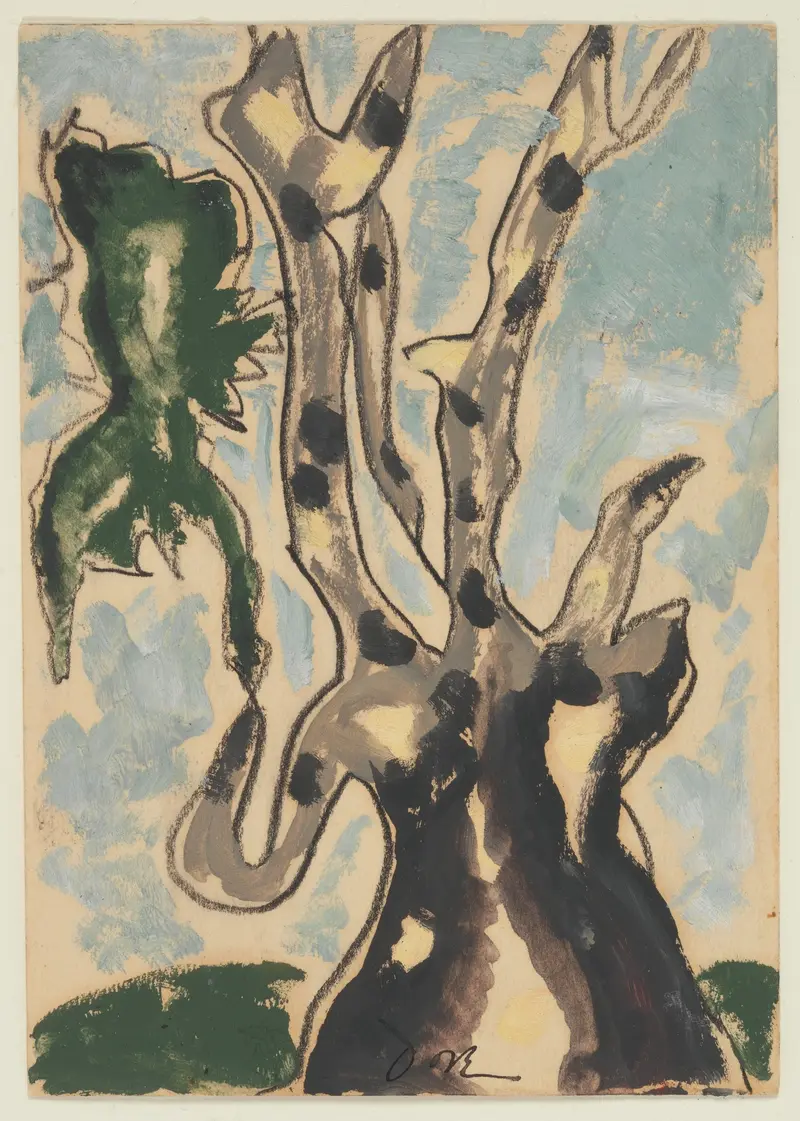
Sycamore
Arthur Dove

Out the Window
Arthur Dove
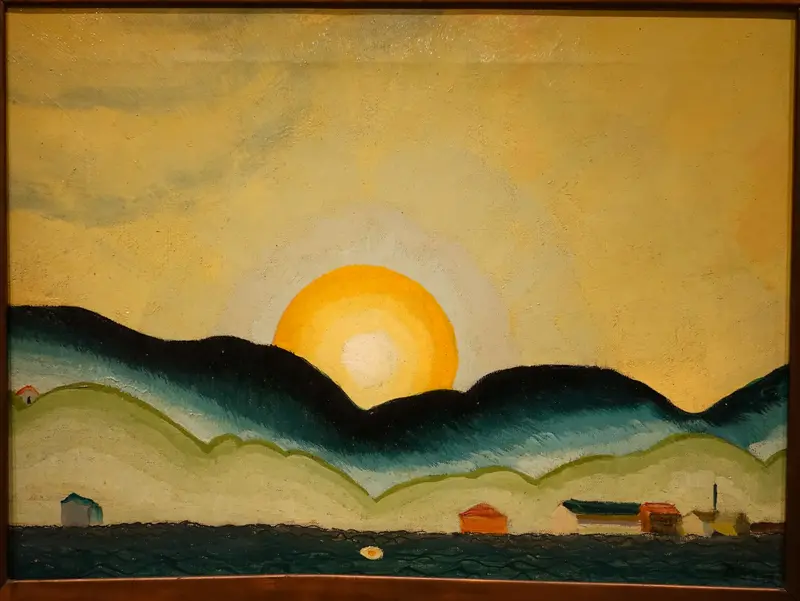
Northport Harbor
Arthur Dove

George Gershwin–‘Rhapsody in Blue,’ Part I
Arthur Dove
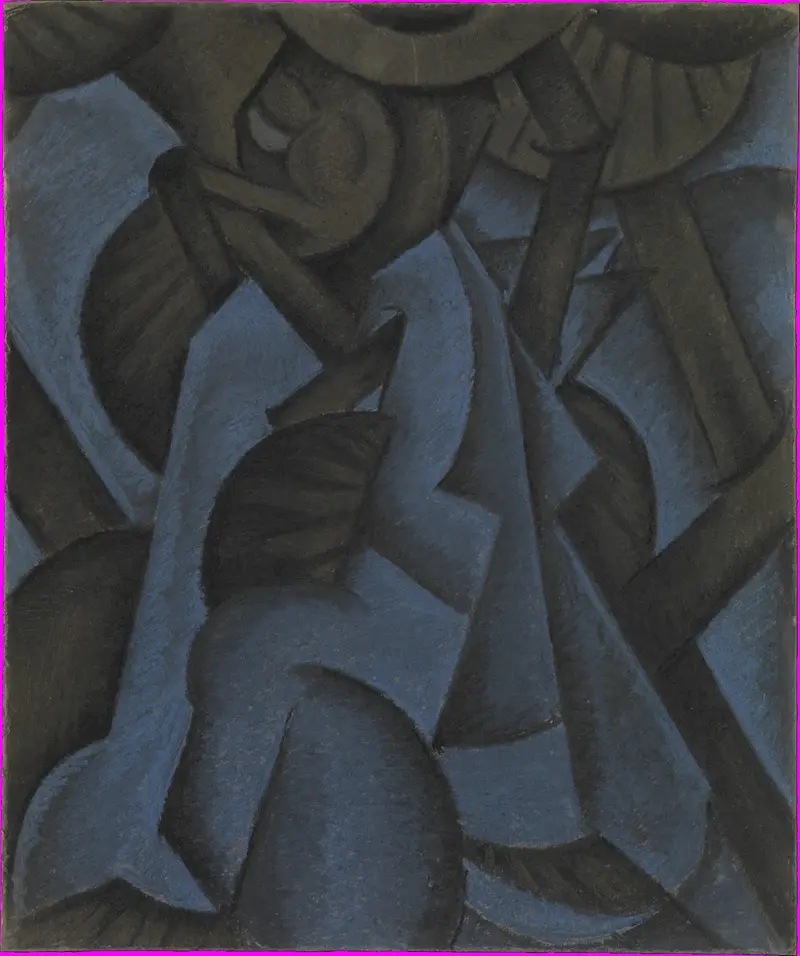
Pagan Philosophy
Arthur Dove
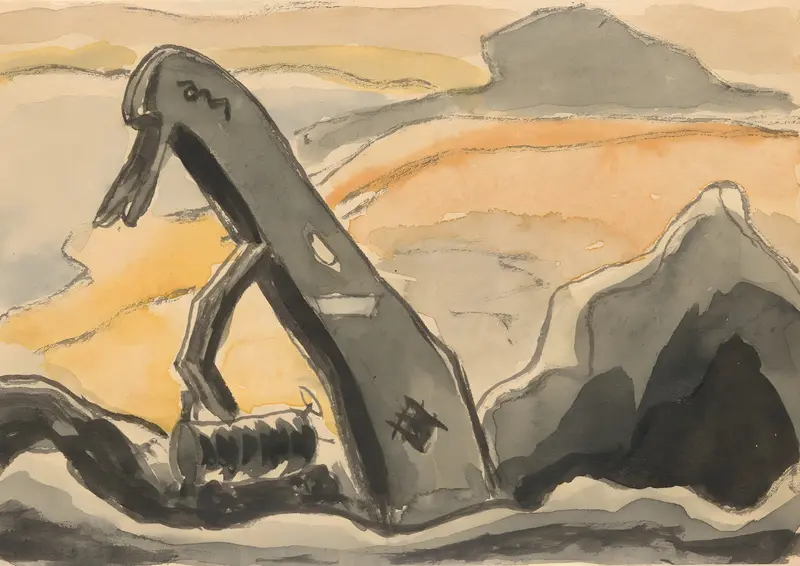
Steam Shovel–Port Washington
Arthur Dove
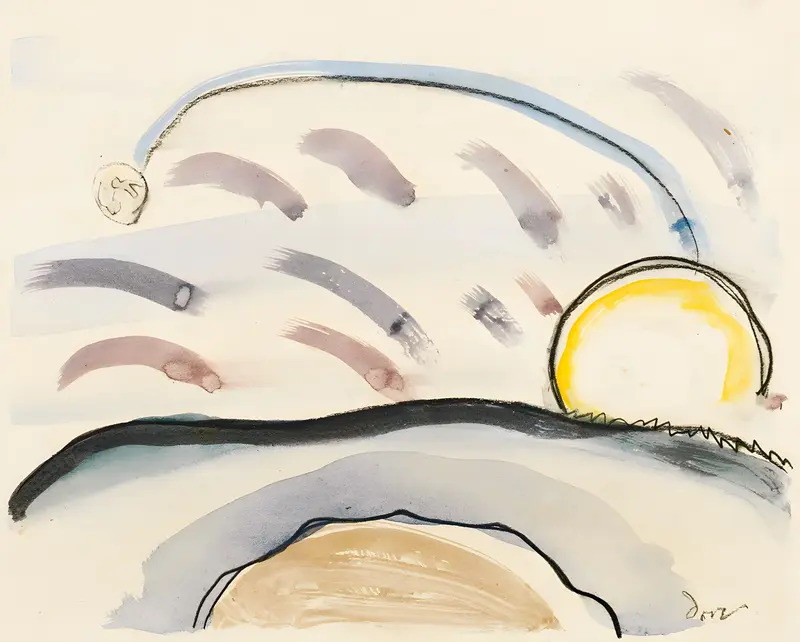
Study for ‘Sun and Moon’
Arthur Dove
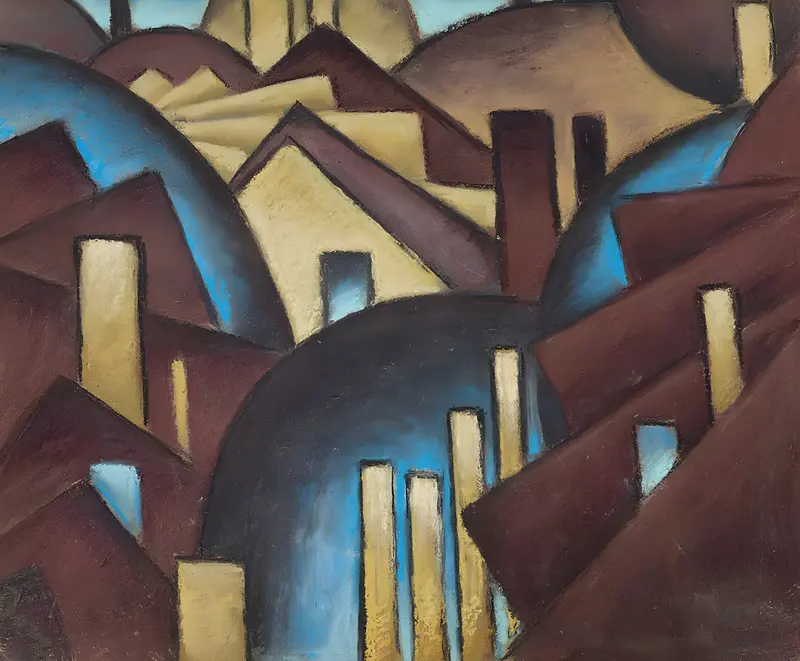
Nature Symbolized No. 1 (Roofs)
Arthur Dove
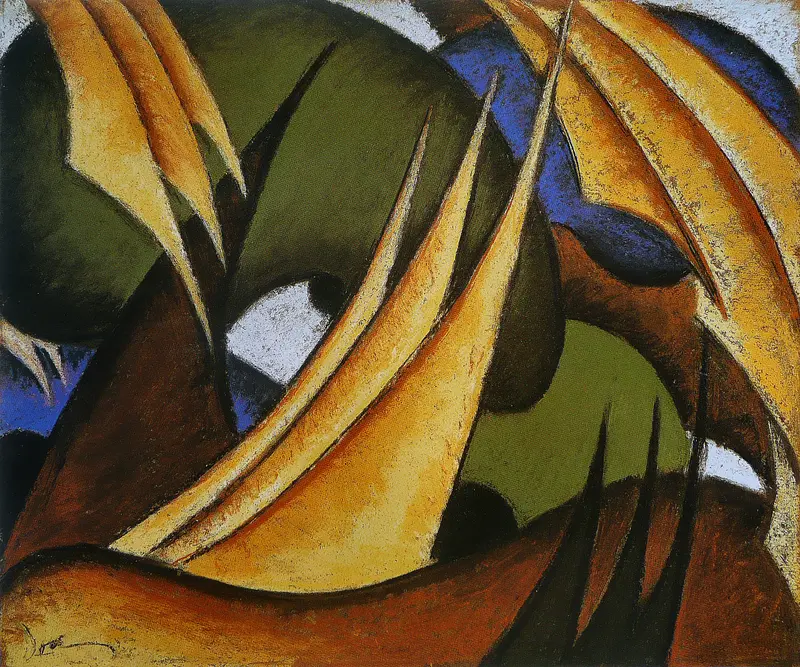
Sails
Arthur Dove
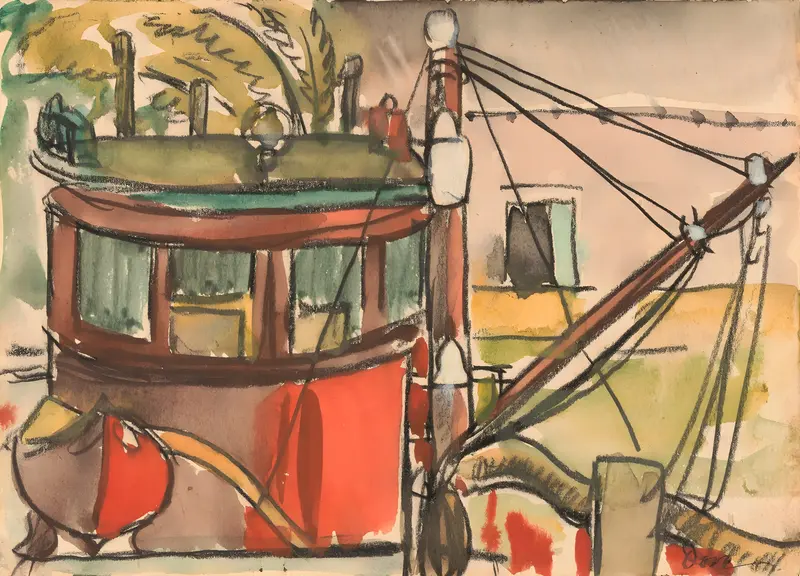
Oil Tanker II
Arthur Dove





