
Yosemite Valley looking east from the Mariposa Trail — History & Facts
In the silent echo of nature, fear often lurks, manifesting in the awe of its grandeur. Look to the vast expanse of the valley, where shadows dance among the towering cliffs. The majesty of granite peaks looms in the background, illuminated softly by a hazy light that bathes the scene in ethereal blues and greens. Observe the delicate brushstrokes that guide the viewer’s gaze from the foreground’s lush greenery upward, creating a seamless transition to the imposing heights.
The careful composition draws a line between the fragility of the earth below and the formidable forces that shape it above. Yet, within this breathtaking vista lies an undercurrent of tension. The looming cliffs evoke a sense of dread and isolation, while the serene valley below hints at an unyielding beauty. The play of light and shadow symbolizes the duality between fear and solace, reflecting a struggle that exists in both nature and the human experience.
Each element, from the wild flora to the stoic rocks, captures a dialogue between reverence and trepidation, reminding us of our vulnerability in the face of nature’s power. In 1873, John Ross Key painted this landscape while living in California, amidst a growing fascination with the American West. This period was marked by an increasing appreciation for the natural world, inspired by the Romantic movement and the ongoing exploration of untamed territories. Key’s work emerged during a time when artists began to grapple with the emotional capacity of landscapes, capturing both the serene and the unsettling aspects of the wilderness.
More Artworks by John Ross Key
Browse all →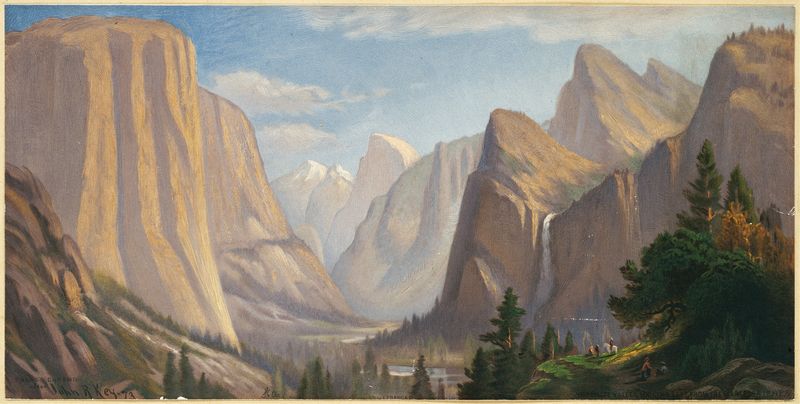
Yosemite Valley, Looking East from the Mariposa Trail
John Ross Key
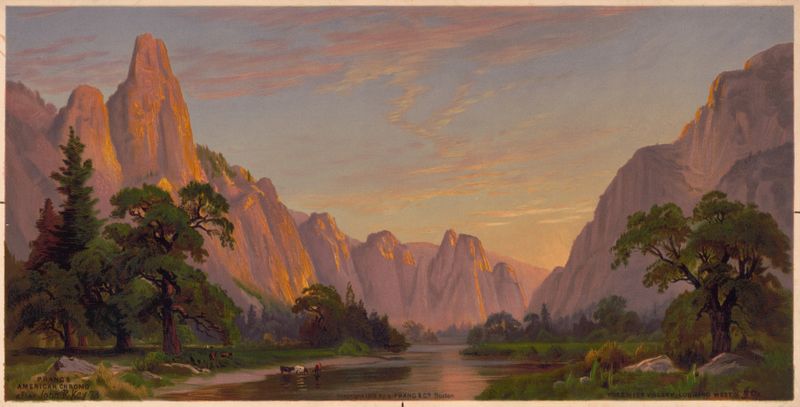
Yosemite Valley looking west
John Ross Key
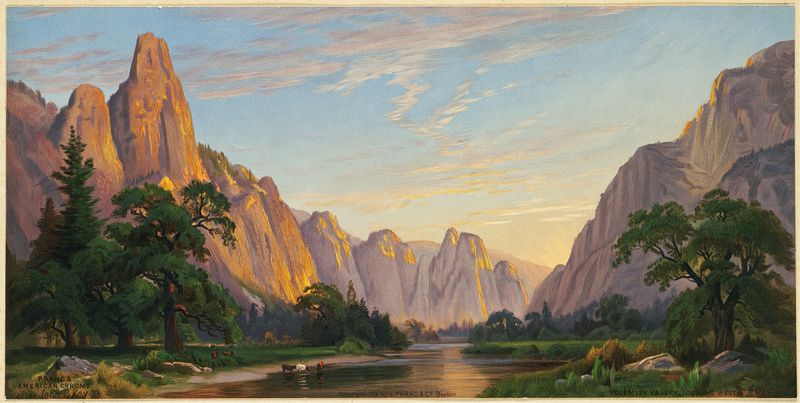
Yosemite Valley, Looking West
John Ross Key

Redwood Trees, Santa Cruz Mts., Cal
John Ross Key
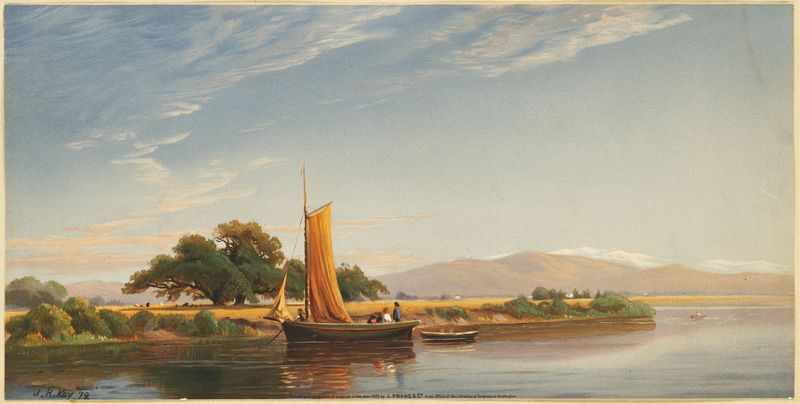
Sacramento Valley
John Ross Key

Lake Tahoe, Looking Southwest
John Ross Key

Afternoon on the Lake
John Ross Key

Santa Cruz Mts., Monterey Bay, Pacific Ocean
John Ross Key
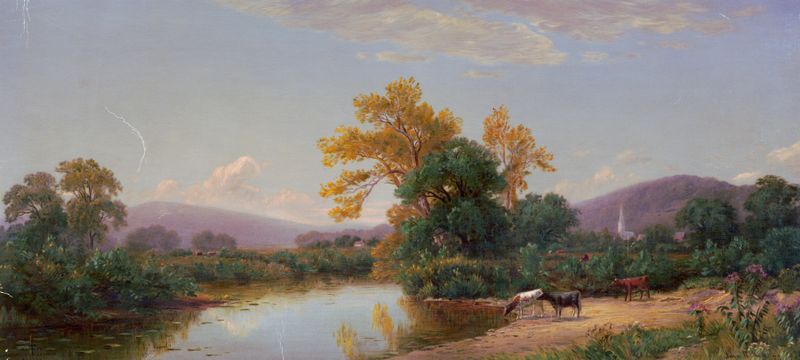
Allegaheny Mt., Md.
John Ross Key
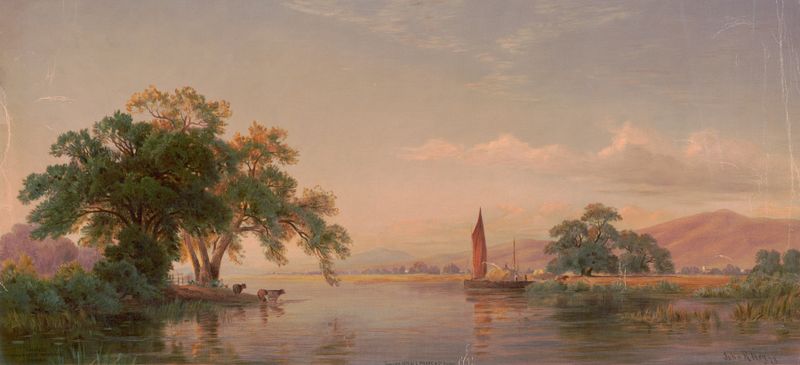
Santa Clara Valley, California
John Ross Key





