
Yotsubashi, four joint bridges — History & Facts
Can beauty exist without sorrow? In Akamatsu Rinsaku’s Yotsubashi, four joint bridges, the answer unfolds through the delicate interplay of form and emotion. Each bridge stands not just as a structure, but as a metaphor, inviting contemplation on the fragility of connection and the weight of history. Look towards the center of the composition where the four bridges converge, their graceful arches cradling the horizon. The muted palette, composed of soft grays and gentle greens, evokes a sense of tranquility that contrasts with the stark lines of the bridges.
Notice how the light plays upon the water below, shimmering like liquid glass, reflecting a world both still and in motion. The careful placement of the bridges creates a rhythm, leading the eye across the canvas and inviting one to pause and ponder the spaces in between. Beneath the calm surface lies a tension between nature and architecture. The elegant yet rigid structures act as a reminder of human intervention in the natural world, while the surrounding water serves as a vessel for unspoken stories.
One can almost sense the echoes of the past—the whispers of footsteps that once crossed these bridges, carrying dreams and burdens alike. This duality captures a deeper yearning for unity amidst separation, intertwining beauty with the melancholy of transience. Created in 1947, in a post-war Japan, the work reflects Rinsaku’s search for hope and renewal during a time of cultural upheaval. As Japan began to emerge from the shadows of conflict, artists like him sought to reconcile tradition with modernity.
This piece embodies that delicate balance, marking a moment in art history where beauty was a response to sorrow, and a bridge to a brighter future.
More Artworks by Akamatsu Rinsaku
Browse all →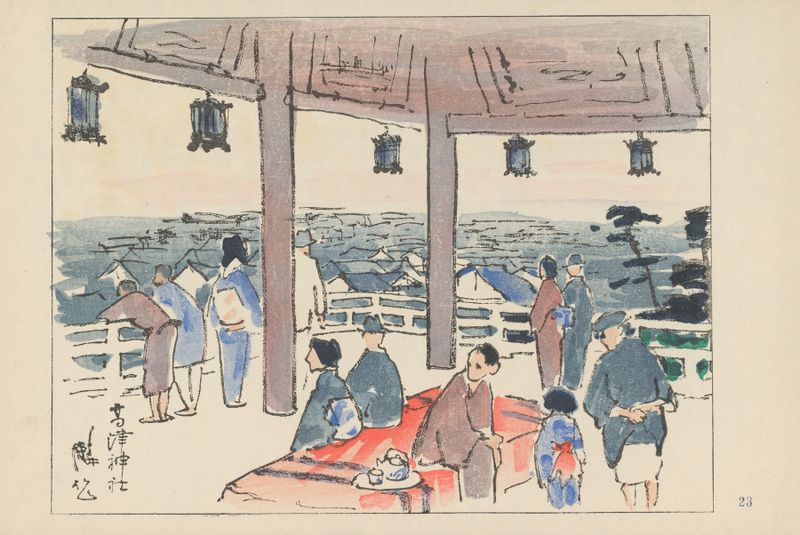
Kozu shrine dedicated to Nintoku Emperor
Akamatsu Rinsaku
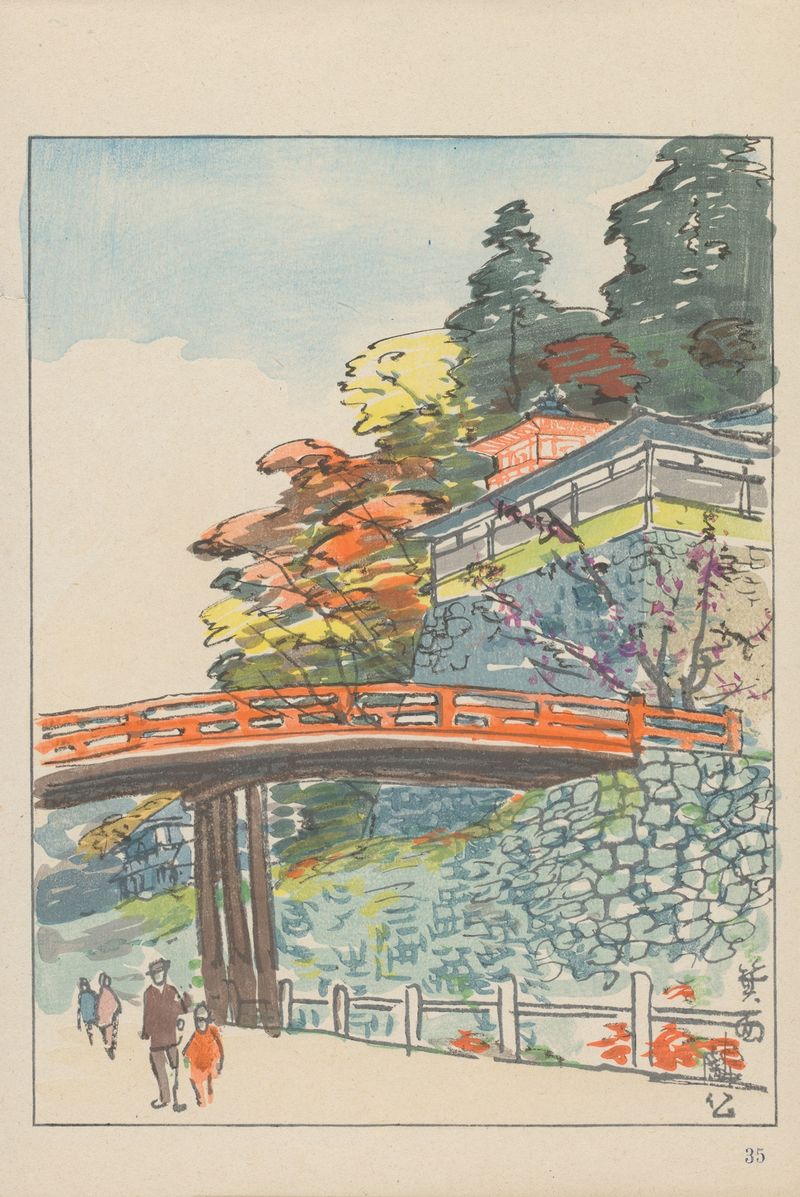
Minoo, National Park
Akamatsu Rinsaku
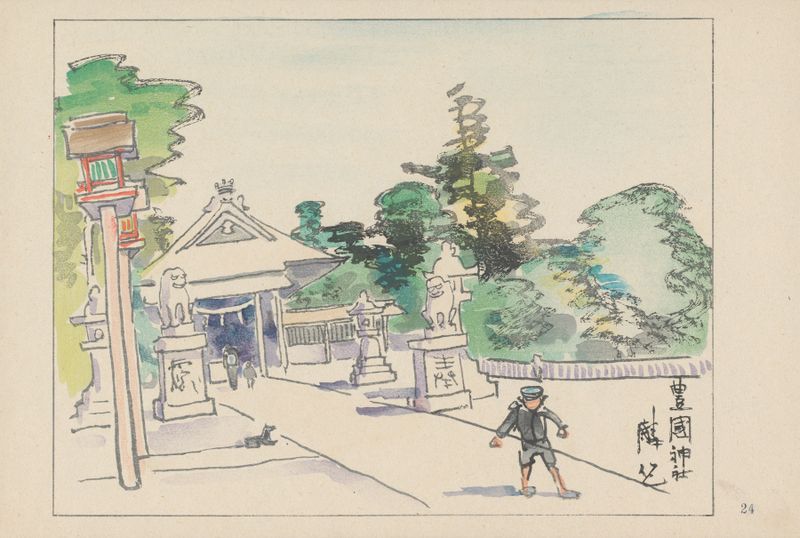
Toyokuni shrine dedicated to Toyotomi Hideyoshi
Akamatsu Rinsaku

Tsumura betsuin, the agency of Nishi-honganji
Akamatsu Rinsaku
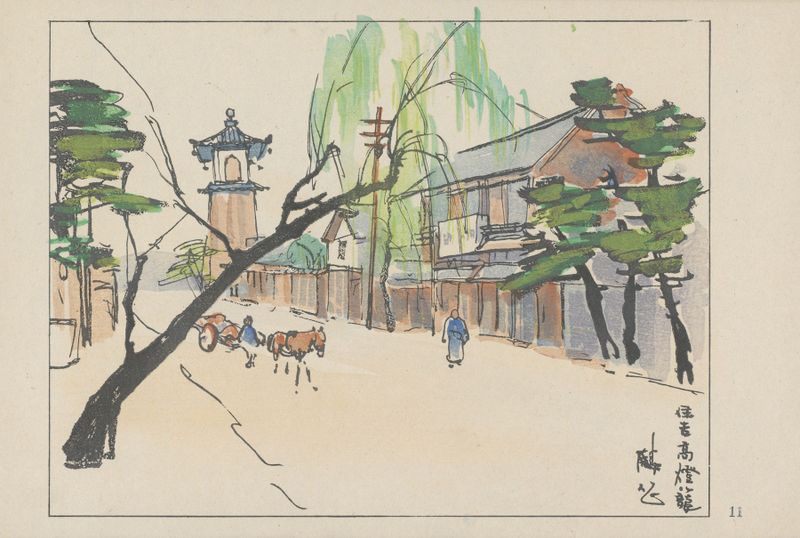
The high lanton at Sumiyoshi, a light house in older time
Akamatsu Rinsaku
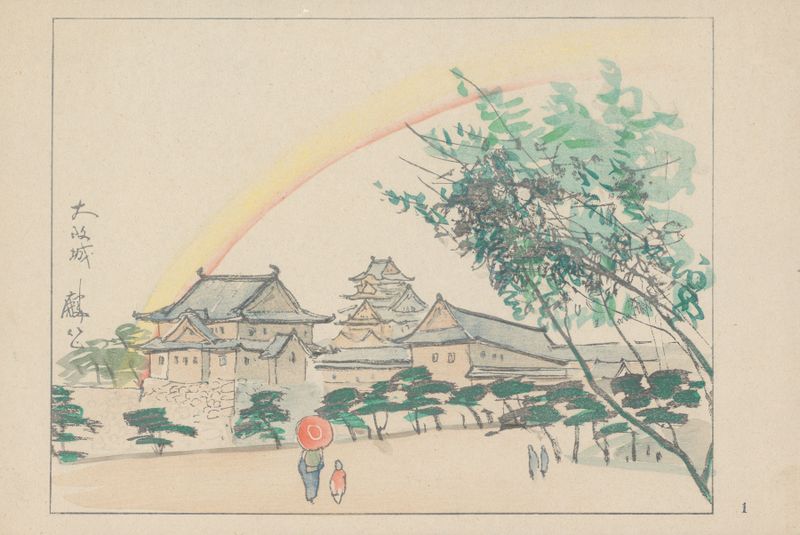
Osaka Castle, built by Toyotomi Hideyoshi in 1585 A.D
Akamatsu Rinsaku
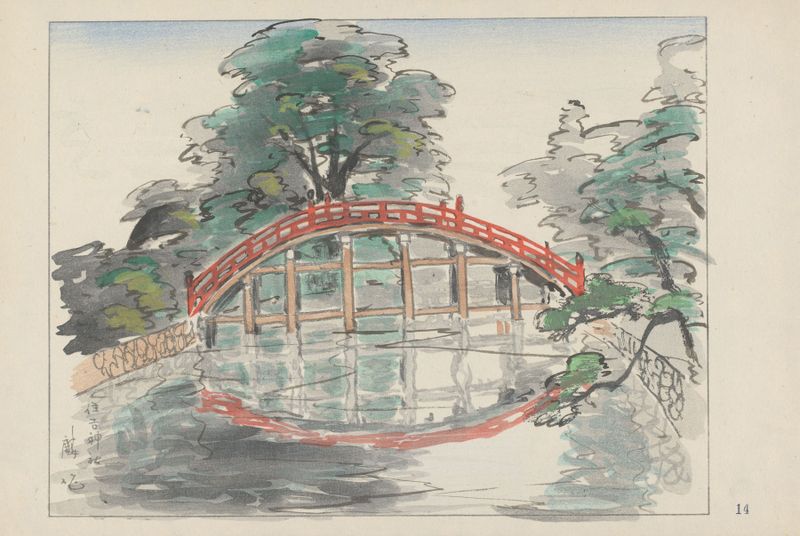
Sumiyoshi Shinto shrine
Akamatsu Rinsaku
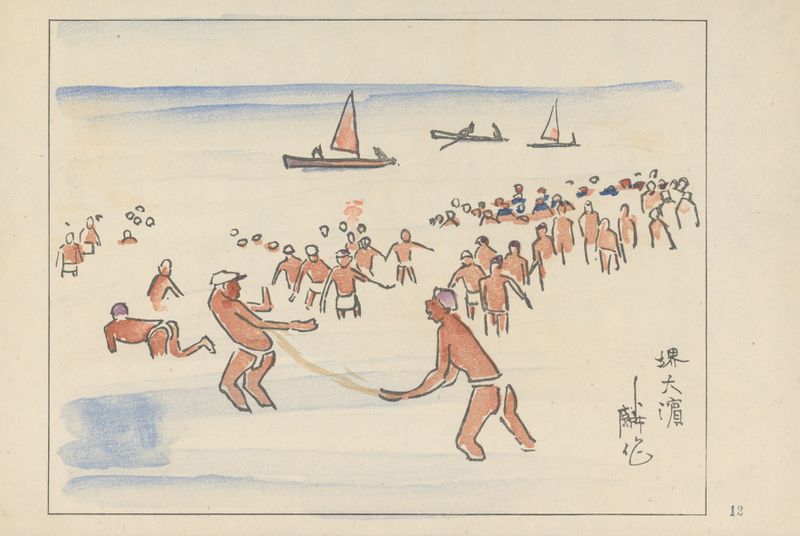
Sakai Ohama, swiming beach
Akamatsu Rinsaku

Kawaguchi, the estuary of Yodo river
Akamatsu Rinsaku
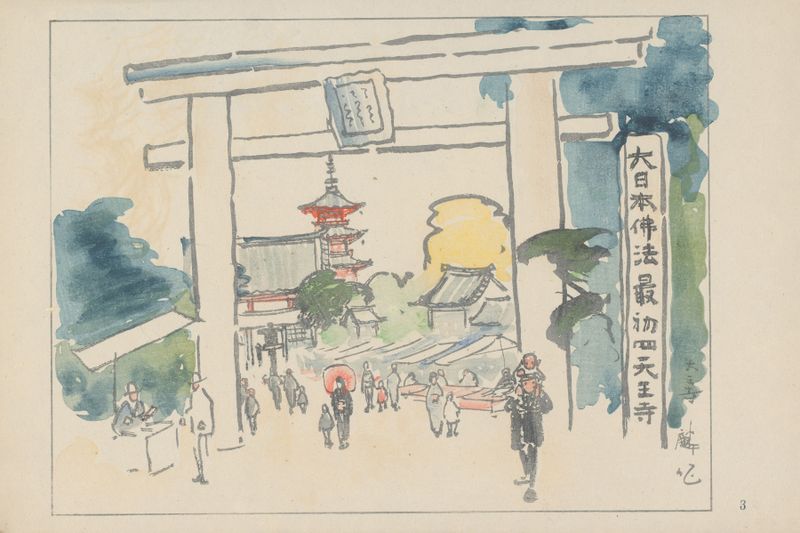
Shitennoji temple, built by Prince Shotoku in 587 A.D
Akamatsu Rinsaku
More Architecture Art
Browse all →
The statue of Liberty
Frédéric Auguste Bartholdi

View of Houses in Delft, Known as ‘The Little Street’
Johannes Vermeer

View of Houses in Delft, Known as ‘The Little Street’
Johannes Vermeer

The Cathedral in Rouen. The portal, Grey Weather
Claude Monet

The yellow house
Vincent van Gogh

The Church in Auvers-sur-Oise, View from the Chevet
Vincent van Gogh