Zamek od strony wiaduktu Pancera — History & Facts
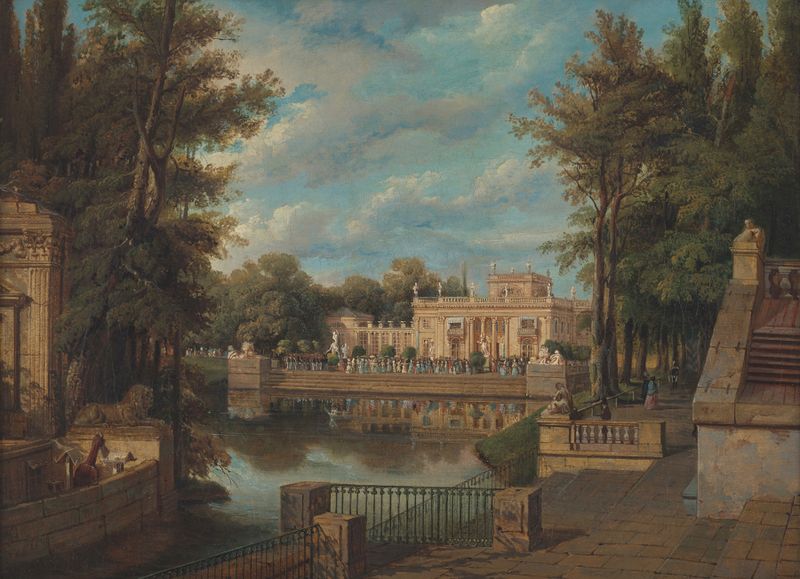
Who listens when art speaks of silence? In Zamek od strony wiaduktu Pancera, the echoes of a still landscape whisper of time’s passage, inviting contemplation on the movement beneath its serene surface. Look to the foreground where the grand structure of the castle emerges, its stony façade both imposing and melancholic against the muted sky. Notice how Seydlitz employs a palette of subdued earth tones, drawing the eye along the meandering path that leads towards the castle. The almost shadowed light falls gently on the ruins, suggesting an intimate, lingering presence that radiates a sense of nostalgia.
The delicate brushwork captures the quiet rustle of leaves, creating an atmosphere thick with anticipation. Delve deeper into the painting, and you’ll find contrasts between the solidity of the castle and the ephemeral quality of the surrounding nature. The subtle interplay of light and shadow evokes a tension between permanence and decay, while the sparse figures in the distance suggest life's quiet resilience amidst the weight of history. Each detail, from the weathered stones to the distant trees, speaks to a world in motion, simultaneously anchored in the present and drifting into the past. In 1853, Jan Seydlitz painted this work during a period of personal and artistic exploration in Poland, reflecting a broader Romantic fascination with nature and ruins.
This era was characterized by a burgeoning national identity, as artists sought to capture the essence of their homeland amid political upheaval. Seydlitz's choice to depict the castle from a vantage point elevated by the viaduct speaks to a desire for perspective—both literally and metaphorically—settling into a unique intersection of history, landscape, and emotion.