Ulica Świętojańska podczas procesji Bożego Ciała — History & Facts
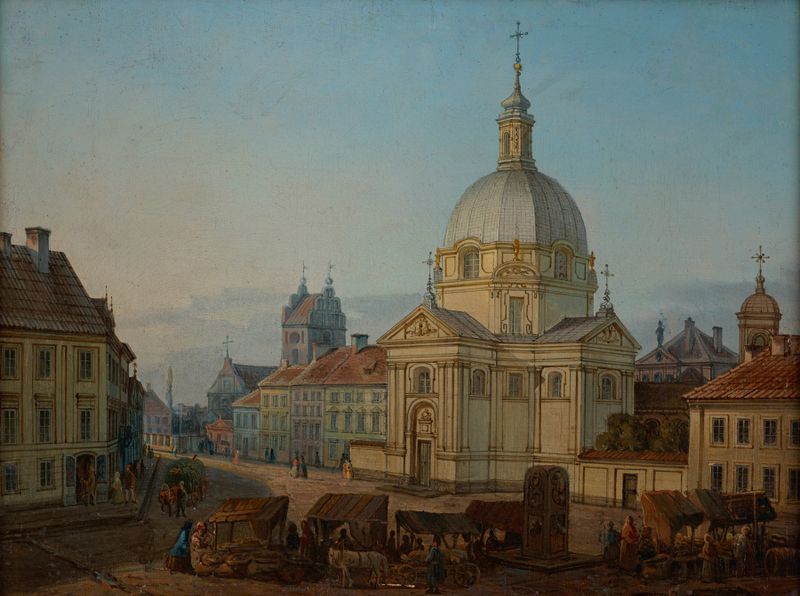
When did color learn to lie? The vibrant hues of a sunny day often conceal the shadows lurking beneath the surface of a seemingly festive occasion. As you gaze at Ulica Świętojańska podczas procesji Bożego Ciała, look to the centre where a procession unfolds, a stream of individuals moving gracefully through the cobblestone street. Notice how the sunlight dances upon their garments, bright colors juxtaposing the solemnity of their expressions. The careful attention to detail reveals the artist’s mastery; each figure is meticulously painted with a sense of movement, yet their expressions carry an undercurrent of tension that hints at deeper stories. At first glance, the painting radiates warmth and celebration, but a closer examination uncovers a chilling contrast between the joyous colors and the quiet solemnity of the participants.
The vibrant banners fluttering in the breeze appear almost deceptive, masking an atmosphere thick with unvoiced concerns, perhaps a reflection on societal expectations or personal betrayals. The distant architecture looms as a silent witness, grounding the scene in a reality that is both tangible and haunting. Jan Seydlitz created this work in 1860 amidst a Europe in flux, where art was beginning to break from the constraints of Romanticism. Living in Poland, he was influenced by the shifting dynamics in society and the art world.
The piece captures not only a religious observance but also reflects the complex emotional landscape of an artist grappling with the pressures of tradition and modernity, all while navigating a nation seeking its identity.