
Záber z Levoče — History & Facts
In Gejza Schiller's striking work, we find a delicate interplay between light and shadow, a reflective moment that speaks volumes about the human experience. Focus first on the shimmering gold tones that envelop the piece, drawing the eye to the intricate details of the architecture depicted. The luminous highlights contrast beautifully against the muted earth tones, suggesting a world where beauty thrives amidst struggle. Notice how the gentle lines of the buildings lead the viewer’s gaze upward, creating a sense of aspiration against the weight of history. Beneath the surface, the artwork reveals a tension between grandeur and decay.
The vibrant colors, while captivating, hint at a deeper melancholy, the golden facade masking the crumbling structure behind it. This duality reflects the complexities of existence, where beauty can often veil underlying pain, creating a poignant dialogue about resilience and fragility. Schiller created this piece between 1920 and 1924, a time when Central Europe was grappling with the aftermath of World War I. The artist, living in Czechoslovakia, sought to express the beauty of his homeland while also confronting the scars of conflict.
This period marked a significant shift in the art world, with artists exploring new emotional depths, and Schiller's work exemplifies that evolving narrative.
More Artworks by Gejza Schiller
Browse all →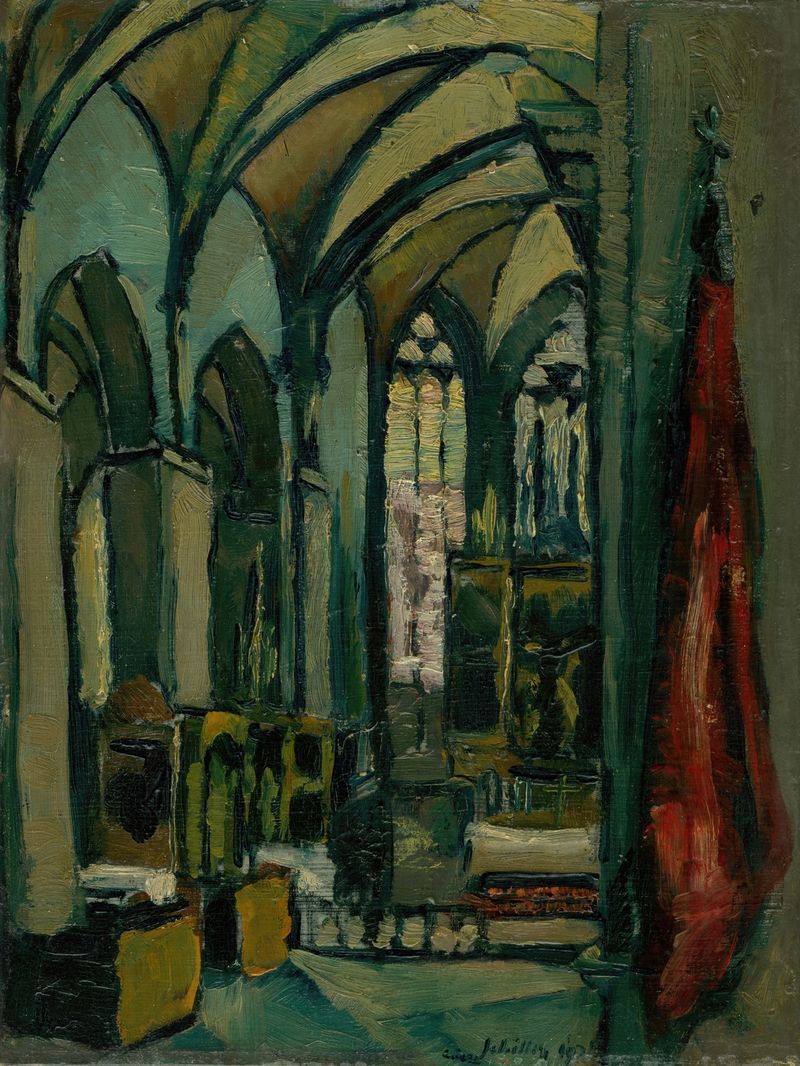
More Architecture Art
Browse all →
The statue of Liberty
Frédéric Auguste Bartholdi

View of Houses in Delft, Known as ‘The Little Street’
Johannes Vermeer

View of Houses in Delft, Known as ‘The Little Street’
Johannes Vermeer

The Cathedral in Rouen. The portal, Grey Weather
Claude Monet

The yellow house
Vincent van Gogh

The Church in Auvers-sur-Oise, View from the Chevet
Vincent van Gogh