Vnútro kostola — History & Facts
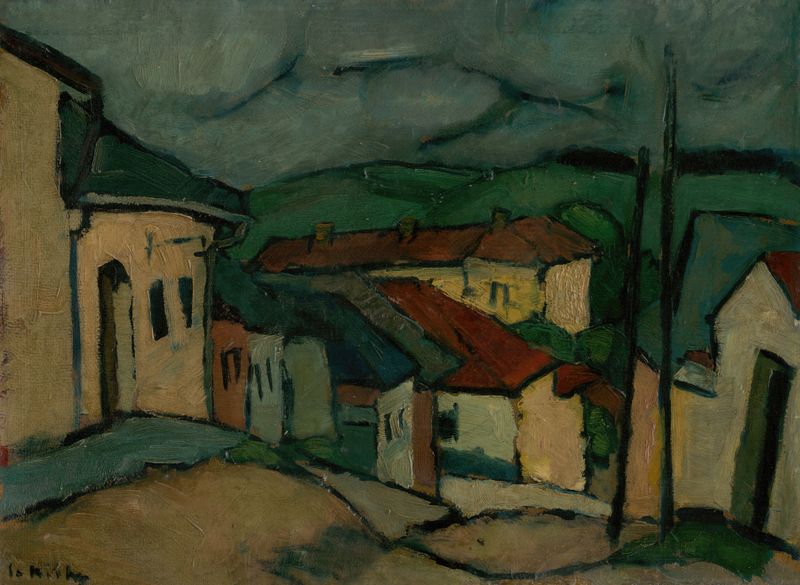
This notion resonates deeply within the poignant stillness of a church interior, where violence simmers beneath the surface of serene devotion. In this space, the juxtaposition of faith and suffering intertwines, prompting an exploration of the human condition within sacred walls. Look to the center of the composition, where the altar stands as a focal point, bathed in a muted light that contrasts with the darker shadows lurking around it. Notice the intricate details of the stained glass, which filter sunlight into fragmented hues, creating an ethereal ambiance.
The artists’ brushwork captures both solidity and fragility, inviting you to wander through the hallows of the sanctuary, while the somber palette suggests a narrative that is both uplifting and foreboding. Amidst the beauty, violence whispers through the contrasts—light and dark, sacred and profane. The ominous undercurrents are felt in the heavy silence, where the stillness of worship coexists with the echoes of historical upheaval. Each stroke of paint speaks to a deeper unrest, reminding viewers of the burdens carried by generations seeking solace within these sacred spaces. Gejza Schiller created this artwork between 1920 and 1924 in Slovakia, a time marked by political unrest and cultural change following World War I.
As artists grappled with the societal impact of conflict, Schiller’s work reflects a nuanced understanding of the duality present in human experience—where the search for peace is often shadowed by the remnants of violence.