Zeilsloep met drie figuren — History & Facts
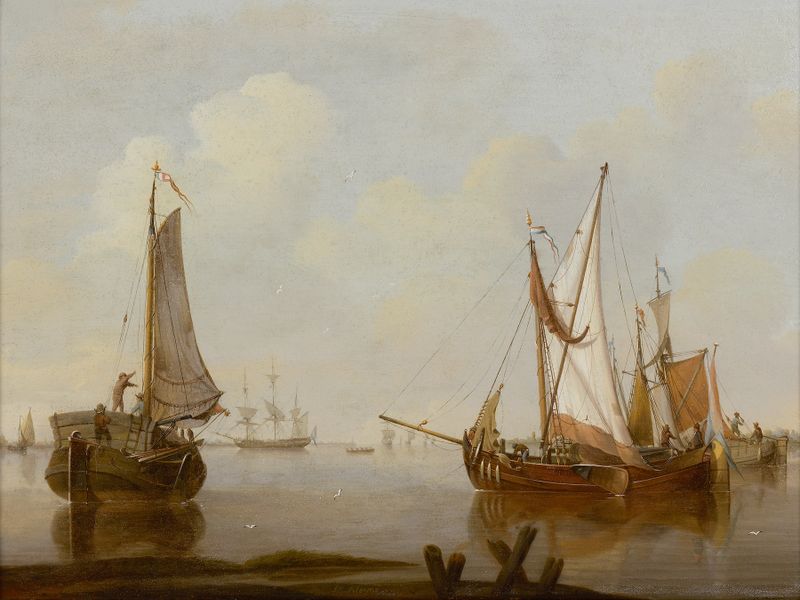
In the space between the brushstrokes of Zeilsloep met drie figuren, a rich narrative unfolds, whispering secrets of the human experience through stillness. The essence of silence envelops the scene, urging us to ponder the thoughts and emotions that linger unspoken among its figures. Focus on the trio of figures in the boat, their expressions captured in a moment of serene contemplation. Notice how the light glimmers softly on the water, creating gentle ripples that seem to echo the quietude among them.
The muted color palette blends earthy greens and browns with the subtle blue of the water, inviting the viewer into a tranquil yet introspective space. The composition is carefully balanced, drawing the eye across the boat and into the horizon, where the vastness of the world surrounds them, amplifying the weight of what remains unshared. Hidden within this tableau is a profound exploration of solitude and companionship. Each figure is distinct yet part of a collective silence, suggesting both unity and isolation.
The tension of their stillness speaks to the complexities of human connections—how proximity does not always equate to communication. The delicate brushwork captures the fleeting nature of a moment, rendering it timeless and evocative as it contrasts the serenity of the scene with the potential storm of unexpressed feelings. David Kleyne painted Zeilsloep met drie figuren in the late 18th century, a period marked by the emergence of Romanticism and a shift towards personal expression in art. Living in the Netherlands, he was influenced by his contemporaries who explored themes of nature and emotion.
This painting reflects not only his artistic inclinations but also the broader cultural currents of introspection and emotional depth that characterized the era.