Zwei Fischerboote vor Anker — History & Facts
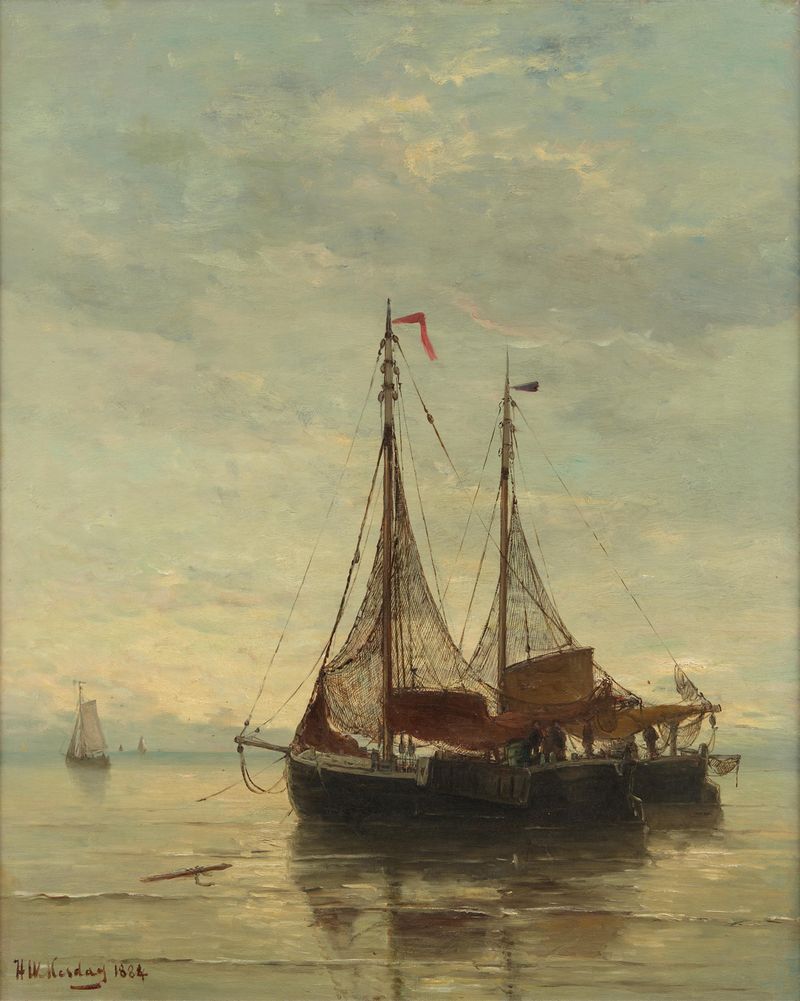
What if silence could speak through light? In Zwei Fischerboote vor Anker, the interplay of hues and shadows invites us to contemplate unuttered desires anchored beneath the surface. Look to the center, where two fishing boats rest serenely on still waters. The gentle blues and greens of the sea merge with soft, sandy browns of the shore, while pale, golden light pours across the scene from the horizon. Notice how Mesdag captures the tranquility of this moment, each brushstroke revealing the delicate balance between nature and man-made vessels.
The boats, seemingly at peace, tell a story of waiting and longing. Delve deeper and you’ll find hidden narratives woven into the fabric of this composition. The quietude suggests a longing for connection — between fishermen and the sea, and perhaps even between individuals. The boats, with their reflective surfaces, hint at the stillness of aspirations unfulfilled, while the shimmering light dances on the water, contrasting the tranquil scene with a sense of urgency.
It speaks of moments suspended in time, where silent dreams linger in the air. During the late 19th century, when this piece was likely painted, Mesdag was deeply entrenched in the vibrant art community of The Hague, known for its plein air painting. This period witnessed a fascination with light and color, a response to the changing perceptions of nature amidst industrialization. The artist’s dedication to capturing the essence of landscapes reflects both his personal journey and the broader transformations of society at that time.