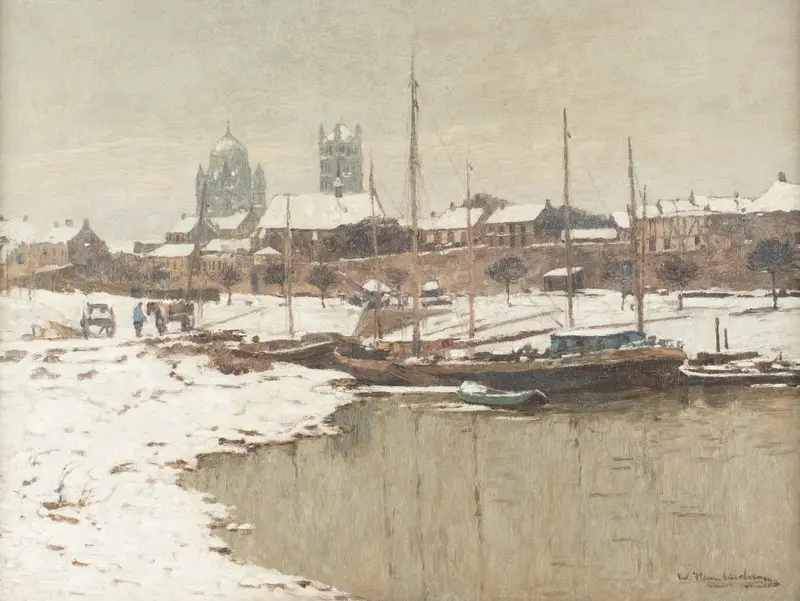
German, 1850–1910
Wilhelm Hambüchen was a German painter known for his contributions to the art world in the late 19th and early 20th centuries. He is recognized for his landscapes and still-life compositions, which often reflect a deep appreciation for nature and the subtleties of light. Hambüchen was born in 1850 in Düsseldorf, Germany, where he began his artistic training at the Kunstakademie Düsseldorf under notable instructors. He later became associated with the Düsseldorf school of painting, which emphasized realism and attention to detail. Throughout his career, he exhibited widely and gained recognition for his ability to capture the essence of his subjects. His major works include 'Autumn Landscape' and 'Still Life with Flowers', which showcase his mastery of color and composition. Hambüchen's style is characterized by a blend of realism and impressionism, making him a significant figure in the transition of German art during his time. He passed away in 1910, leaving behind a legacy that influenced subsequent generations of artists.
2 artworks