A Ball Game Before a Country Palace — History & Facts
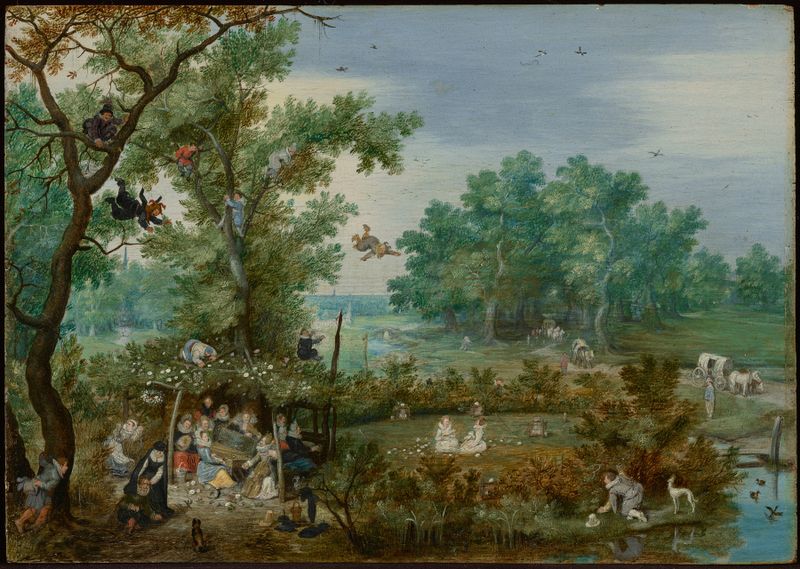
Can beauty exist without sorrow? In the vibrant dance of life, the joy of play often masks the shadows of deeper truths. Look to the center of the canvas where a lively game unfolds, a group of children engaged in spirited play before an opulent palace. The delicate brushwork captures the light, rendering the soft hues of the sky and the warm tones of the architecture with a luminous quality. Observe how the figures are set against a backdrop of lush greenery, their laughter seemingly echoing through the air, while the ornate palace looms large—a symbol of status and wealth.
Each detail invites the eye to wander: the vibrant costumes of the children, the intricate carvings on the palace facade, and the gentle sway of the trees bending toward the warmth of the sun. Yet beneath this surface gaiety lies a poignant contrast. The innocent joy of the children juxtaposes with the grandeur of the palace, hinting at the unbridgeable gap between their carefree existence and the weight of privilege. As they frolic, one might sense an underlying yearning for the freedom that wealth cannot buy, a bittersweet acknowledgment of life’s dual nature.
The painting captures a fleeting moment where the essence of childhood play collides with the stark realities of social disparity, prompting contemplation of what truly defines happiness. Adriaen van de Venne painted this work around 1614 in the Netherlands, a period marked by both artistic innovation and social change. Emerging from an era of burgeoning wealth due to trade, the artist found himself in a cultural milieu brimming with contradictions: the opulence of the elite contrasted sharply with the struggles of the common folk. This piece reflects his keen insight into the human condition, offering a glimpse into the complexities of joy and sorrow, all while contributing to the rich tapestry of Dutch genre painting.