A British warship in three positions in the Channel — History & Facts
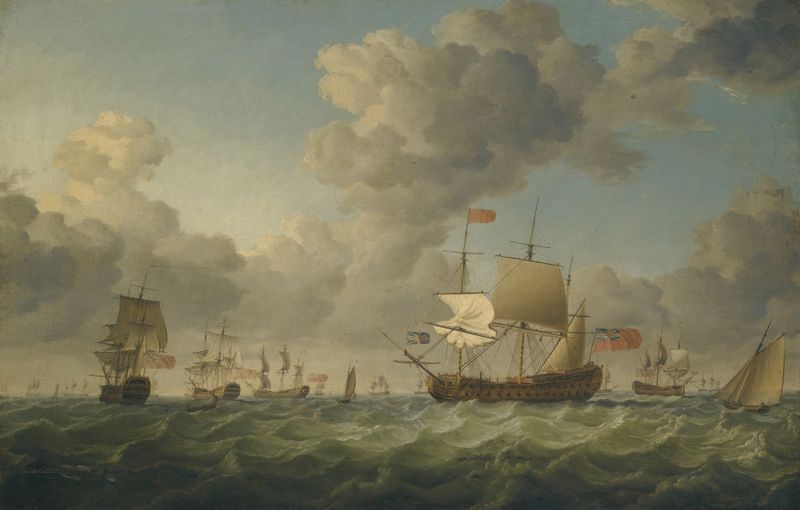
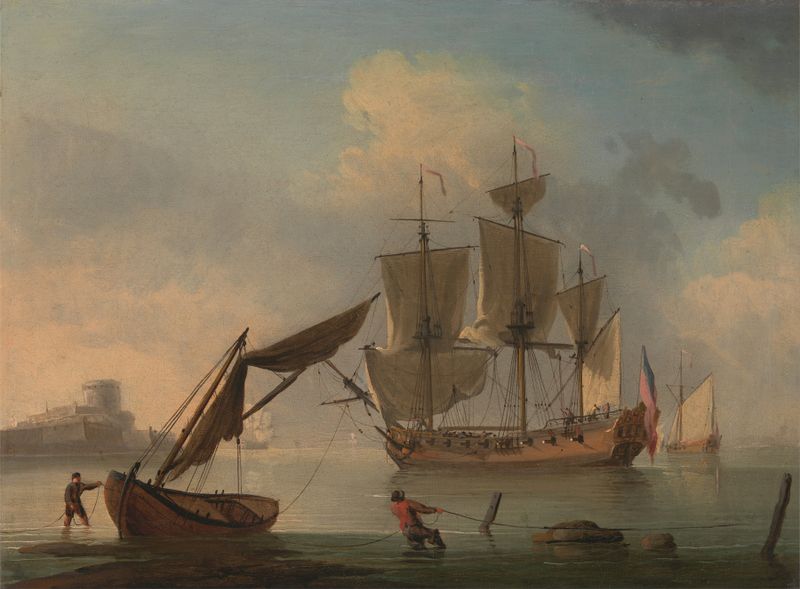
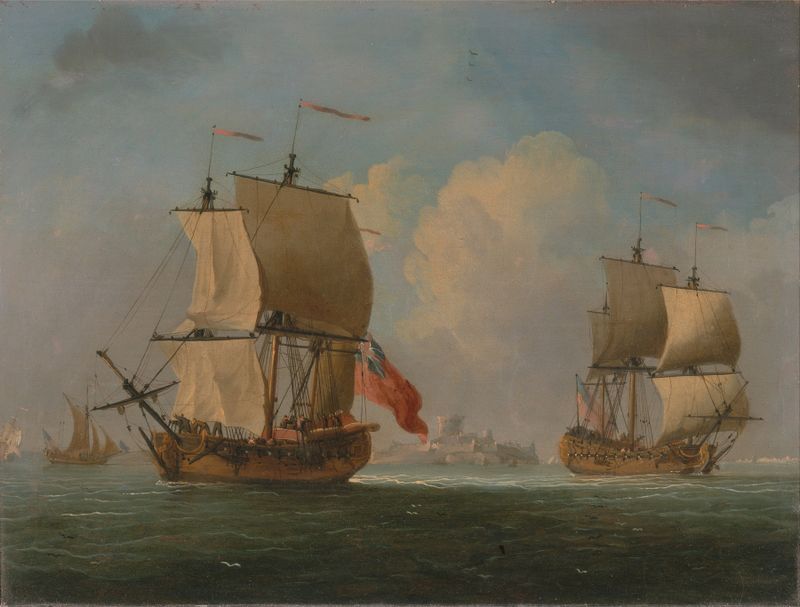
In the vibrant strokes of the canvas, the pulse of maritime history emerges, revealing a tale of valor and movement that echoes through time. Look to the lower left, where a British warship stands majestically against a churning sea. Notice how the billowing sails, caught in a moment of gust, dance with life, their white canvas stark against the deep blues and greens of the water. The artist’s deft use of light captures the reflections and shadows on the hull, allowing the viewer to feel the tension between the ship and the natural world surrounding it. Yet, beneath the surface of this maritime tableau lies a narrative of conflict and endurance.
The positions of the ships illustrate not just a command of the waters, but a strategic dance amidst potential peril. Each vessel, in its distinct stance, evokes a sense of readiness, while the background clouds gather ominously, hinting at the unpredictability of naval warfare. The harmony of the composition belies the chaos that such scenes may have once embodied. Francis Swaine painted this work during a time when naval power was paramount in British society, likely in the late 18th century.
As a marine painter, he thrived in an era marked by the expansion of the British fleet, with war and exploration shaping the cultural landscape. His works emerged as reflections of the burgeoning British maritime identity, capturing not just the ships, but the spirit of an age defined by the sea.