A calm with fishermen unloading their catch — History & Facts
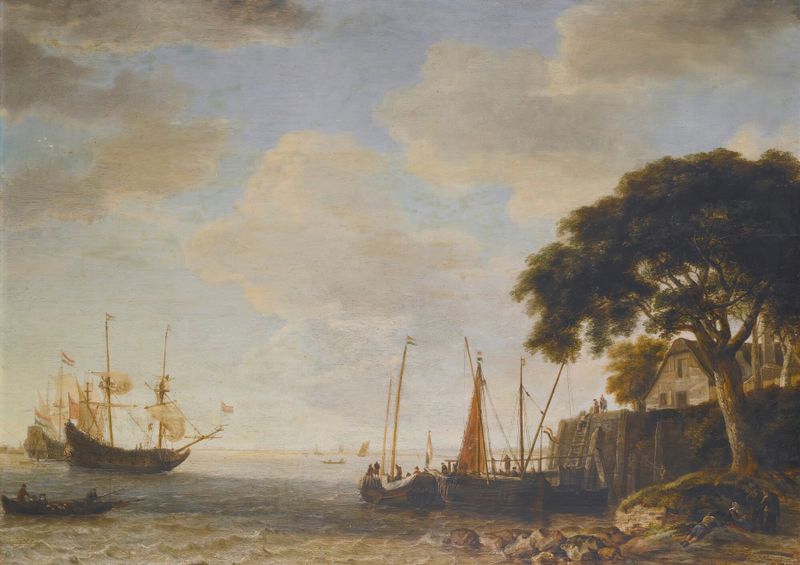
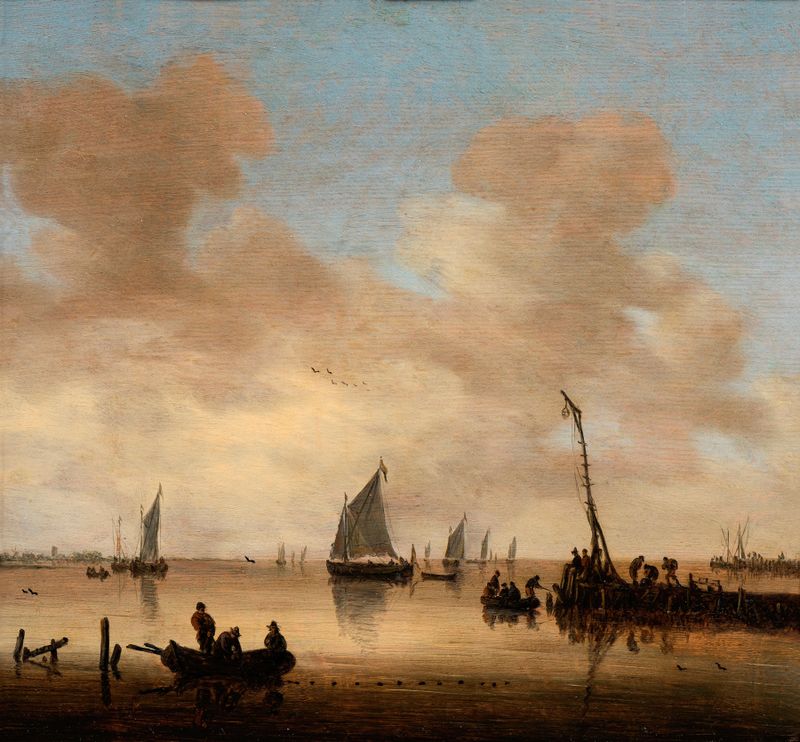
Could beauty survive in a century of chaos? In A calm with fishermen unloading their catch, we find solace amid the ebb and flow of life by the water’s edge, where the simple act of labor transforms into an ode of creation. Look to the left at the robust figures of fishermen, their backs bent under the weight of nets heavy with the day’s bounty. Notice how the sunlight bathes their weathered faces, highlighting the strength etched into their worn hands, while shadows dance across the rippling water. The palette is one of muted earth tones, evoking a sense of harmony and grounding, with soft blues and greens that reflect the serenity of the scene, contrasting with the labor's intensity. Yet, beneath this tranquil surface lies an undercurrent of tension.
While the fishermen are absorbed in their task, the distant horizon hints at an approaching storm, suggesting both the unpredictability of the sea and the fragility of existence. The juxtaposition of hard labor and impending chaos invites contemplation on the impermanence of life, the vulnerability of creation against nature’s whims, and the cyclical nature of human endeavor. Jeronymus van Diest painted this work during a time when the influence of Dutch landscape art was profound, likely in the late 17th century. The burgeoning interest in realism and detail reflected a society grappling with its identity and natural world.
As the artist embraced this evolving landscape genre, he captured the essence of daily life, offering a window into the resilience and beauty inherent in both man and nature during tumultuous times.