Quiet lake — History & Facts
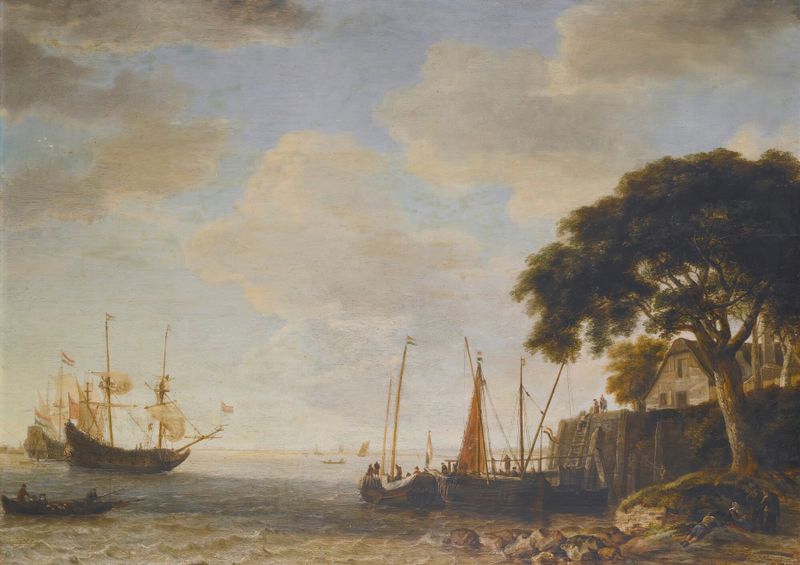
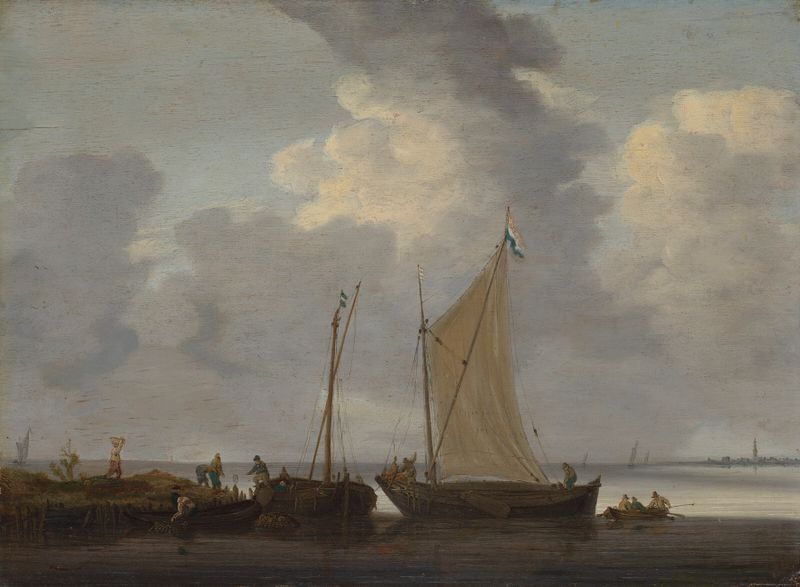
Could beauty survive in a century of chaos? In a world often clouded by turmoil, the tranquility of a silent lake speaks to our deepest yearning for peace and solace. Look closely at the shimmering waters that stretch across the canvas, reflecting a gentle sky overhead. Notice how the stillness of the surface contrasts with the soft, dappled light filtering through the trees on the left. The artist masterfully employs a muted palette of greens and blues, evoking both serenity and a subtle melancholy.
Your eyes are drawn to the delicate ripples that suggest a breeze, hinting at the unseen forces that strive to disrupt this harmony. The juxtaposition of light and shadow reveals an emotional tension inherent in the scene. While the expanse of water symbolizes hope and refuge, the encroaching darkness of the forest on the edges hints at uncertainty and the looming chaos of the outside world. Small details, like the solitary boat floating quietly, represent both isolation and a journey yet to come.
This delicate balancing act between light and shadow embodies a profound commentary on the fragility of beauty amidst adversity. Created between 1650 and 1700, this work emerged during a time of significant upheaval across Europe, with wars and social transformations shaping the landscape of art. Jeronymus van Diest, known for his serene landscapes, sought to capture the ephemeral moments of tranquility in nature. During this period, he found solace in the natural world, reflecting the universal desire for peace during turbulent times, offering viewers a glimpse of hope through the stillness of a quiet lake.