
A Camp in the Caucasus — History & Facts
This sentiment resonates deeply within the canvas, inviting a reflection on the delicate interplay between hope and despair. Look closely at the vibrant hues of ochre and emerald that swirl together, drawing your eye to the encampment nestled amidst the majestic Caucasus mountains. Notice how light bathes the scene, illuminating the faces of weary soldiers who, despite their fatigue, share a moment of camaraderie. The contrasting shadows lend a sense of depth, suggesting untold stories that lie beneath the surface. The juxtaposition of the rugged, imposing landscape and the delicate human figures speaks to a broader struggle—one of perseverance in adversity.
The soldiers, cloaked in their muted uniforms, represent the fragility of hope clinging to life amidst chaos. Tiny details, such as the flickering campfire or the tattered flags fluttering against the wind, symbolize resilience, evoking the bittersweet essence of survival in a world marked by conflict. Paul von Franken painted A Camp in the Caucasus in 1860, during a period marked by political upheaval across Europe. Living in a time of great change, he sought to encapsulate the human spirit amid the struggles of war.
This work, created in the context of rising nationalism and shifting allegiances, reflects not only the artist's experiences but also the turbulent era that shaped his vision, blending a poignant narrative with the raw beauty of the landscape.
More Artworks by Paul von Franken
Browse all →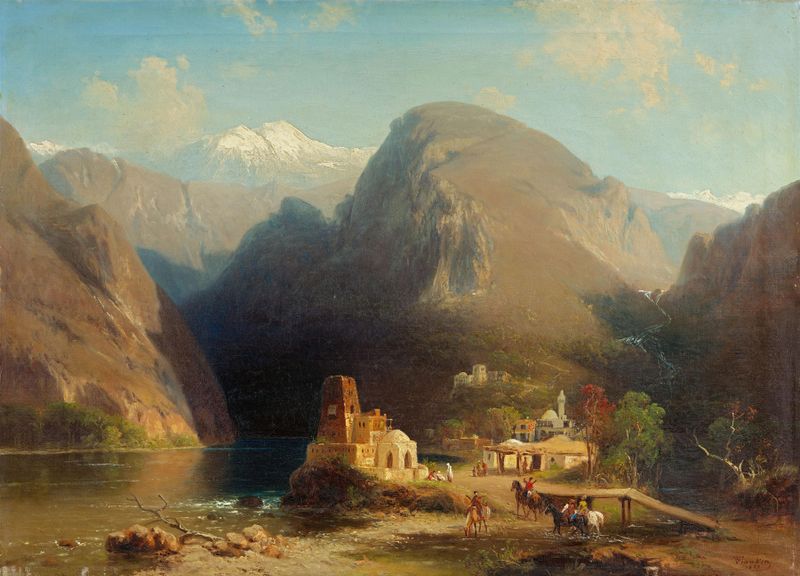
Landschaft im Kaukasus
Paul von Franken
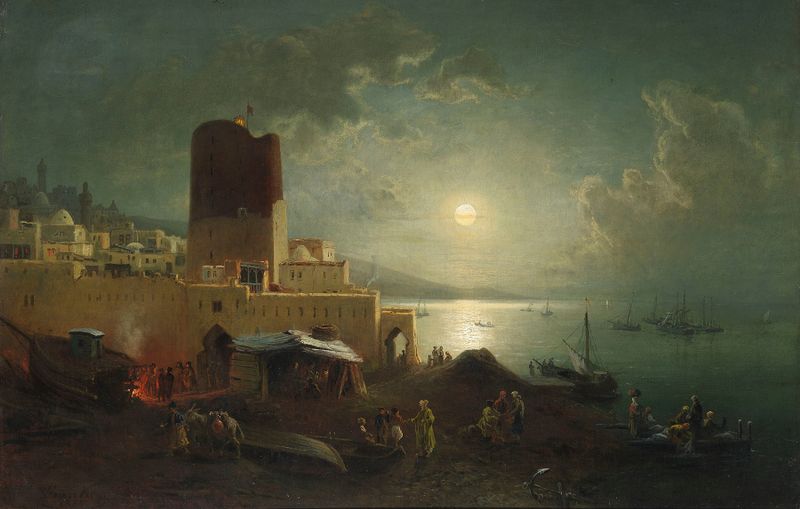
Der Jungfrauenturm (Qiz Qalasi) in Baku am Kaspischen Meer
Paul von Franken
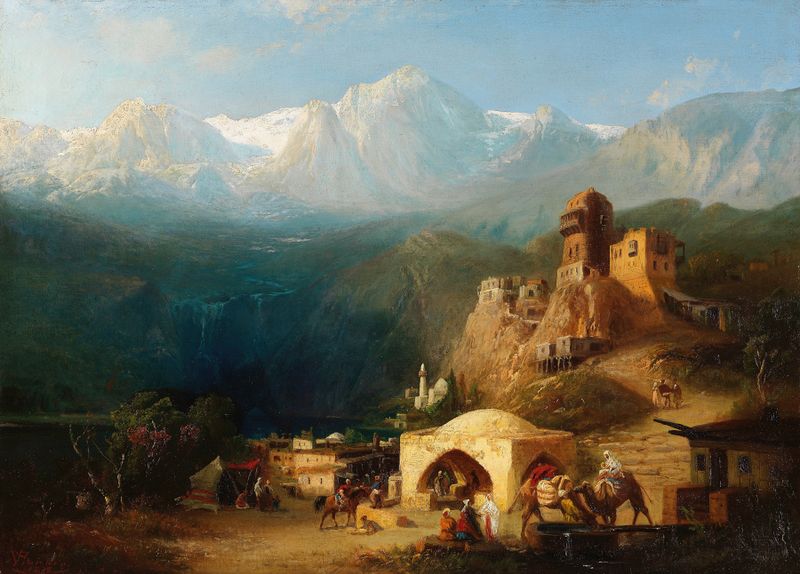
Aus dem Nord-Kaukasus
Paul von Franken
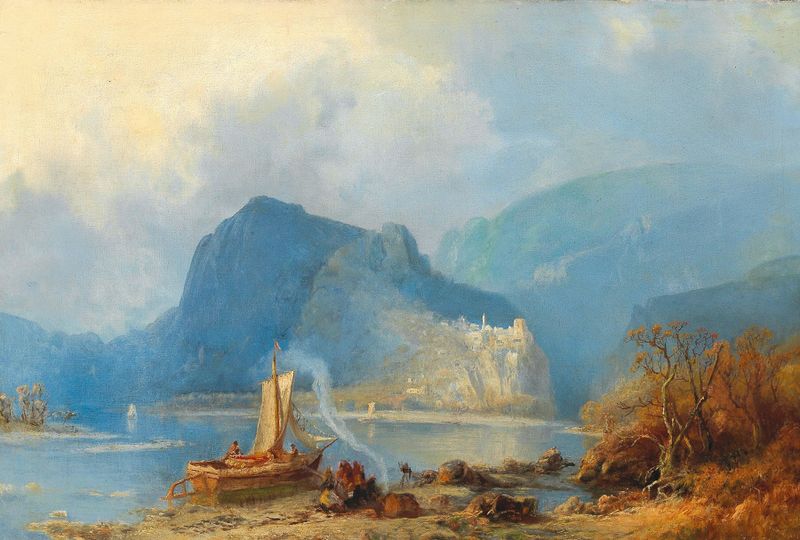
Mountain lake in the Caucasus
Paul von Franken
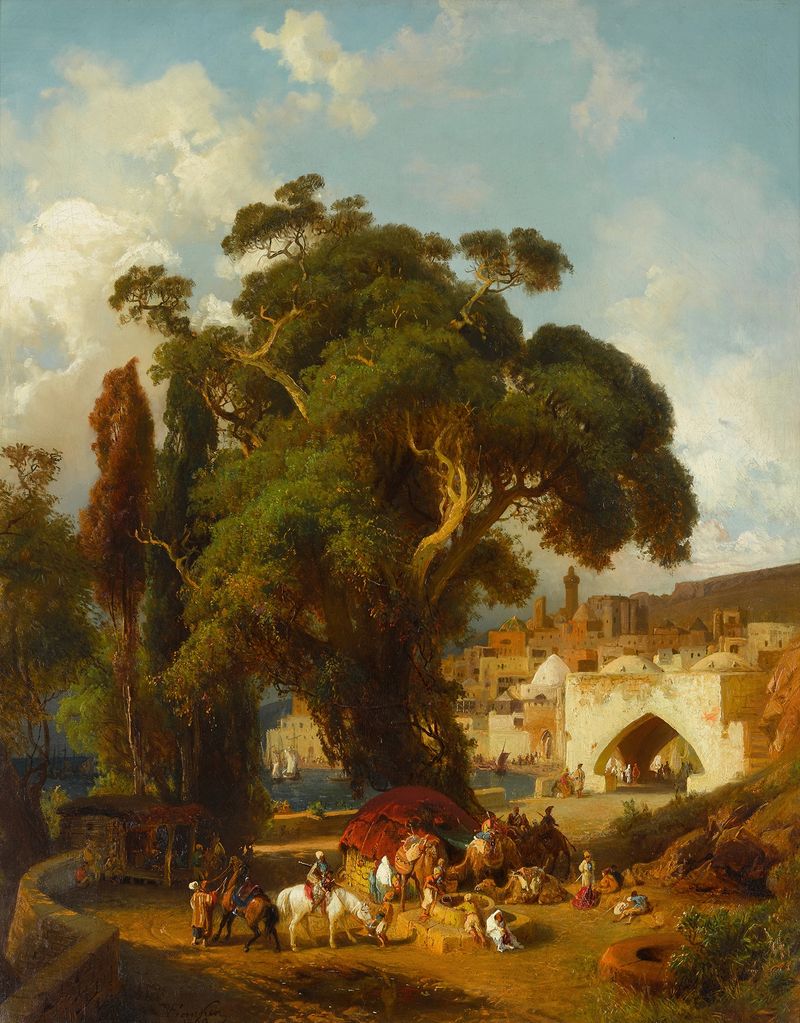
A gateway to an Eastern town
Paul von Franken

Caucasian landscape
Paul von Franken
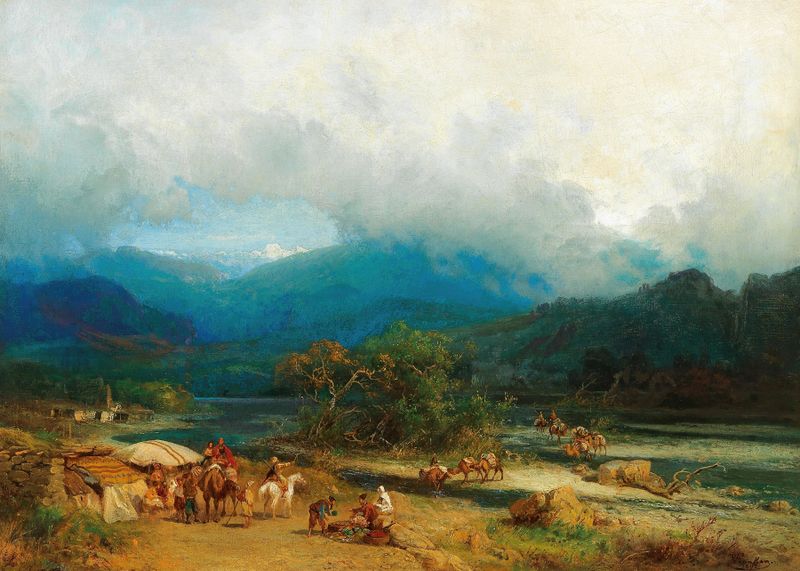
Resting on the riverbank in the Caucasus
Paul von Franken





