
Der Jungfrauenturm (Qiz Qalasi) in Baku am Kaspischen Meer — History & Facts
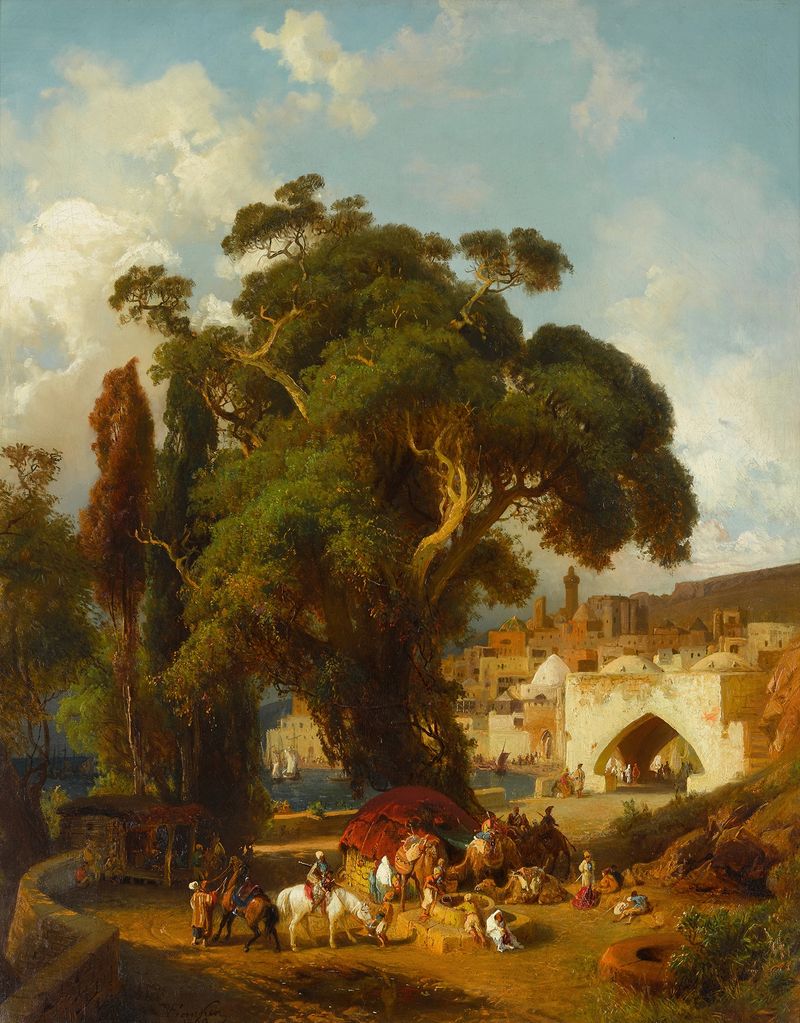
In the delicate interplay of light and shadow, a whisper of history unfolds, inviting us to ponder the stories that linger in the air. Focus on the golden glow washing over the ancient tower, its weathered stones absorbing the light like a cherished memory. The composition draws the eye upward, tracing the elegant contours of the structure as it stretches toward the sky. Notice how the azure of the Caspian Sea contrasts with the earth tones of the tower, creating a harmonious dialogue between land and water, history and the present. Amidst this tranquil scene lies an emotional tension between permanence and transience.
The tower stands resolute against the passage of time, a sentinel that has borne witness to countless sunsets and the ebb and flow of life. Yet, the soft illumination speaks of fleeting moments, inviting viewers to consider the lives that have passed before it, their secrets tucked within the folds of silence. Paul von Franken created this work in 1880 while living in Baku, a period marked by cultural exchange and a burgeoning interest in the East. The artist embraced this moment to capture the architectural beauty of the Qiz Qalasi, reflecting both the regional heritage and his own fascination with light and form.
In a world where traditional and modern influences intertwined, his painting stands as a testament to the enduring power of place and memory.
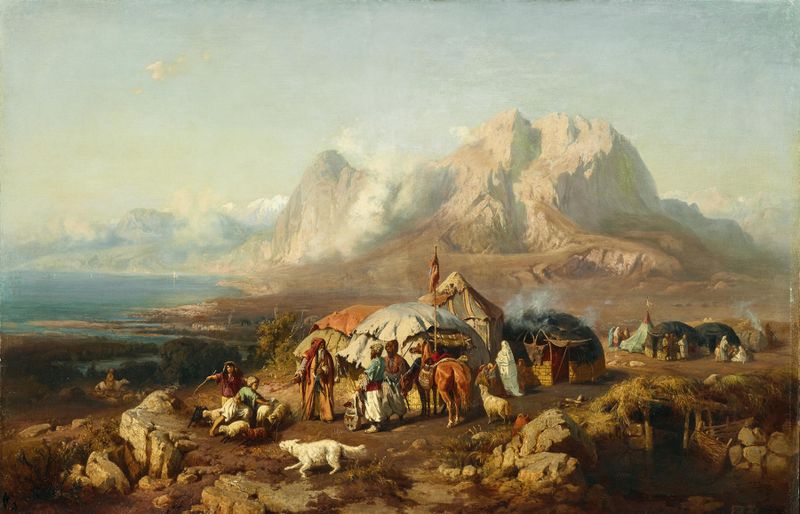
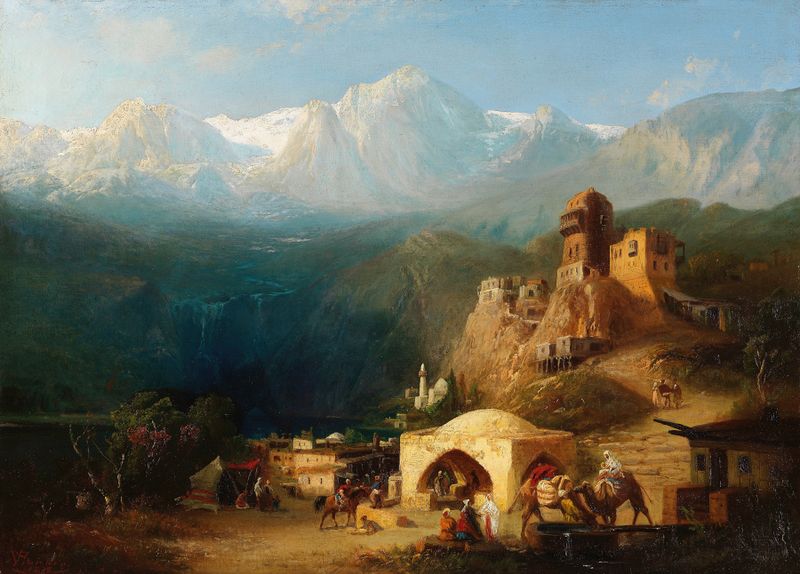
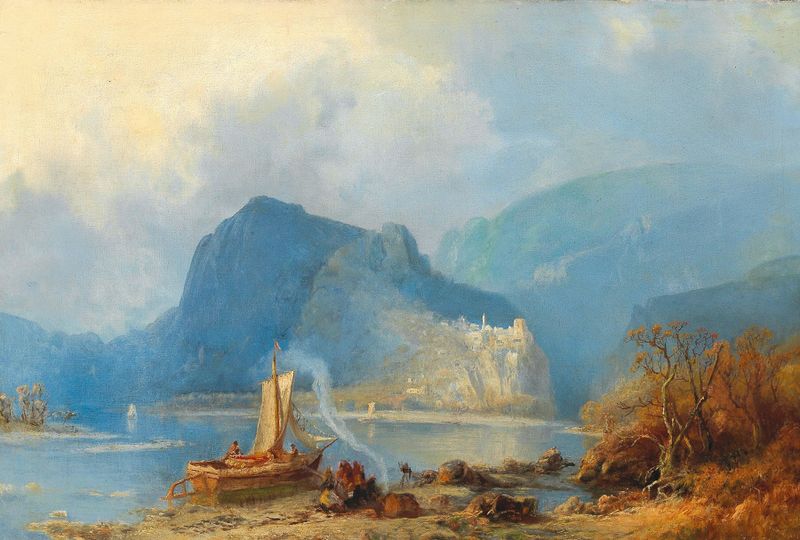
More Artworks by Paul von Franken
Browse all →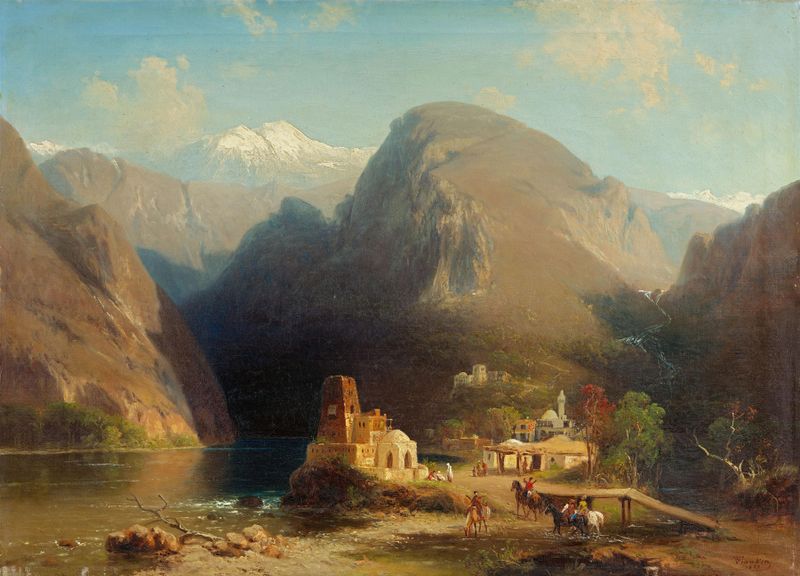

More Architecture Art
Browse all →
The statue of Liberty
Frédéric Auguste Bartholdi

View of Houses in Delft, Known as ‘The Little Street’
Johannes Vermeer

View of Houses in Delft, Known as ‘The Little Street’
Johannes Vermeer

The Cathedral in Rouen. The portal, Grey Weather
Claude Monet

The yellow house
Vincent van Gogh

The Church in Auvers-sur-Oise, View from the Chevet
Vincent van Gogh