
Aus dem Nord-Kaukasus — History & Facts
What stories linger in the shadows of memory, waiting to be unveiled? Look to the bottom left, where deep shadows cascade down the rugged cliffs, giving way to the soft, muted greens and earthy browns of the landscape. Notice how the light gently breaks through the clouds, glimmering on the edges of the foliage, creating a stark contrast with the enveloping darkness. The composition draws your eye upward, following the flow of the mountains, leading to the distant peak that almost touches the sky.
Here, the artist’s technique—a delicate balance of chiaroscuro—invites you into a world suspended between light and dark. In the interplay of shadows and light, emotional tensions emerge. The shadows can be perceived as the weight of history, while the bright patches of sunlight symbolize hope and renewal. Each element speaks to the duality of nature, reflecting both the beauty and the peril of life in the northern Caucasus.
The rocky terrain suggests resilience, enduring against the passage of time, while the luminous sky hints at the ever-present possibility of change and enlightenment. Paul von Franken painted Aus dem Nord-Kaukasus in 1876 during a period marked by a growing interest in landscape painting as an expression of nationalism and cultural identity. Living in Germany, he was part of a wider movement that sought to capture the profound beauty of natural settings. At this time, the art world was transitioning, and artists sought to convey not just the physical reality of their subjects, but an emotional resonance that connected viewers to the essence of the landscapes depicted.
More Artworks by Paul von Franken
Browse all →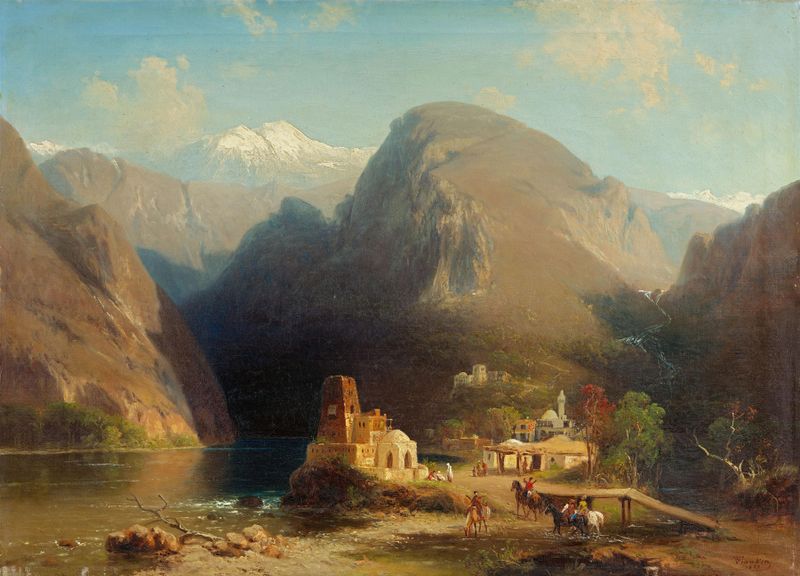
Landschaft im Kaukasus
Paul von Franken
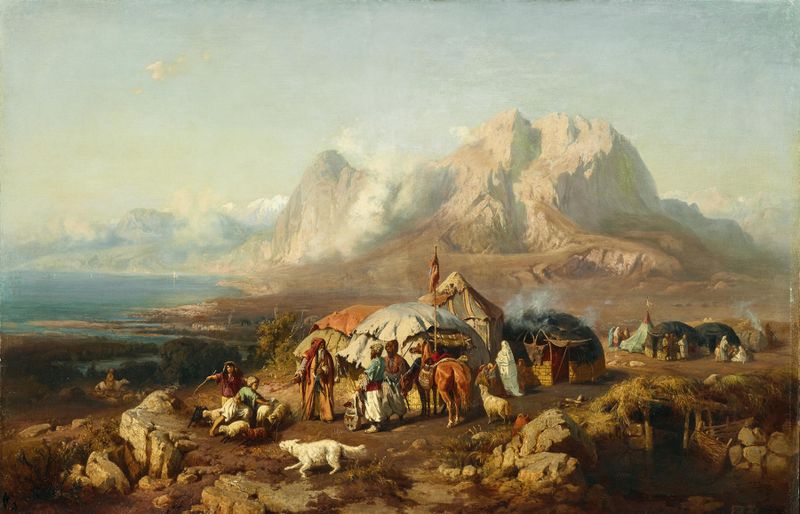
A Camp in the Caucasus
Paul von Franken
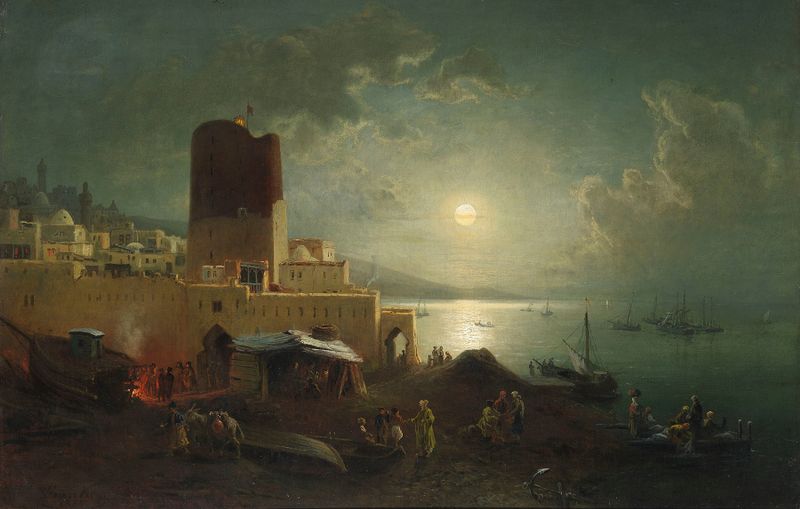
Der Jungfrauenturm (Qiz Qalasi) in Baku am Kaspischen Meer
Paul von Franken
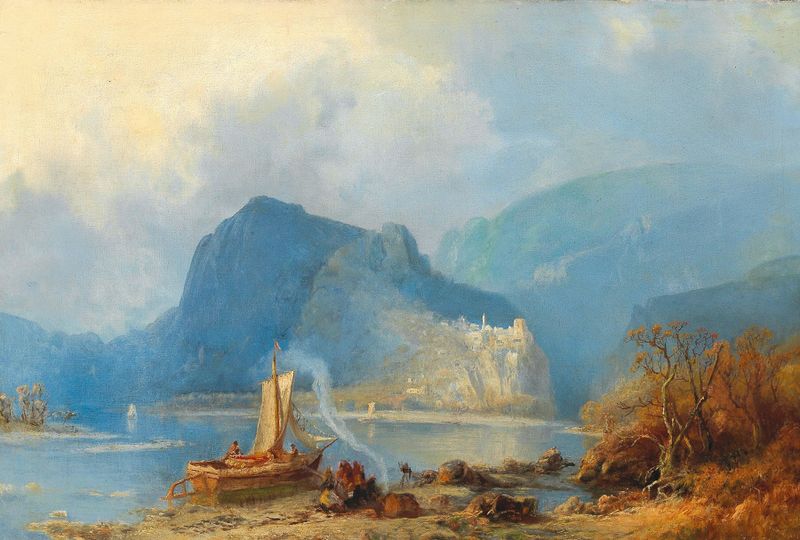
Mountain lake in the Caucasus
Paul von Franken
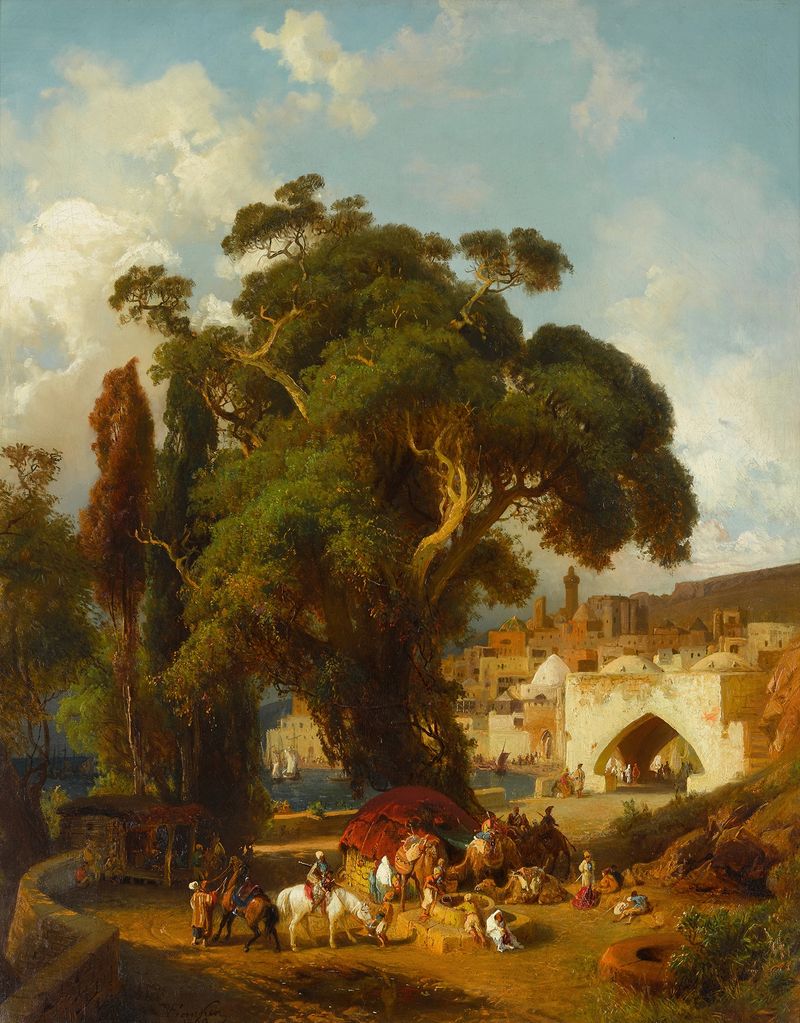
A gateway to an Eastern town
Paul von Franken

Caucasian landscape
Paul von Franken
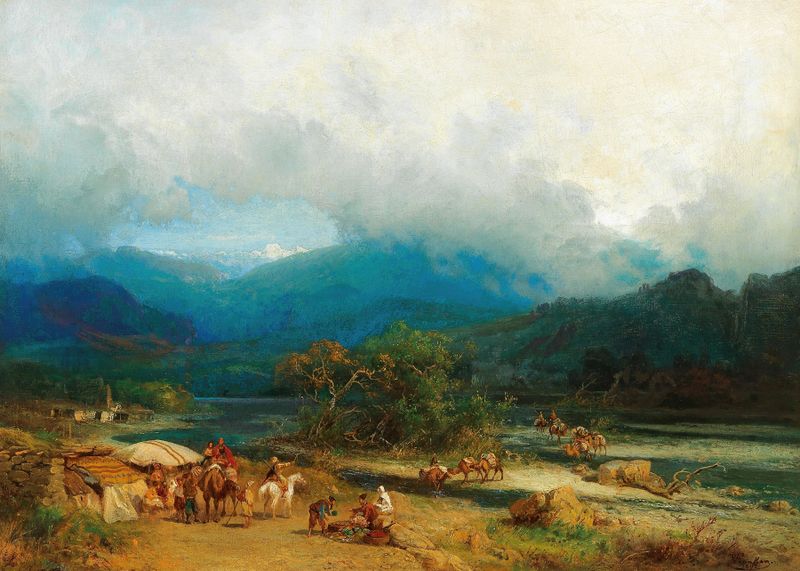
Resting on the riverbank in the Caucasus
Paul von Franken





