A Capriccio View Of A Busy Harbour Scene With Figures Loading Their Boats — History & Facts
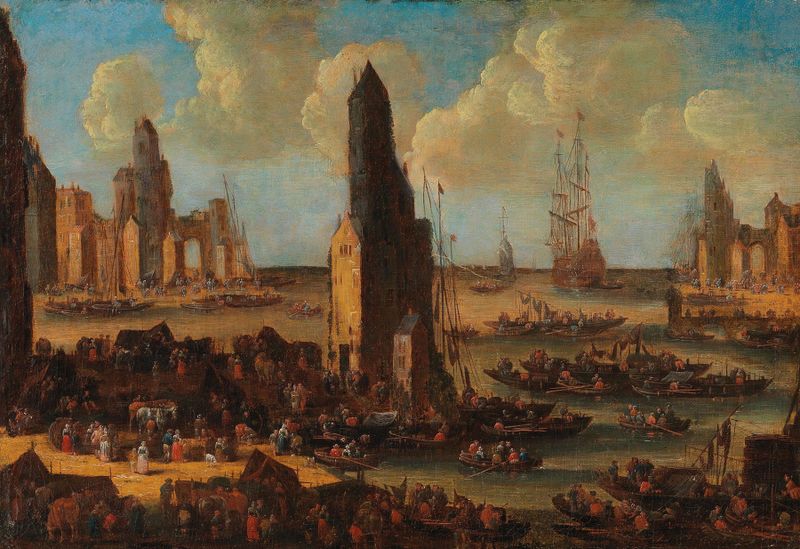
In A Capriccio View Of A Busy Harbour Scene With Figures Loading Their Boats, colors clash with a serene backdrop, hinting at a subtext of unrest lurking beneath the surface. The bustle of the harbor suggests life, yet the tension in the air whispers of undercurrents that disrupt its tranquility. Look to the center, where vivid hues of blue and green intertwine, creating a vibrant seascape that contrasts with the muted browns and grays of the boats. Notice how the figures, caught mid-action, seem almost frozen in time, their gestures dynamic yet solemn.
The brushwork conveys a sense of movement, as if the very wind stirs the scene, while the carefully balanced composition invites the viewer’s eye to dance around the busy harbor, revealing a coexistence of stillness amid chaos. Delve deeper, and you may sense the emotional weight of each figure's labor. The boats, heavy with goods, echo the burdens that individuals carry, and their positioning hints at a fragile balance between commerce and conflict. The juxtaposition of lively trade against the subdued palette suggests an awareness of violence and strife that can erupt at any moment, reminiscent of the historical tensions of maritime dominance and the ever-present threat of upheaval. Pieter Casteels II painted this intriguing work during a period of personal and artistic exploration, likely in the late 17th century, when the maritime world was both a site of prosperity and conflict.
As trade routes expanded and European powers vied for control, life in harbors was filled with both promise and peril. Casteels, situated in a milieu rich with artistic collaboration and competition, captured this delicate balance in a scene teeming with life yet shadowed by unseen forces.