A harbour with numerous boats — History & Facts
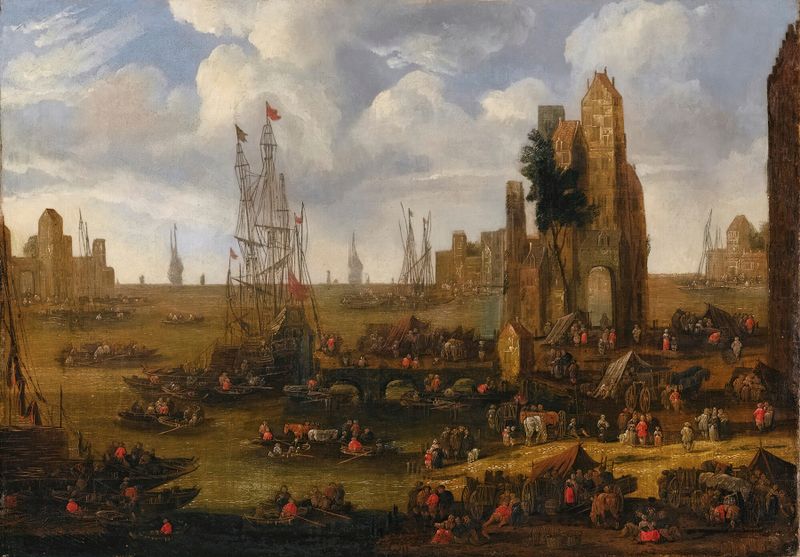
Can paint confess what words never could? In A harbour with numerous boats, the artist captures the tumultuous dance of chaos and order, an intricate tapestry woven from the threads of nature and human endeavor. Each brushstroke seems to echo the silent stories of the boats, reflecting a world bustling with life yet caught in a moment of stillness. Look to the left at the vibrant multitude of boats, their hulls painted in hues of deep blue, sunlit yellow, and earthy red. The delicate ripples on the water mirror their forms, while the soft, diffused light bathes the scene in a warm glow, enhancing the chaos of movement.
Notice how the artist masterfully balances the composition, allowing the gentle sway of the water to guide your gaze, creating a sense of rhythm amongst the vessels. Within this maritime gathering lies a deeper tension, as the contrasting stability of the boats against the fluidity of the water reflects the ever-shifting nature of life. Observe the fishermen, their forms etched with fine lines, representing both the toil of daily existence and the fleeting moments of tranquility. The interplay between the vibrant colors and muted shadows evokes a sense of nostalgia, reminding us of the serenity that often accompanies chaos. Pieter Casteels II painted this work in the 17th century, a time when the maritime industry was flourishing and artists were increasingly depicting scenes of daily life and trade.
Living in a period marked by exploration and economic growth, Casteels found inspiration in the lively harbors of his time, capturing the essence of a world both familiar and ever-changing.