A Chestnut Hunter And His Groom In A Landscape — History & Facts
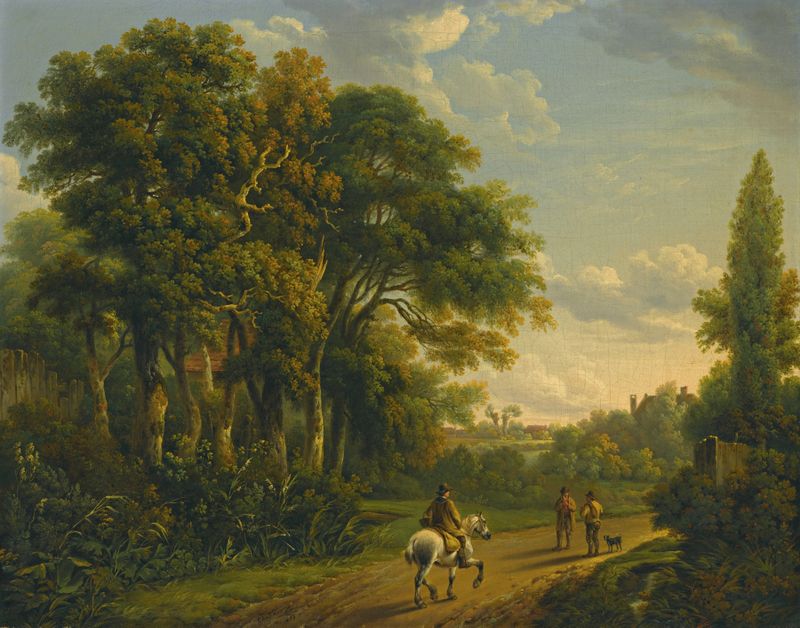
In the stillness of nature, the fleeting nature of life unfurls beneath a gentle sky. Look to the left at the imposing figure of the chestnut hunter, poised with his gaze fixed beyond the horizon. His sturdy stance, almost statue-like, contrasts with the soft, fluid brushstrokes of the surrounding landscape. The palette is a medley of earthy tones—rich greens and warm browns—evoking a sense of both tranquility and foreboding.
The light dances unevenly across the scene, casting elongated shadows that hint at the ephemeral quality of existence. Delve deeper into the intricate details; observe how the hunter's hands rest lightly on his knee, suggesting a moment of contemplation, even resignation. The groom, slightly behind, embodies a sense of loyalty yet remains shrouded in an aura of uncertainty, underscoring the delicate balance between companionship and solitude. This tableau speaks of mortality, where life is as fleeting as the autumn leaves that drift on the wind, bearing witness to the passage of time. In 1819, during the height of his career, the artist was navigating the shifting tides of Romanticism, choosing to emphasize emotion and nature's beauty.
At this time, Towne was living in England, capturing the essence of a world that was rapidly industrializing, contrasting the peace of rural life with the encroaching modernity. This painting reflects not only his aesthetic values but also speaks to the universal struggle between life’s transience and the eternal landscapes that witness it.